


Sustainable Kitchen Remodeling UK: The 2026 Professional Guide
Sustainable kitchen remodeling in the UK has transitioned from a niche trend to a regulatory necessity in 2026. With the full implementation of the Future Homes Standard, homeowners are now prioritising carbon reduction alongside aesthetic appeal.
Creating a truly green kitchen requires a holistic approach to design, material sourcing, and energy efficiency. At In-Hire, we specialise in delivering high-specification house extensions that integrate these ecological principles from the ground up.
Navigating the Future Homes Standard Kitchens
The 2026 building regulations have fundamentally changed how we approach internal renovations and kitchen design. Future Homes Standard kitchens are now designed to be fossil-fuel-free, focusing on extreme thermal efficiency and low-carbon heating solutions.
This shift means that every aspect of your remodel must contribute to a Net Zero household. From high-performance insulation to airtight construction, the structural integrity of your kitchen space is more critical than ever.
Key Pillars of 2026 Sustainable Design
* Carbon Neutral Materials: Prioritising timber from FSC-certified UK forests and low-VOC finishes.
* Circular Economy: Utilising repurposed cabinets or high-quality recycled glass worktops UK suppliers now provide.
* Energy Autonomy: Integrating solar-ready appliances and smart grid battery storage within the cabinetry.
Premium Eco-Materials: Recycled Glass Worktops UK
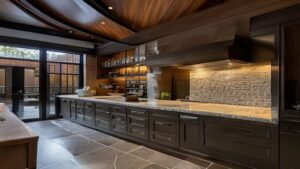
One of the most visually striking elements of a sustainable kitchen is the choice of surface materials. In 2026, recycled glass worktops UK manufactured have become the gold standard for high-end, eco-conscious renovations.
These surfaces are created by fusing crushed waste glass with bio-resins, resulting in a durable and non-porous finish. They offer a unique aesthetic that natural stone cannot replicate, often featuring iridescent flecks and a depth of colour that enhances natural light.
Why Choose Recycled Glass?
If you are planning a wider renovation, consider how these materials complement a loft conversion to create a cohesive, sustainable aesthetic throughout your home.
Induction Hob Installation Cost and Energy Efficiency
As the UK moves away from gas connections in residential properties, induction technology has become the primary choice for cooking. Understanding the induction hob installation cost is vital for your 2026 budget planning.
While the units themselves have stabilised in price, the installation often requires a dedicated high-amperage circuit. Expect to pay between £250 and £600 for a professional electrical installation, depending on your current consumer unit’s capacity.
Advantages of Induction Technology
* Precision Control: Modern hobs offer 0.5-degree temperature increments for professional-grade results.
* 90% Efficiency: Unlike gas, which loses 50% of its heat to the surrounding air, induction transfers energy directly to the cookware.
* Safety Features: Auto-shutoff and cool-touch surfaces make these ideal for family environments.
Smart Home Kitchen Integration for 2026
In 2026, a sustainable kitchen is an intelligent kitchen. Smart home kitchen integration allows you to monitor and reduce your energy consumption in real-time through intuitive dashboards.
From AI-driven refrigerators that track food waste to dishwashers that only run when renewable energy on the grid is at its peak, technology is a key driver of sustainability. These systems are no longer gadgets but essential tools for maintaining a low-carbon lifestyle.
Essential Smart Kitchen Features
For those undertaking a comprehensive basement conversion, integrating these smart systems early in the design phase is crucial for seamless functionality.
Ventilation and Part O Compliance
Sustainability is not just about energy; it is about the health of the occupants. Updated Building Regulations Part O now strictly governs overheating and air quality in UK homes.
A sustainable kitchen remodel must include high-efficiency Mechanical Ventilation with Heat Recovery (MVHR) systems. These units extract stale air and moisture while recycling the thermal energy to pre-warm incoming fresh air.
The Cost of Sustainability in 2026
While the initial investment in sustainable kitchen remodeling UK projects can be 15-20% higher than traditional methods, the long-term ROI is undeniable. Reduced utility bills and increased property valuation for Net Zero-ready homes make this a financially sound decision.
* Mid-range Sustainable Kitchen: £25,000 – £40,000.
* High-end Designer Eco-Kitchen: £45,000 – £85,000+.
* Professional Consultation: Essential for ensuring all Part L and Part O regulations are met.
2026 Sustainability Checklist
* [ ] Verify the FSC or PEFC certification of all timber elements.
* [ ] Select appliances with an ‘A’ rating under the updated 2025 energy labelling scheme.
* [ ] Ensure the kitchen layout maximises natural light to reduce daytime lighting needs.
* [ ] Opt for lime-based or clay-based paints to ensure a breathable, non-toxic environment.
Final Thoughts on Sustainable Remodeling
Sustainable kitchen remodeling in the UK is about creating a space that respects the environment without compromising on luxury. By choosing the right materials and technology, you create a future-proofed asset that serves both your family and the planet.
At In-Hire, we are committed to excellence in every build. Contact us today to discuss how we can bring your vision of a sustainable home to life with our expert construction services.