


The Expert Guide to Permitted Development Rights UK 2026
Navigating the landscape of permitted development rights UK 2026 is essential for homeowners looking to add value to their property. These rights allow for specific improvements without the need for a full planning application.
Understanding these rules ensures your project stays within legal boundaries while maximising your living space. The 2026 framework places a heavy emphasis on sustainability and smart technology integration.
Evolution of Permitted Development Rights UK 2026
In 2026, the UK government has refined these rights to support the Net Zero target. This means higher standards for insulation and energy efficiency are now mandatory for all projects.
You can explore our specialized house extensions services to see how these updated rights apply to modern builds. Working with experts ensures your design meets the strict criteria set by local authorities.
Key Changes in the 2026 Framework
* Sustainability Mandates: All extensions must now include provisions for low-carbon heating.
* Biodiversity Net Gain: Minor developments must show a positive impact on local wildlife.
* Part O Compliance: New glazing limits apply to prevent overheating in summer months.
* Smart Integration: Provisions for EV charging points are often required in new garages.
The Prior Approval Process 2026 Explained
The prior approval process 2026 is a critical middle ground between permitted development and full planning. It allows the local planning authority to assess the impact of your proposal on neighbouring properties.
Specifically, this process focuses on transport, noise, and light impacts. If you are planning a larger rear extension, you must engage with this process before starting any physical work.
Steps for a Successful Prior Approval
Why Lawful Development Certificates are Essential
While not mandatory, obtaining lawful development certificates is highly recommended for any project. This document proves to future buyers and lenders that your work was completed legally.
It provides a permanent record that your project fell within permitted development rights UK 2026 at the time of construction. This prevents legal disputes during property sales or remortgaging.
Our team can help you secure these through our professional planning assistance. Having this certificate in hand offers total peace of mind for the long term.
Side Return Extension Planning and Design
Side return extension planning remains one of the most popular ways to expand Victorian and Edwardian terraced homes. In 2026, we see a shift towards using sustainable zinc cladding and high-performance timber frames.
You must ensure the height of the extension does not exceed four metres. Additionally, the width must not be more than half that of the original house.
Design Must-Haves for Side Returns
* Frameless Glass Roofs: Maximise natural light while adhering to thermal efficiency standards.
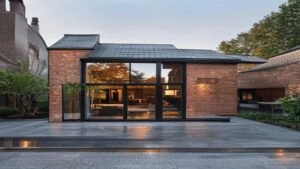
* Industrial Finishes: Exposed London stock brick paired with matte black aluminium bifolds.
* Living Walls: Incorporate vertical greenery to satisfy new biodiversity requirements.
Loft Conversion Regulations 2026 Update
Adhering to loft conversion regulations 2026 is vital for creating a safe and legal attic room. The focus this year is on fire safety and the structural integrity of existing floor joists.
You are generally allowed 40 cubic metres of additional space in terraced houses. Semi-detached and detached homes typically allow for up to 50 cubic metres.
Check out our loft conversions page for detailed breakdowns of current construction costs. Modern conversions now frequently include integrated solar tiles to power heat pumps.
Technical Requirements for 2026 Lofts
* Headroom: A minimum height of 2.2 metres across the main floor area is standard.
* Fire Doors: FD30 rated doors must be installed on all habitable rooms off the stairwell.
* Ventilation: Mechanical Ventilation with Heat Recovery (MVHR) is now a preferred standard.
Managing Construction Costs in 2026
Construction costs have stabilised in 2026 but remain higher than in previous decades. Prefabricated modular components are now frequently used to reduce on-site labour time.
Budgeting for a permitted development project should include a 15% contingency fund. This covers unexpected groundworks or structural reinforcements required by building control.
Final Checklist for Your 2026 Project
* Verify your property has not had its permitted development rights removed by an Article 4 Direction.
* Ensure your design does not exceed the designated height or volume limits.
* Confirm that materials used are of a similar appearance to the existing dwelling.
* Appoint a qualified building control inspector before the first spade hits the ground.
* Document every stage of the build for your final completion certificate.