

Modular House Extensions UK 2026: A Future-Proof Guide
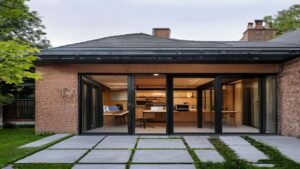
Modular house extensions UK 2026 are transforming how homeowners in London and the South East expand their living spaces.
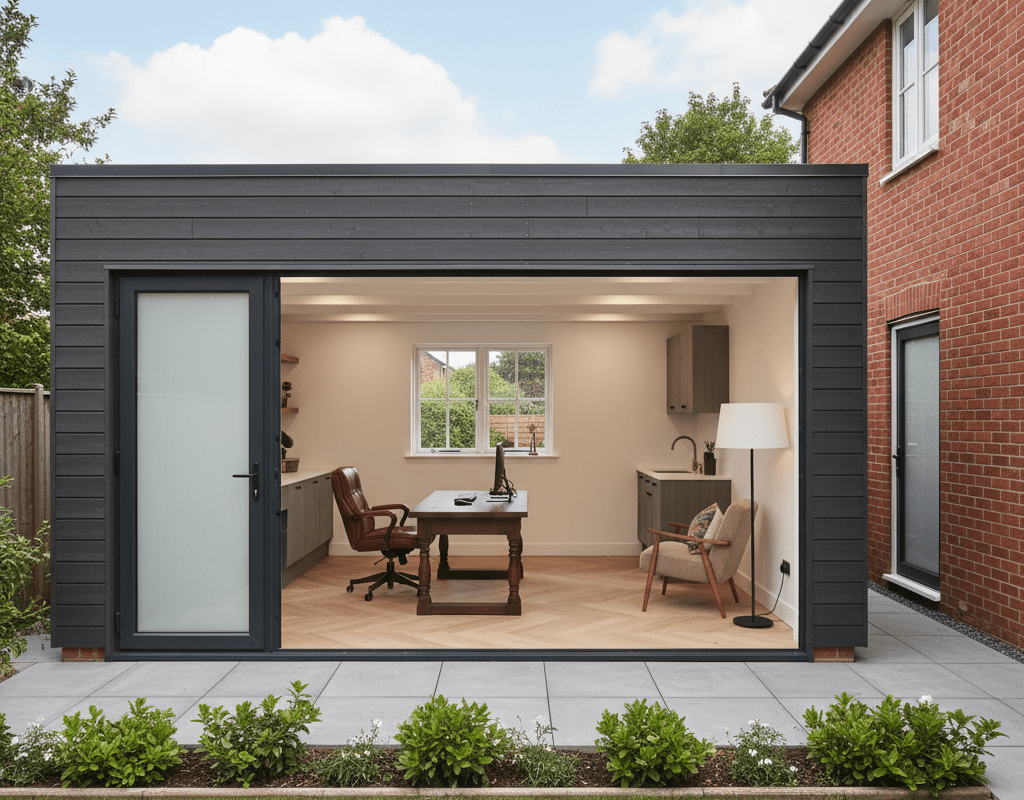
By choosing off-site fabrication, you can achieve a high-performance home office or kitchen diner with minimal site disruption.
Meeting the Future Homes Standard 2026
As of 2026, the building industry has undergone a radical shift to comply with the fully implemented Future Homes Standard.
This regulation mandates that all new additions achieve a significant reduction in carbon emissions compared to previous standards.
Modular systems are uniquely positioned to meet these goals because they utilise high-precision manufacturing processes.
In-Hire provides the expertise needed to navigate these complex regulations during your house extension project.
The Rise of Prefabricated Timber Frames
Prefabricated timber frames have become the primary choice for sustainable UK construction in 2026.
Timber acts as a natural carbon sink, locking away CO2 for the lifetime of the extension.
Modern modular units are built in controlled factory environments to ensure perfect airtightness and thermal efficiency.
This method virtually eliminates the ‘performance gap’ often found in traditional masonry builds.
Benefits of Timber over Traditional Masonry
* Superior U-values that exceed 2026 Part L requirements.
* Significantly faster installation times, often completed in days.
* Reduced site waste through precision digital cutting.
* Lower foundation requirements due to the lightweight nature of wood.
Modular Home Extensions London: Urban Solutions
Modular home extensions London projects are soaring due to the restricted access of many Victorian terrace properties.
Crane-in modules allow homeowners to add significant value without months of scaffolding and tradespeople on-site.
In-Hire specialises in coordinating these complex logistics for London-based loft conversions and rear extensions.
Managing a build in the capital requires specific permits and a deep understanding of local planning constraints.
Low Carbon Building Materials in 2026
Sustainable construction is no longer an optional extra; it is a fundamental requirement of the UK planning system.
Low carbon building materials such as hempcrete, recycled insulation, and low-carbon cement are now standard in modular builds.
Using these materials helps homeowners achieve Net Zero status while lowering long-term energy bills.
Smart sensors are often integrated into these modules to monitor humidity and heat loss in real-time.
Top Sustainable Materials for 2026
- Mycelium insulation panels for organic, breathable walls.
- Recycled aluminium glazing frames with triple-pane vacuum glass.
- Solar-integrated roof tiles for seamless energy generation.
- Cross-Laminated Timber (CLT) for structural integrity and aesthetics.
Understanding the Costs of 2026 Modular Builds
While material prices for timber and steel have stabilised, the cost of high-tech insulation remains a significant factor.
Homeowners should expect to invest between £2,500 and £4,000 per square metre for a premium modular unit.
These costs reflect the inclusion of heat pumps and advanced mechanical ventilation with heat recovery (MVHR) systems.
Investing in quality now prevents expensive retrofitting costs as the UK moves toward 2030 sustainability targets.
Why Speed of Construction Matters Today
In 2026, the UK rental and housing market remains competitive, making speed a critical financial asset.
A modular extension can be manufactured while your groundworks are being prepared by the In-Hire team.
This parallel processing can reduce total project timelines by up to 50% compared to traditional brick-and-mortar.
Most modules arrive on-site with internal finishes, plumbing, and electrics already installed and tested.
Planning Permission and Permitted Development
Many modular extensions fall under Permitted Development (PD) rights, provided they meet specific size and height criteria.
However, in 2026, local councils are more stringent regarding ‘overheating’ assessments under Part O of the building regs.
Your modular design must demonstrate adequate solar shading and ventilation strategies to prevent summer overheating.
Consulting with professional builders early in the design phase ensures your module complies with local aesthetics.
Key Planning Checkpoints
* Verify if your property is in a Conservation Area or AONB.
* Ensure the module height does not exceed 4 metres for a pitched roof.
* Submit a detailed drainage strategy to satisfy SuDS requirements.
* Confirm the use of non-combustible materials for boundary-facing walls.
The Role of Smart Home Integration
Every modular house extension in 2026 is a ‘smart’ extension by default.
Centralised hubs now control everything from your heat pump to your automated external shading.
These systems optimise energy consumption based on weather forecasts and occupancy patterns.
Modular units are particularly suited for this technology as wiring looms are pre-installed in the factory.
Future-Proofing Your UK Property Investment
A modular extension isn’t just about extra space; it is about protecting the future value of your asset.
Homes that fail to meet the 2026 Future Homes Standard may face ‘brown discounts’ in the coming decade.
By opting for high-spec modularity, you ensure your home remains desirable to future eco-conscious buyers.
Quality craftsmanship and sustainable credentials are the new benchmarks for luxury in the UK property market.
Conclusion: Making the Modular Move
Modular house extensions UK 2026 represent the pinnacle of modern construction efficiency and environmental responsibility.
From prefabricated timber frames to the integration of low carbon building materials, the benefits are undeniable.
Whether you are planning a modular home extension in London or a rural retreat, the focus remains on quality.
Ready to transform your home with a sustainable, future-proof extension? Contact In-Hire today to start your journey.