


Modular Home Extensions UK Cost: The 2026 Definitive Guide
Understanding the modular home extensions UK cost is essential for homeowners looking to expand efficiently in 2026. Modern Methods of Construction (MMC) have revolutionised how we add space to our properties.
Today, homeowners prioritise speed, sustainability, and fixed-price contracts over traditional brick-and-mortar builds. This guide explores the financial landscape of off-site construction for London, Manchester, and the Cotswolds.
Current Modular Home Extensions UK Cost Breakdown
In 2026, the modular home extensions UK cost typically ranges between £1,800 and £3,200 per square metre. These prices include high-spec insulation and integrated smart home technology as standard.
Premium projects in London or the South East may see costs rise toward £4,000 per square metre. This often accounts for complex site logistics and bespoke architectural finishes.
Factors Influencing Your Investment
* Site Accessibility: Restricted access in urban areas like Birmingham often requires specialised crane hire for modular builds.
* Material Selection: Net Zero 2026 standards require high-performance timber frames or recycled steel structures.
* Foundation Requirements: Helical screw piles are increasingly popular for their low carbon footprint and speed of installation.
* Interior Fit-out: The choice between ‘shell only’ and ‘turnkey’ solutions significantly impacts the final invoice.
The Rise of MMC Residential Projects
MMC residential projects are now the primary choice for UK homeowners seeking predictable timelines. Off-site construction ensures that 90% of the build is completed in a controlled factory environment.
This method eliminates the delays caused by the unpredictable UK weather. It also ensures a level of precision that traditional site-based trades struggle to match consistently.
Key Off-site Construction Benefits
Prefabricated Garden Rooms and Annexes
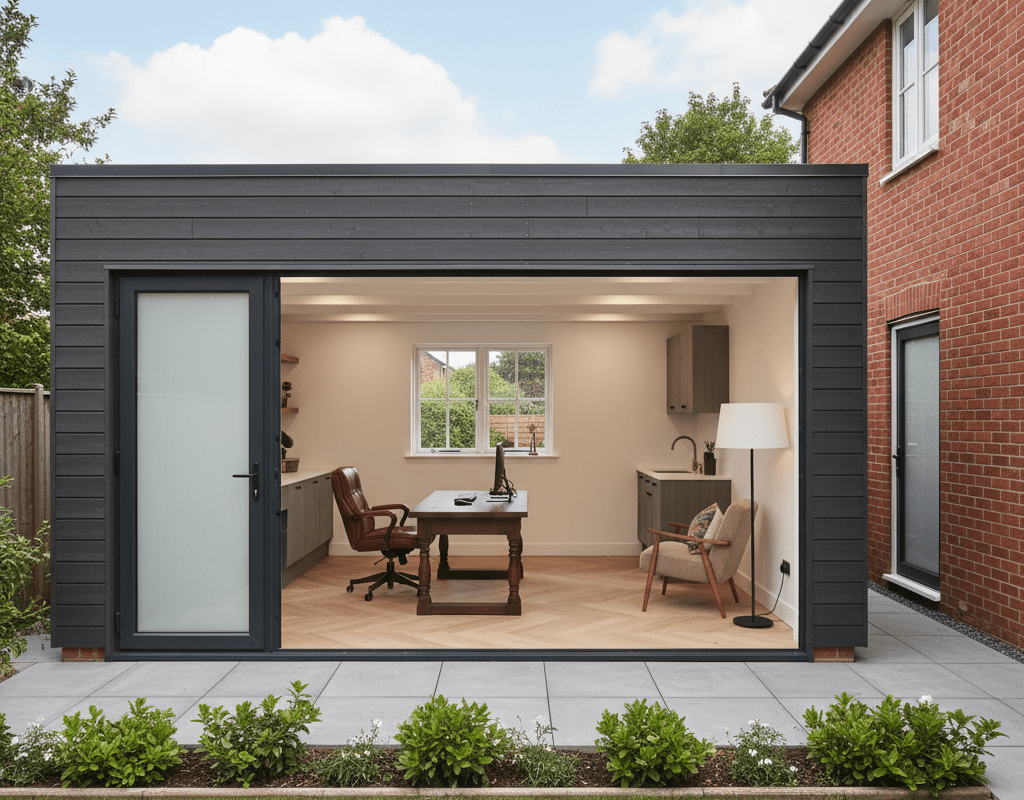
Many homeowners opt for prefabricated garden rooms as a cost-effective alternative to side-return extensions. These standalone structures serve perfectly as home offices or guest suites without requiring extensive structural alterations.
In 2026, these units often feature green roofs and integrated solar arrays. They provide a fast-track solution to the UK’s growing demand for flexible living spaces.
Popular Uses for Garden Prefabs
* Professional Home Studios: High-speed fibre connectivity and acoustic treatments included.
* Multi-generational Living: Self-contained annexes for elderly relatives or adult children.
* Wellness Retreats: Private gyms and saunas with integrated ventilation systems.
Logistics: Crane Hire for Modular Builds
Successful installation depends heavily on professional crane hire for modular builds. This is a critical component of the modular home extensions UK cost that is often overlooked in early budgeting.
Whether you are in a tight Manchester street or a sprawling Cotswold estate, the right lifting equipment is vital. Most projects require either a mobile crane or a tower crane depending on the reach required.
Choosing the Right Lifting Partner
* All-Terrain Cranes: Perfect for sites with uneven ground or limited stabilisation space.
* Contract Lifting Services: Provides a fully managed service, including insurance and risk assessments.
* Slinger Signallers: Essential personnel for guiding large modular sections into place safely.
2026 Building Regulations and Planning
Navigating the 2026 planning landscape requires an understanding of ‘Permitted Development’ rights. Many modular extensions fall under these rights, provided they meet specific height and volume criteria.
However, the 2026 Future Homes Standard requires all new structures to be ‘zero-carbon ready’. This means your modular extension must not rely on fossil fuel heating systems.
Compliance Checklist for 2026
Comparing Costs: Modular vs Traditional
While the initial modular home extensions UK cost may seem comparable to traditional builds, the ‘hidden’ savings are significant. Shorter build times mean lower site management costs and less disruption to your daily life.
Traditional builds often suffer from ‘scope creep’ and material price inflation during the project. Modular contracts are typically fixed-price, providing greater financial certainty for UK homeowners.
Total Investment Comparison
* Modular Extension (30sqm): £60,000 – £85,000 (installed in 4 weeks).
* Traditional Extension (30sqm): £55,000 – £90,000 (built in 16-24 weeks).
* Prefabricated Garden Room (15sqm): £25,000 – £45,000 (installed in 1 week).
Final Thoughts on Modular Expansion
Investing in a modular extension is a forward-thinking move for any UK property owner in 2026. The combination of sustainable materials and precision engineering ensures a high-quality finish.
By understanding the modular home extensions UK cost and the logistics of crane hire, you can plan your project with confidence. The future of UK housing is off-site, efficient, and exceptionally designed.