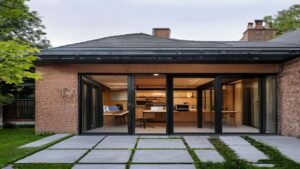
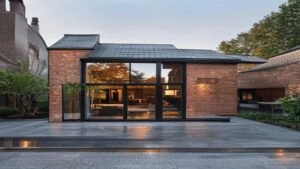
Modular Home Extensions London: The Future of Urban Living in 2026
Modular home extensions London have become the definitive choice for homeowners seeking high-quality, sustainable space in record time. As we navigate 2026, the demand for precision-engineered living spaces has surpassed traditional brick-and-mortar builds due to efficiency and reduced site disruption.
Modern Methods of Construction (MMC) are now the standard for high-end residential projects across the capital. By choosing a modular approach, you are prioritising thermal performance and architectural excellence while minimising the chaos of a live construction site.
Why Modular Home Extensions in London are Leading 2026 Trends
London’s unique architectural landscape requires a sophisticated approach to expansion. Traditional builds often struggle with tight access and strict environmental regulations now enforced by local councils.
Modular home extensions London offer a turnkey solution where the majority of the build occurs in a controlled factory environment. This off-site manufacturing approach ensures that every millimetre of your new space is crafted to perfection before it even reaches your property.
The Rise of MMC Residential Construction
MMC residential construction has evolved significantly, moving away from the basic ‘box’ designs of the past. Today, these structures integrate seamlessly with Victorian terraces and modern townhouses alike, using high-end materials like London stock brick slips and sustainable zinc cladding.
By leveraging prefabricated extensions UK technologies, homeowners can achieve a level of airtightness and insulation that traditional methods simply cannot match. This is particularly vital for meeting the latest Part L building regulation updates regarding carbon emissions.
Key Off-Site Manufacturing Benefits for Londoners
Choosing a factory-built solution provides several distinct advantages for the urban dweller. The most significant benefit is the reduction in on-site construction time, often by as much as 70%.
* Reduced Noise Pollution: Heavy drilling and masonry work are largely confined to the factory.
* Superior Quality Control: Indoor environments eliminate the risk of damp materials or weather-related delays.
* Fixed Pricing: Modular projects are less susceptible to the fluctuating material costs seen in traditional builds.
* Sustainability: Minimal waste is produced on-site, supporting London’s Net Zero targets for 2026.
If you are planning a significant upgrade, exploring our professional house extensions services can help you visualise how these modular units integrate with your existing structure.
Achieving Rapid Build Extensions in Record Time
One of the primary drivers for the shift toward modularity is the speed of delivery. Rapid build extensions allow a family to gain a new kitchen or home office in weeks rather than months.
Once the groundworks and screw-pile foundations are prepared, the modules are craned into place. The final ‘stitch-up’ and internal finishing are completed quickly, allowing you to occupy the space almost immediately.
Navigating 2026 Building Regulations in London
In 2026, the UK’s Building Regulations have become increasingly stringent, particularly regarding thermal comfort and overheating. Modular home extensions London are specifically designed to meet these modern standards right out of the box.
* Part O Compliance: Advanced glazing and shading systems are integrated to prevent overheating in south-facing extensions.
* Part L Updates: Vacuum insulation panels are often used in modular walls to provide maximum R-values with minimal wall thickness.
* Smart Integration: Most 2026 modular units come pre-wired for Matter-compatible smart home systems and heat pump controls.
For those looking to enhance their entire property, our home renovation experts can coordinate the modular install with a full house upgrade.
Structural Materials and Aesthetic Versatility
Modern modularity does not mean a compromise on style. You can choose from a vast array of external finishes to match your London neighbourhood’s specific aesthetic requirements.
The Cost of Modular Extensions in 2026
While the initial cost of a modular home extension in London can be comparable to traditional builds, the long-term value is significantly higher. You must account for the savings in project management and site preliminaries.
* Basic Modular Shell: Starting from £2,800 per square metre.
* Premium Architectural Fit-out: Between £3,500 and £4,500 per square metre.
* Site Preparation: Costs vary based on London soil conditions and utility diversions.
When calculating your budget, remember to include the value of our architectural design services to ensure the modular unit perfectly complements your property’s original floor plan.
Sustainability and the Circular Economy
The construction industry is moving towards a circular economy, and modular builds are at the forefront. Components are designed for longevity but can also be deconstructed or recycled more easily than concrete-heavy traditional builds.
By choosing prefabricated extensions UK, you are investing in a future-proof asset. These homes are designed to be energy-positive, often generating more power via integrated solar PV than they consume.
Planning Permission for Modular Builds in London
Many homeowners mistakenly believe that modular extensions fall under different planning rules. In reality, they are subject to the same Permitted Development (PD) rights and full planning applications as any other build.
However, because modular designs are often more sustainable, they are frequently viewed favourably by London planning departments. Our team can help you navigate the nuances of London’s specific borough requirements to ensure a smooth approval process.
* Permitted Development: Ideal for rear extensions within specific height and depth limits.
* Full Planning: Required for larger wraps or projects in Conservation Areas.
* Certificates of Lawfulness: Highly recommended to ensure future resale value is protected.
Choosing the Right Modular Partner
Selecting a contractor for modular home extensions London requires a specialist who understands both manufacturing and site assembly. It is not just about the product; it is about the integration.
Look for providers who offer comprehensive warranties and have a proven track record of navigating the logistical challenges of London’s narrow streets. Transporting large modules requires precision planning and specialist haulage equipment.
Summary: Why Modular is the 2026 Standard
The transition to modular home extensions London represents a shift toward a more professional, predictable, and sustainable construction industry. By moving the majority of the work into a controlled factory, we eliminate the variables that typically plague London renovations.
Whether you need a rapid build extension for a growing family or a high-spec home office, MMC residential construction provides the most reliable path to success. The combination of speed, quality, and environmental responsibility makes it the undisputed choice for 2026.