



Large Format Porcelain Tiles Installation UK: The 2026 Professional Guide
Modern British architecture in 2026 is defined by seamless transitions and expansive surfaces. Achieving this aesthetic requires precision-engineered large format porcelain tiles installation UK wide, specifically designed for high-end residential projects.
Whether you are renovating a heritage property or building a Net Zero home, these tiles offer unrivalled durability. Their massive surface area reduces grout lines, creating a minimalist look that aligns with current UK design trends.
Why Large Format is the 2026 Standard
Large format porcelain has moved beyond the bathroom to become the primary flooring solution for open-plan living. Modern slabs now reach up to 3.2 metres, requiring specialist handling and advanced suction equipment for safe installation.
These tiles are perfectly suited for the Future Homes Standard, providing high thermal mass for energy efficiency. When paired with high-performance house extensions, they create a stable indoor climate year-round.
Essential Anti-Slip Tile Ratings UK
Safety is paramount when selecting oversized tiles for high-traffic zones or wet areas. You must understand the R-rating system to ensure your project complies with current UK health and safety regulations.
* R9 & R10: Ideal for internal living areas, kitchens, and hallways where moisture is minimal.
* R11 & R12: Required for bathrooms, wet rooms, and all external patio applications.
* PTV (Pendulum Test Value): A score of 36+ is mandatory for commercial-grade slip resistance in public-facing residential spaces.
Choosing the correct anti slip tile ratings UK ensures your home remains safe for all generations. This is particularly vital for level-threshold transitions between interior floors and garden terraces.
Underfloor Heating Compatible Tiles and Efficiency
As we move away from gas boilers toward heat pumps, underfloor heating (UFH) has become the primary heat source in UK homes. Porcelain is the gold standard for these systems due to its exceptional thermal conductivity.
Using underfloor heating compatible tiles allows for rapid heat transfer and long-term heat retention. This reduces the load on your air-source heat pump, lowering monthly energy bills significantly.
* Expansion Gaps: Large slabs require specific perimeter movement joints to handle thermal expansion.
* Adhesive Selection: High-flexibility S2-grade adhesives are mandatory to prevent cracking during heating cycles.
Properly integrated systems are a core feature of modern loft conversions where vertical space and weight are critical considerations.
Outdoor Porcelain Tiling Cost and Installation
Extending your living space into the garden remains a top priority for UK homeowners in 2026. The outdoor porcelain tiling cost typically ranges from £110 to £180 per square metre, including professional labour and materials.
This investment covers the excavation, a reinforced concrete sub-base, and the high-performance slurry primers required for a permanent bond. Cheaper ‘dry-lay’ methods on sand often fail under the British freeze-thaw cycle.
- Sub-base Preparation: A minimum 100mm Type 1 MOT base is essential for structural integrity.
- Slurry Priming: Every tile back must be coated with a polymer-modified primer to prevent delamination.
- Grouting: Use epoxy or high-grade resin grouts that resist moss, algae, and staining over time.
Integrating Stone Cladding Exterior Walls
To complement your porcelain flooring, many 2026 designs incorporate stone cladding exterior walls. This creates a cohesive architectural language that blends the structure with the surrounding landscape.
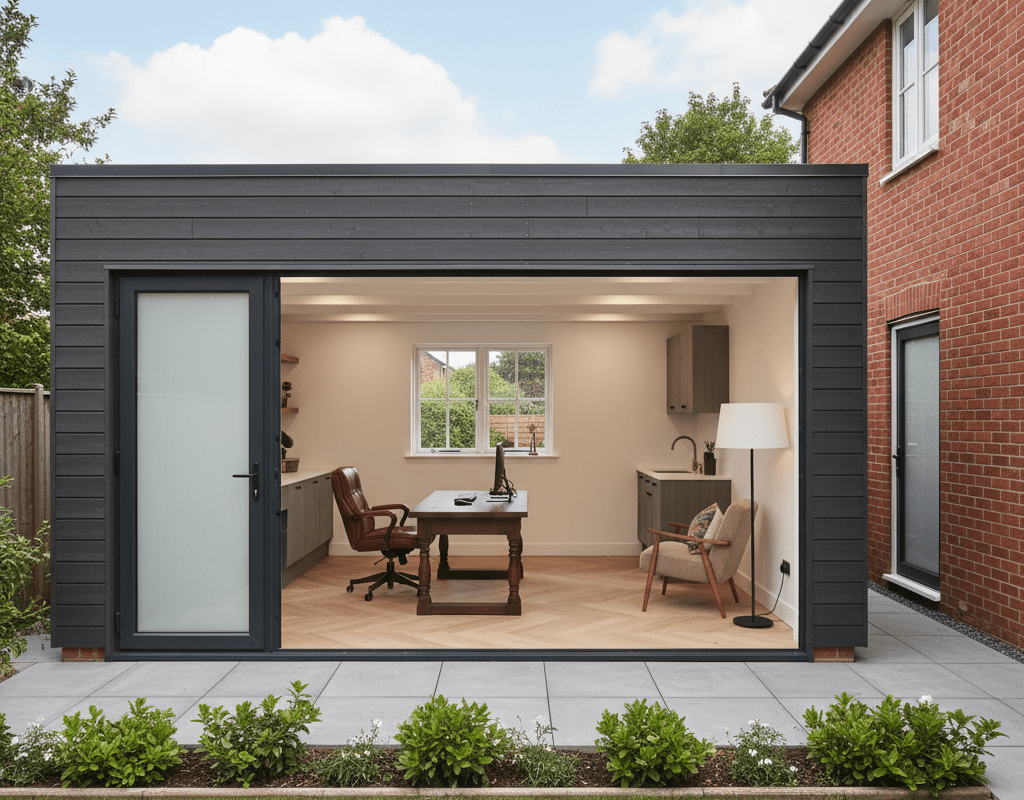
Natural stone slips or porcelain-effect cladding provide a high-end finish without the weight of traditional masonry. These systems are often used to accent renovations, adding texture to anthracite zinc or timber-clad extensions.
Technical Challenges of Large Format Installation
Handling slabs that exceed 1200mm requires a specialist two-person team and bespoke cutting tools. Conventional score-and-snap cutters are often insufficient for 12mm or 20mm porcelain.
* Substrate Levelness: Floors must be level within a 3mm tolerance over a 3-metre span.
* Back-Buttering: Adhesive must be applied to both the floor and the tile to ensure 100% coverage.
* Vibration Tools: Professional installers use electric beaters to remove air pockets and ensure a solid bed.
Cost Breakdown for 2026 Projects
The total price for a professional large format porcelain tiles installation UK project depends on the slab size and site access. Expect to pay a premium for tiles exceeding 1000mm due to the increased risk and labour intensity.
* Materials: High-quality Italian or Spanish porcelain starts at £45 per square metre.
* Labour: Specialist installers charge between £60 and £90 per square metre for large formats.
* Ancillaries: Self-levelling compounds and decoupling membranes add approximately £15 per square metre.
Maintaining Your Porcelain Investment
One of the primary benefits of porcelain is its low maintenance profile compared to natural stone. Because it is non-porous, it does not require the annual sealing that marble or limestone demands.
Simply clean with a pH-neutral detergent to maintain the factory finish for decades. This durability makes it the most cost-effective long-term solution for modern British homes.
Final Architectural Considerations
Before starting your project, consult with your architect about the structural load-bearing capacity of your subfloor. Large format slabs are significantly heavier than standard tiles and may require floor reinforcement.
Ensure your layout is planned from the centre of the room to avoid thin ‘slivers’ of tiles at the edges. This meticulous planning separates a standard installation from a truly premium architectural finish.