

House Extensions London Planning 2026: The Master Strategy
Navigating the landscape of House Extensions London Planning 2026 requires a deep understanding of the latest regulatory shifts.
As we enter 2026, the Future Homes Standard has fundamentally transformed how we approach residential development in the capital.
The New Era of London Planning Regulations
London’s planning authorities have introduced stringent requirements for all major and minor residential developments this year.
The most significant change involves mandatory compliance with the latest Part L and Part O building regulations for thermal efficiency.
Securing planning permission now hinges on your project’s ability to demonstrate carbon neutrality from the outset of the design phase.
If you are considering a renovation, exploring our professional house extensions services ensures your project meets these 2026 benchmarks.
Biodiversity Net Gain Residential Extensions
In 2026, Biodiversity Net Gain residential extensions are no longer optional for many London boroughs like Camden and Islington.
Small-scale developments must now prove a 10% increase in local biodiversity through innovative landscaping and structural additions.
* Integration of insect hotels and bee bricks into external masonry.
* Installation of native hedgerows instead of traditional timber fencing.
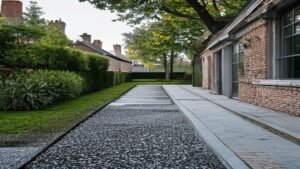
* Creation of permeable paving solutions to manage urban runoff.
Failing to address biodiversity in your initial application can lead to significant delays in the validation process.
Green Roof Planning Permission London
Obtaining Green roof planning permission London has become a strategic advantage for homeowners seeking to maximise their footprint.
Planners are increasingly viewing living roofs as an essential tool for mitigating the ‘urban heat island’ effect across the city.
These features are particularly effective when planning a loft conversion to balance structural expansion with ecological responsibility.
Sustainable House Extension Materials in 2026
The selection of sustainable house extension materials is now a core component of the London planning assessment process.
Embodied carbon calculations are being scrutinised to ensure that the construction phase is as green as the finished building.
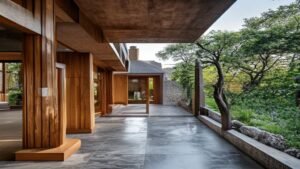
* Cross-Laminated Timber (CLT): High strength with a significantly lower carbon footprint than traditional steel.
* Recycled London Stock Brick: Preserving the aesthetic of Victorian terraces while reducing manufacturing energy.
* Hempcrete Insulation: A carbon-negative alternative to synthetic foam boards that offers superior breathability.
Choosing these materials not only aids planning approval but significantly improves the long-term energy performance of your home.
Eco-friendly Home Extensions UK: The Financial Benefits
Investing in eco-friendly home extensions UK wide is delivering higher returns on investment than ever before in 2026.
Energy prices remain volatile, making the high-performance building envelope of a sustainable extension a major selling point for future buyers.
Smart home integration is now standard, with AI-driven systems optimising heat pump performance and solar battery storage automatically.
For those looking to increase their living space efficiently, our home extensions team focuses on high-performance specifications as standard.
Navigating the 2026 Planning Application Process
The digitisation of the London planning system has accelerated, but the technical requirements have become far more complex.
You must provide a detailed Sustainability Statement and a Circular Economy Statement for almost all London-based extension projects.
* Pre-application advice is essential to gauge the local council’s stance on modern sustainable aesthetics.
* Detailed 3D sunlight and daylight assessments are now mandatory to prevent overshadowing of neighbouring properties.
* Engagement with a qualified ecologist may be required to certify your Biodiversity Net Gain (BNG) metrics.
Starting with a clear professional strategy is the only way to avoid the ‘hidden’ costs of planning revisions in the current market.
Smart Technology and the Future Homes Standard
The 2026 updates to the Future Homes Standard require extensions to be ‘zero-carbon ready’ without further retrofitting.
This means gas boilers are officially a thing of the past for new extensions, replaced by air-source heat pumps and infrared heating panels.
Mechanical Ventilation with Heat Recovery (MVHR) is now a common requirement to maintain air quality in highly airtight modern builds.
Integrating these systems into your extension design ensures compliance and future-proofs your property value.
Costs and Timelines for London Extensions in 2026
Material costs have stabilised since the volatility of the early 2020s, but specialised ‘green’ materials carry a premium.
You should budget between £3,500 and £5,000 per square metre for a high-specification, sustainable London extension this year.
* Planning Approval: 8 to 12 weeks depending on the borough’s current backlog.
* Technical Design & Building Regs: 6 to 8 weeks for complex eco-specifications.
* Construction Phase: 16 to 24 weeks for a standard rear or side-return extension.
While the initial outlay is higher, the reduction in operational energy costs provides a clear pathway to breaking even within a decade.
Summary of 2026 Planning Success Factors
Success in House Extensions London Planning 2026 requires a proactive approach to environmental and architectural standards.
Prioritise biodiversity, embrace sustainable materials, and ensure your thermal performance exceeds the current Building Regulations.
By following this expert framework, you can create a beautiful, compliant, and highly valuable addition to your London property.
If you are ready to begin your project, contact our specialists at In-Hire for a detailed consultation on your specific site requirements.