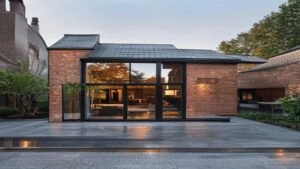
Garage Conversion to Home Office 2026: The UK Expert Guide
Converting a redundant garage into a high-performance workspace is the smartest UK home improvement in 2026. As remote working evolves into a permanent lifestyle, the demand for premium, sustainable garden-facing offices has reached an all-time high.
Executing a garage conversion to home office 2026 requires more than just a lick of paint. It demands strict adherence to the latest Future Homes Standard and evolved building codes.
At In-Hire, we specialise in connecting homeowners with the tools and expertise needed for high-spec transformations. Whether you are looking for London garage conversion specialists or DIY plant hire, professional planning is your first step.
Navigating Garage Conversion Building Regulations in 2026
In 2026, the legislative landscape for home improvements is more complex than ever. You must ensure your project complies with the latest iterations of the Building Regulations, specifically targeting thermal efficiency.
Part L (Fuel and Power) now mandates significantly lower U-values for walls and floors. This ensures your new workspace remains energy-neutral and cost-effective to heat during British winters.
Overheating Mitigation and Part O Compliance
One of the most critical updates for 2026 is the stringent application of overheating mitigation Part O. With UK summers reaching record temperatures, your office must be designed to stay cool without excessive air conditioning.
Professional designs now incorporate solar control glazing and passive ventilation systems. Failing to address Part O during the planning phase can lead to a workspace that is unusable during July and August.
The Anatomy of an Insulated Garage Home Office
To achieve a truly professional finish, you must move beyond basic wool insulation. A modern insulated garage home office utilises high-performance PIR boards or spray-foam technology to maximise internal space.
Space is a premium in UK garages, so choosing thin-profile, high-efficiency insulation is vital. This allows you to meet Part L requirements without sacrificing the footprint of your desk or storage units.
* Floor Insulation: High-density floor grade PIR boards laid over a new DPM.
* Wall Lining: Independent timber stud frames with integrated vapour barriers.
* Roof Performance: Warm-roof constructions to eliminate condensation risks.
* Acoustic Damping: Enhanced soundproofing to block out street noise and domestic distractions.
Garage Conversion Value Increase 2026: A Financial Analysis
Many homeowners ask if the investment is worth it in the current market. Current data suggests a significant garage conversion value increase 2026, often adding between 10% and 15% to a property’s total valuation.
In high-demand areas, a bespoke home office is often more desirable to buyers than a dusty car port. This shift in buyer sentiment makes the conversion one of the highest ROI (Return on Investment) projects available today.
If you are considering a wider renovation, our house extension services can help integrate your office into a larger architectural plan. Integrated designs often yield the highest valuation jumps.
Key Design Trends for 2026 Workspaces
Design aesthetics in 2026 have moved towards ‘Biophilic Industrialism’. This combines raw materials like exposed brick with heavy greenery and natural timber accents.
Working with London Garage Conversion Specialists
For those in the capital, the challenges are often structural and bureaucratic. London garage conversion specialists are well-versed in navigating tight footprints and Party Wall Agreements.
Living in a conservation area? You will likely need full planning permission rather than relying on Permitted Development rights.
Utilising professional loft conversion techniques can also be applied to garages with high pitched roofs. This creates a ‘mezzanine’ office, separating your desk from a small breakout or lounge area below.
Essential Checklist for Your 2026 Conversion
Before you break ground or hire equipment, ensure you have ticked off these essential requirements. Success in 2026 is defined by preparation and the quality of your supply chain.
* Structural Survey: Check that existing foundations can support the new floor screed.
* Damp Proofing: Essential for converting old single-skin brick garages into habitable rooms.
* Electrical Load: Ensure your consumer unit can handle the new heating and computing circuits.
* Ventilation: Mechanical Extract Ventilation (MEV) is often required to meet 2026 air quality standards.
Cost Expectations for 2026 Projects
Material costs have stabilised since the volatility of the early 2020s, but labour remains at a premium. Expect to pay between £1,500 and £2,500 per square metre for a high-end, fully compliant conversion.
This price range includes professional finishing, smart home integration, and premium insulation. While cheaper ‘shell’ conversions exist, they rarely add the same long-term value to your property.
Future-Proofing with Net Zero Technology
In 2026, a home office should contribute to your home’s Net Zero goals. Consider installing a small air-source heat pump specifically for the office space.
Alternatively, infrared heating panels can be mounted on the ceiling. These provide instant, radiant heat that is far more efficient than traditional electric radiators.
For those looking to expand their footprint further, our basement conversion options offer another route to high-value subterranean workspaces. Every square metre of your property should be working as hard as you do.
Conclusion: Your Productivity Starts Here
Transforming your garage into a home office is more than a construction project; it is a lifestyle upgrade. By following the 2026 regulations and prioritising insulation, you create a space that is comfortable, legal, and profitable.
Ready to start your journey? Ensure you have the right team and the right equipment to deliver a professional finish that stands the test of time.