

Future Homes Standard House Extensions: The 2026 UK Guide
Navigating the landscape of Future Homes Standard house extensions in 2026 requires a deep understanding of the UK’s most rigorous building regulations to date. As we move closer to Net Zero targets, every new residential project must now meet stringent carbon reduction benchmarks.
Homeowners across London and the South East are discovering that modern builds require more than just aesthetic appeal. They demand a holistic approach to thermal efficiency and renewable energy integration.
Understanding the 2026 Regulatory Landscape
The implementation of the Future Homes Standard has revolutionised how we approach domestic construction in Great Britain. This framework ensures that any new addition to your property is future-proofed against rising energy costs.
Achieving Part L compliance extension standards is no longer optional for homeowners. It is the mandatory baseline for all structural works sanctioned this year.
For those planning significant upgrades, consulting our expert house extensions team ensures your design meets these new legal thresholds. Professional guidance prevents costly retrospective corrections during the building control sign-off process.
The Role of Air Source Heat Pumps UK 2026
In 2026, gas boilers are increasingly becoming a relic of the past for modern home extensions. The shift towards air source heat pumps UK wide has been accelerated by government incentives and technological breakthroughs.
These units now operate with higher coefficients of performance (COP) even in the coldest British winters. They serve as the primary heating source for sustainable living spaces.
Benefits of Modern Heat Pump Integration
* Significant reduction in household carbon footprints compared to traditional gas systems.
* Integration with smart home hubs for precision temperature control in every room.
* Potential for cooling functions during increasingly warm UK summers.
* Long-term energy savings that offset the initial installation premium.
Evaluating Triple Glazing Costs 2026
One of the most frequent questions we receive at In-Hire concerns triple glazing costs 2026. While the initial investment is higher than double glazing, the thermal performance is non-negotiable for meeting U-value targets.
Average costs for high-spec aluminium-clad timber frames now range from £800 to £1,200 per square metre. This varies based on the aperture size and the specific gas fill used between the panes.
Why Triple Glazing is Essential for Part L
- Acoustic Insulation: Perfect for urban extensions in noisy areas like Manchester or Birmingham.
- Solar Gain Management: Advanced coatings prevent your extension from becoming a greenhouse in July.
- Elimination of Cold Spots: Maintains a consistent internal temperature throughout the winter months.
- Security Enhancement: The additional pane provides an extra layer of physical protection against intruders.
Energy Efficient Building Materials for 2026
Selecting the right energy efficient building materials is the foundation of any successful project. In 2026, we are seeing a massive surge in the use of bio-based insulation and low-carbon concrete alternatives.
Materials like hempcrete and wood fibre boards are now mainstream choices for high-end extensions. These products offer excellent breathability while providing superior thermal mass.
When planning a bespoke loft conversion, using these lightweight yet efficient materials can significantly reduce the structural load. This approach often simplifies the planning process and speeds up the construction timeline.
Optimising Thermal Bridging and Air Tightness
The Future Homes Standard places a heavy emphasis on the continuity of the thermal envelope. Any gap in insulation or air leakage can undermine the efficiency of your expensive heating systems.
Modern construction techniques now utilise specialist tapes and membranes to ensure an airtight seal. This is particularly critical at the junctions between the original building and the new extension.
Our specialists often recommend detailed architectural design services to map these junctions before any ground is broken. Precision at the planning stage is the only way to guarantee a truly airtight structure.
Smart Home Integration and Energy Monitoring
A 2026 extension isn’t just a physical space; it is a smart ecosystem. Homeowners are now installing integrated energy monitoring systems to track performance in real-time.
These systems allow you to see exactly how much energy your air source heat pump is consuming. You can then adjust your usage patterns to take advantage of off-peak electricity tariffs.
* Automated blinds that react to solar intensity.
* Zoned underfloor heating controlled via smartphone apps.
* Integrated solar PV arrays with battery storage solutions.
* Electric vehicle (EV) charging points powered by the extension’s roof panels.
The Financial Case for High-Performance Extensions
While the upfront costs of Future Homes Standard house extensions are higher, the return on investment is clearer than ever. High-performance homes command a significant premium on the UK property market.
Buyers are increasingly savvy about EPC (Energy Performance Certificate) ratings. A home with an ‘A’ rating is far more attractive than a drafty period property with an ‘E’ or ‘F’ grade.
By investing in triple glazing and renewable heating today, you are protecting your asset for decades. You also insulate yourself against the volatility of global energy markets.
Checklist for Your 2026 Extension Project
* Verify Part L Compliance: Ensure your architect has calculated the SAP (Standard Assessment Procedure) scores accurately.
* Source Sustainable Timber: Use FSC-certified timber for all framing and cladding requirements.
* Plan for Ventilation: Use Mechanical Ventilation with Heat Recovery (MVHR) to maintain air quality without heat loss.
* Check Local Planning Rules: Some UK conservation areas have specific rules about the appearance of triple-glazed windows.
* Consult Professionals Early: Engage with experienced contractors who understand the 2026 technical requirements.
Final Thoughts on Sustainable Building
The era of the ‘bolt-on’ conservatory is over. Future Homes Standard house extensions represent a new philosophy in British architecture where luxury and ecology coexist.
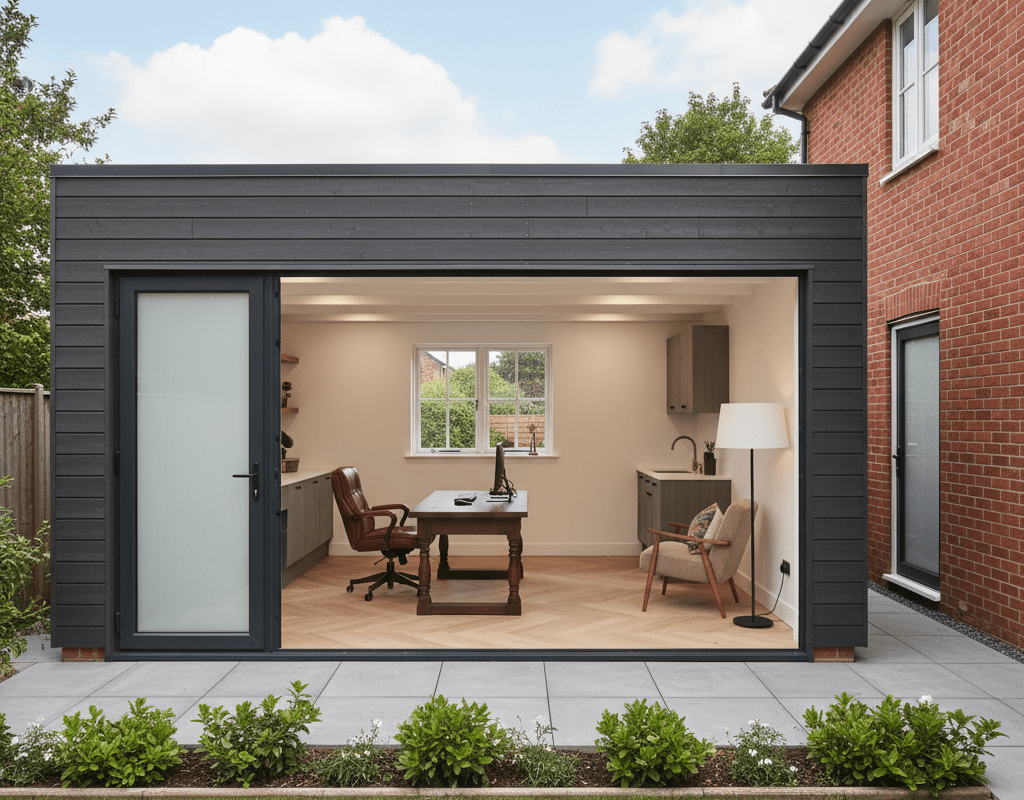
Whether you are adding a kitchen diner or a garden office, the principles of sustainability must be at the centre. This ensures your home remains comfortable, legal, and valuable for years to come.