


The Definitive Guide to a Future Homes Standard House Extension in 2026
Navigating the UK construction landscape in 2026 requires a deep understanding of the Future Homes Standard. This regulation has fundamentally changed how we approach every new house extension across the country.
Property owners must now prioritise thermal efficiency and carbon reduction above traditional aesthetics. Achieving a Future Homes Standard house extension ensures your property remains compliant, valuable, and exceptionally comfortable.
Understanding the 2026 Regulatory Landscape
The Future Homes Standard represents the most significant shift in UK building regulations for decades. It mandates that all new additions achieve a 75-80% reduction in carbon emissions compared to previous standards.
Central to this shift is Part L 2025 compliance, which dictates strict U-values for walls, floors, and roofs. Every loft conversion or ground-floor extension must now act as a high-performance thermal envelope.
The Core Pillars of Compliance
* Elimination of fossil fuel heating systems in all new structural additions.
* Advanced airtightness testing to prevent heat loss through junctions.
* Enhanced mechanical ventilation with heat recovery (MVHR) systems.
* Standardised use of high-performance sustainable insulation materials.
The Rise of the Modular Extension in the UK
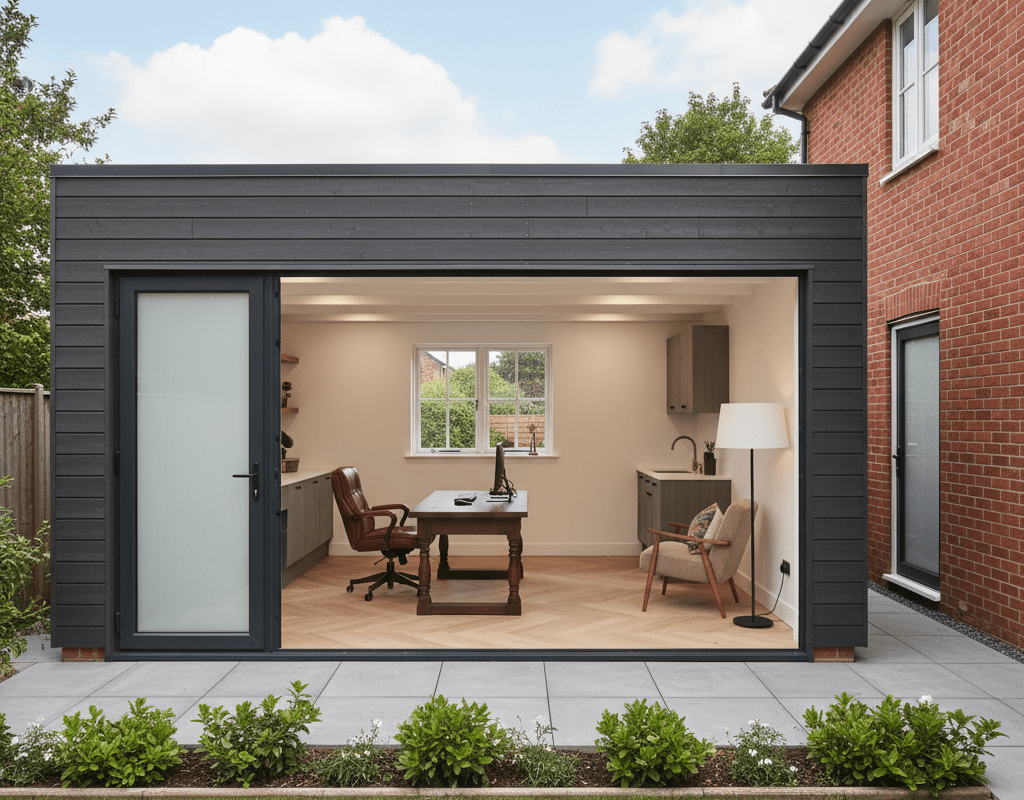
As site-based labor costs rise, the modular extension UK market has seen exponential growth in 2026. These prefabricated units are built in controlled factory environments to exacting Future Homes Standard specifications.
Choosing a modular approach allows for precision-engineered airtightness that is often difficult to achieve with traditional brickwork. It also significantly reduces the on-site construction timeline for your home renovation.
Benefits of Modern Prefabrication
- Guaranteed Performance: Factory-tested U-values ensure your extension meets Part L 2025 compliance without fail.
- Reduced Waste: Precision cutting and material recycling in factories align with Net Zero 2050 goals.
- Speed of Delivery: Most modular pods are installed and watertight within 48 hours of arriving on-site.
Low Carbon Heating Systems for 2026 Extensions
Gas boilers are no longer a viable option for a Future Homes Standard house extension. Instead, homeowners are opting for air-source heat pumps (ASHPs) or infrared heating panels integrated into the ceiling.
These low carbon heating systems work most efficiently when paired with underfloor heating. This setup allows for lower flow temperatures while maintaining a consistent, comfortable heat profile throughout the new space.
Evaluating Your Heating Options
* Air Source Heat Pumps: The gold standard for energy efficiency in 2026, offering high seasonal performance factors.
* Infrared Radiant Panels: A discreet, space-saving solution perfect for smaller modular extensions.
* Solar PV Integration: Many extensions now feature integrated solar tiles to offset the electrical load of heat pumps.
Triple Glazing Costs and Thermal Performance in 2026
Windows are no longer just for views; they are critical thermal components. In 2026, triple glazing has become the default specification for any high-quality house extension project.
While triple glazing costs 2026 have stabilised due to high demand, they still represent a significant portion of the budget. Expect to pay approximately £650 to £900 per square metre for premium aluminium-clad timber frames.
Why Triple Glazing is Non-Negotiable
- Acoustic Insulation: Beyond heat retention, triple glazing offers superior soundproofing against urban noise.
- Surface Temperature: The internal pane remains warm to the touch, eliminating the ‘cold draught’ effect near large glass walls.
- Future-Proofing: Installing double glazing now would likely lead to a lower EPC rating and reduced resale value.
Essential Materials for Sustainable Extensions
Material selection in 2026 focuses on embodied carbon and longevity. We are seeing a move away from traditional cement-heavy blocks toward timber frames and lime-based renders.
Natural wood fibre insulation is also gaining popularity for its hygroscopic properties. This allows your extension to ‘breathe,’ preventing the interstitial condensation issues common in older builds.
Top Materials for 2026 Projects
* Cross-Laminated Timber (CLT): Provides immense structural strength with a negative carbon footprint.
* Recycled Aluminium: Ideal for sleek, slimline bifold doors that meet modern aesthetic demands.
* Low-Carbon Concrete: Utilises fly ash or slag to reduce the environmental impact of foundations.
Cost Management for High-Spec Extensions
Building to the Future Homes Standard requires a higher initial investment than traditional methods. However, the long-term savings on energy bills and maintenance often result in a lower total cost of ownership.
Budgeting in 2026 must account for the increased cost of skilled labour and high-performance components. Accurate cost planning is essential to ensure your project remains viable from inception to completion.
Budgeting Checklist for 2026
- Design Fees: Factor in specialized thermal bridging modelling and SAP 10.3 assessments.
- Technology Buffer: Reserve 5-10% of the budget for smart home integration and energy monitoring.
- Compliance Testing: Ensure funds are allocated for airtightness testing and final EPC certification.
Achieving Part L 2025 Compliance: A Step-by-Step Guide
To ensure your project meets the rigorous standards, you must engage with a consultant early in the design phase. Part L 2025 compliance is not just about insulation thickness; it involves a holistic look at the building’s fabric.
Start by optimising the orientation of your extension to maximise passive solar gain in winter. Conversely, integrate external shading or solar control glass to prevent overheating during increasingly warm UK summers.
Compliance Milestones
* Initial SAP Assessment: Performed during the design stage to predict carbon emissions and energy use.
* On-Site Inspections: Frequent checks by Building Control to verify the correct installation of thermal breaks.
* Final Certification: The handover of the Building Regulations Completion Certificate and updated Home Energy Rating.
The Future of UK Housing Extensions
As we look beyond 2026, the trend toward ‘active’ extensions will continue to grow. These are structures that not only use less energy but actually contribute energy back to the main house or the grid.
By investing in a Future Homes Standard house extension today, you are creating a resilient asset. You are also playing a vital role in the UK’s transition toward a sustainable, Net Zero built environment.
Summary of Key 2026 Trends
* Integration of home battery storage with extension-mounted solar arrays.
* Widespread use of bio-based materials like hempcrete and cork for insulation.
* The move toward ‘Circular Economy’ principles where materials are designed for eventual reuse.
Investing in quality now ensures your home remains at the forefront of the UK property market for decades to come.