Eco-friendly Loft Conversions London: The 2026 Sustainable Masterclass
Creating a high-performance living space requires more than just extra square footage in the modern property market. As we navigate 2026, the demand for an Eco-friendly Loft Conversions London project has reached an all-time high.
Homeowners are now prioritising carbon reduction alongside capital appreciation. Our expert team at In-Hire understands that a sustainable loft is the cornerstone of a future-proofed London home.
The Evolution of Sustainable Attic Spaces in 2026
The UK construction landscape has shifted significantly with the full implementation of the Future Homes Standard. Modern loft conversions now serve as thermal regulators for the entire property.
Energy efficiency is no longer an optional upgrade but a core structural requirement. We use advanced materials to ensure your new master suite or home office meets the highest environmental benchmarks.
Navigating Building Regulations Part O and Overheating
Recent updates to Building Regulations Part O have changed how we design London lofts. These rules specifically address the risk of overheating in well-insulated, modern residential buildings.
London’s urban heat island effect makes this regulation particularly critical for attic spaces. We utilise sophisticated thermal modelling to ensure your design provides comfort without relying on energy-intensive air conditioning.
* Cross-ventilation strategies: Essential for purging heat during summer months.
* Solar gain mitigation: Using specialised glass coatings to block infrared radiation.
* External shading solutions: Integrating automated blinds or louvres into the roofline.
Advanced Loft Conversion Insulation Technology
Traditional mineral wool has been superseded by high-performance bio-based materials. We now favour hemp-based or wood-fibre loft conversion insulation for its superior thermal mass and breathability.
These materials do not just keep the heat in during winter. They also provide excellent acoustic damping, which is vital in busy London boroughs like Hackney or Fulham.
- Phase Change Materials (PCMs): Absorbing excess heat during the day and releasing it at night.
- Vacuum Insulation Panels: Providing maximum U-values with minimum thickness to preserve ceiling height.
- Airtightness Membranes: Preventing heat loss through convection while allowing moisture to escape.
The Role of Triple Glazed Roof Lights
In 2026, double glazing is often insufficient for meeting the strict U-value requirements of a premium extension. High-spec triple glazed roof lights are now the industry standard for sustainable London developments.
These units offer thermal performance that rivals the surrounding roof structure itself. They eliminate cold spots and significantly reduce the external noise from London traffic or flight paths.
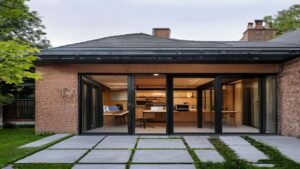
Selecting the right frame is equally important for sustainability. We recommend aluminium bifold doors and window frames with thermal breaks for maximum longevity and recyclability.
Smart Home Heating Controls and Integration
A truly eco-friendly loft must be intelligent enough to manage its own energy consumption. Modern smart home heating controls allow for precise zone management across your entire property.
These systems learn your habits and adjust the temperature based on occupancy and weather forecasts. This prevents the common issue of overheating a loft that is only used during specific hours of the day.
* AI-driven thermostats: Optimising boiler or heat pump cycles for maximum efficiency.
* Integrated sensors: Detecting open windows and automatically pausing the heating system.
* App-based monitoring: Tracking your carbon footprint and energy spend in real-time.
Sustainable Materials for the 2026 London Market
Material procurement in 2026 focuses on low-embodied carbon and local sourcing. We prioritise sustainable timber frames and recycled steel beams where structural requirements allow.
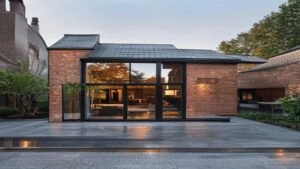
Using reclaimed London stock bricks for external walls ensures the project blends seamlessly with heritage streets. This approach reduces the environmental impact of manufacturing new materials while preserving local character.
Interior finishes have also seen a green revolution in recent years. We specify VOC-free paints and flooring made from renewable cork or bamboo for a healthy indoor environment.
Why Professional Expertise Matters for Net Zero Lofts
Achieving a genuine Net Zero loft requires a holistic approach to design and construction. It is not simply about adding solar panels; it is about the fundamental integrity of the building envelope.
Our specialists at In-Hire provide the technical oversight needed for complex house extensions and lofts. We ensure every detail, from the vapour barrier to the smart hub, works in perfect harmony.
Checklist for Your Eco-friendly Loft Conversion
Before starting your project, ensure you have considered these critical sustainable factors. Planning early is the best way to avoid costly retrofits or compliance issues later.
* Thermal Bridge Analysis: Ensuring no heat escapes through structural junctions.
* Solar Orientation: Positioning windows to maximise natural light without over-exposure.
* Rainwater Harvesting: Integrating systems to use greywater for toilet flushing.
* Biodiversity: Considering a green ‘sedum’ roof to support local London pollinators.
The Future of Living in the Capital
London’s skyline is changing as more homeowners embrace sustainable living. Your loft conversion is an opportunity to lead this charge while creating a stunning, high-value asset.
By investing in quality insulation and smart technology today, you insulate yourself against rising energy costs. A sustainable loft is a gift to your future self and the environment.
Let us help you navigate the complexities of the 2026 building landscape. With the right strategy, your home can become a beacon of efficiency in the heart of the city.