


Biodiversity Net Gain Driveways: Navigating 2026 Regulations
Biodiversity Net Gain Driveways are no longer a luxury for UK homeowners; they are a fundamental component of the 2026 planning landscape. Under the matured Environment Act requirements, even residential external works must now prioritise nature recovery and ecological integrity.
Traditional tarmac and non-porous concrete are rapidly being phased out in favour of habitats that breathe. Choosing the right surfacing solution ensures your property value remains protected while meeting the latest Future Homes Standard expectations.
Understanding BNG Residential Requirements
In 2026, the BNG residential requirements dictate that most significant property enhancements must demonstrate a 10% uplift in local biodiversity. This applies to large-scale landscaping and new driveway installations where existing green space is being altered or removed.
Local authorities across London and the South East now scrutinise external hardstanding applications with unprecedented detail. A biodiversity-first approach ensures your project avoids costly planning delays and environmental levies.
The Role of SuDS Compliant Driveways
Sustainable Drainage Systems (SuDS) are the backbone of any legal driveway installation in the current UK market. SuDS compliant driveways prevent surface water runoff from entering the overloaded public sewer system, significantly reducing local flood risks.
By integrating porous sub-bases with high-quality finishes, homeowners can create a functional space that actively manages rainwater. These systems are essential for obtaining a Certificate of Lawful Development for your front garden renovations.
Permeable Paving Solutions for the Modern Era
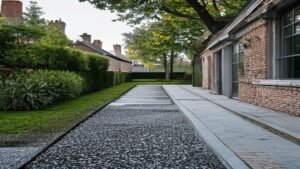
Modern permeable paving solutions offer a sophisticated aesthetic that rivals traditional stone while allowing water to infiltrate the ground naturally. Options range from reinforced gravel grids to interlocking porous blocks that support heavy vehicular traffic.
In 2026, we are seeing a surge in ‘living’ paving systems that incorporate micro-habitats for pollinators within the joints. These systems are a primary method for achieving your Biodiversity Net Gain Driveways targets without sacrificing structural durability.
Benefits of Advanced Permeable Materials
Integrating Eco-Friendly Patio Materials
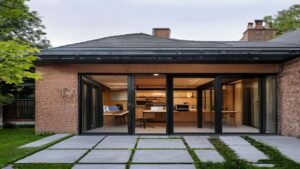
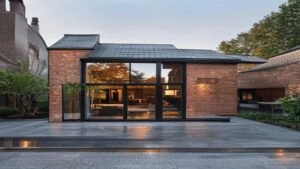
Your driveway should not exist in isolation; it must complement your wider landscaping and house extensions through cohesive design. Using eco-friendly patio materials like reclaimed York stone or UK-sourced timber sleepers creates a seamless, sustainable transition.
In 2026, the industry has moved towards low-carbon ‘green’ concrete and recycled porcelain for high-end finishes. These materials provide the durability required for British weather while significantly lowering the embodied carbon of your home project.
Top Materials for 2026 Sustainability
Planning Your Biodiversity Net Gain Driveway Project
Before breaking ground, it is vital to consult with professionals who understand both structural engineering and ecological impact. Integrating these elements early in your loft conversions or renovation plans ensures a holistic approach to site management.
Start by conducting a baseline biodiversity audit of your current front garden or driveway space. This data will form the foundation of your BNG calculation and help determine the most effective planting strategies for your boundaries.
2026 Checklist for Homeowners
Cost Considerations and Long-Term Value
While the initial investment in Biodiversity Net Gain Driveways may be 15-20% higher than traditional methods, the long-term value is undeniable. Properties with certified sustainable credentials and flood-resilient infrastructure command a premium in the 2026 UK property market.
Reduced maintenance costs and the elimination of flood-related damage further offset the upfront expenditure. Additionally, many insurance providers now offer lower premiums for homes equipped with SuDS-compliant drainage systems.
Estimated 2026 Material Costs
Technical Implementation of SuDS
The success of SuDS compliant driveways relies on the quality of the sub-base rather than just the top layer. A typical 2026 installation involves a deep layer of ‘clean’ angular stone that provides a high void ratio for water storage.
A geo-textile membrane is often used to separate layers and prevent silt from clogging the drainage channels. This technical precision ensures your driveway remains functional for decades without the risk of sinkholes or surface puddling.
Maintenance for Biodiversity Longevity
Future-Proofing with Smart Technology
In 2026, we are integrating smart sensors into Biodiversity Net Gain Driveways to monitor soil moisture and drainage performance. This data can be linked to your smart home system to automate irrigation for surrounding greenery.
This level of integration is becoming standard for high-end property renovations across the Cotswolds and London’s leafier suburbs. It represents the pinnacle of modern, responsible homeownership in a climate-conscious era.
Conclusion: The Path Forward
Embracing Biodiversity Net Gain Driveways is a commitment to both the environment and your property’s future. By prioritising permeable paving solutions and ecological health, you create a lasting legacy of sustainability.
Whether you are updating a heritage home or a modern new build, the principles of BNG and SuDS will ensure your home remains compliant and beautiful. Take the first step today by consulting with experts who specialise in the future of British construction.