


Bespoke Joinery London Sustainability: The 2026 Luxury Standard
In 2026, the intersection of luxury craftsmanship and environmental responsibility has reached a new peak in the capital. Bespoke joinery London sustainability initiatives are no longer optional extras but the foundational requirement for high-end residential projects.
Homeowners and architects now demand transparency in timber sourcing and manufacturing processes. This shift ensures that every custom-built piece contributes to a healthier planet and a more durable home environment.
Whether you are planning complex house extensions or simple interior refurbishments, choosing sustainable joinery is critical for long-term value. Let us explore the innovations defining the London joinery market this year.
The Rise of FSC Certified Joinery UK
Forest Stewardship Council (FSC) certification remains the gold standard for ethical wood sourcing across the United Kingdom. In 2026, FSC certified joinery UK protocols have evolved to include stricter biodiversity protections and carbon footprint tracking for every plank used.
By selecting certified timber, you ensure that your home’s millwork does not contribute to global deforestation. This certification is now a mandatory requirement for many planning permissions in Greater London’s conservation areas.
* Environmental Integrity: Guaranteed replanting schemes for every tree harvested.
* Social Responsibility: Protection of indigenous rights and worker safety standards.
* Quality Control: Premium grade timber that undergoes rigorous moisture testing.
Reclaimed Timber Carpentry: Luxury with a History
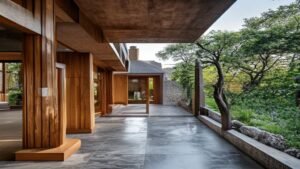
Reclaimed timber carpentry has seen a massive resurgence in 2026, particularly in West London and the Cotswolds. Designers are increasingly salvaging structural beams from Victorian warehouses to create stunning dining tables and shelving units.
This approach reduces the demand for virgin timber and gives historic wood a second life. The unique patina of aged oak or pine adds a layer of character that new wood simply cannot replicate.
* Carbon Sequestration: Keeping existing carbon locked within the wood structure.
* Unique Aesthetics: Visible nail holes, weathering, and historical marks as design features.
* Structural Stability: Older wood is often more stable as it has seasoned naturally over decades.
Bespoke Sustainable Storage Solutions
Maximising space in London properties requires intelligent design, especially with the 2026 shift toward minimalist living. Bespoke sustainable storage solutions are now being integrated directly into the structural fabric of new builds.
Using low-VOC (Volatile Organic Compound) adhesives and finishes is essential for indoor air quality. Modern London homes now utilise multi-functional cabinetry that hides smart home hubs and energy management systems.
- Floor-to-ceiling wardrobes made from compressed bamboo or recycled wood fibres.
- Under-stair units designed with modular components for easy future repair.
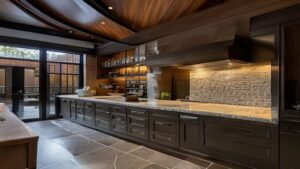
- Integrated kitchen pantries that eliminate the need for plastic storage containers.
When considering your next project, our architectural design services can help integrate these storage solutions seamlessly. Proper planning ensures that sustainability and functionality coexist without compromise.
AI Furniture Design Trends in 2026
Artificial Intelligence has revolutionised how we approach millwork and cabinetry in 2026. AI furniture design trends focus on generative algorithms that minimize material waste during the cutting phase.
By inputting room dimensions and lifestyle requirements, AI can suggest joinery layouts that use 30% less wood than traditional methods. This precision engineering is particularly useful for complex loft conversions where every millimetre counts.
* Waste Reduction: Nested cutting patterns that utilize the entire timber board.
* Structural Optimization: AI calculates the exact thickness needed for load-bearing shelves.
* Customization: Rapid prototyping of 3D models before any physical wood is cut.
2026 Building Regulations: Part L and Part O Impact
Updated Building Regulations in 2026, specifically Part L (Fuel and Power) and Part O (Overheating), have influenced joinery design. Timber is an excellent natural insulator, helping London homes maintain thermal efficiency throughout the year.
Sustainable joinery now includes solar-shading louvres and integrated thermal breaks in window frames. These features are essential for meeting the Net Zero targets set by the UK government for new residential developments.
* Thermal Mass: High-density hardwoods used to regulate internal temperatures.
* Airtightness: Precision-milled joinery that prevents heat loss through gaps.
* Natural Ventilation: Smart-joinery systems that open automatically to vent heat.
Cost Expectations for Sustainable Joinery in London
Investing in sustainability often carries an initial premium, but the long-term ROI is significant in the 2026 London market. Properties featuring high-spec, eco-friendly joinery typically command 10-15% higher resale values.
Expect to pay between £1,200 and £3,500 per linear metre for premium bespoke cabinetry. These costs reflect the higher price of certified timber and the skilled labour required for precision hand-finishing.
* Mid-Range: FSC-certified softwood or high-grade birch plywood with natural oils.
* High-End: Reclaimed tropical hardwoods or carbon-neutral modified timbers like Accoya.
* Luxury: AI-optimized, hand-finished walnut or oak with integrated smart tech.
Future-Proofing Your London Home
To future-proof your investment, choose joinery that is designed for disassembly. This 2026 trend allows homeowners to relocate or recycle their built-in furniture if the house layout changes.
Modular joinery systems use mechanical fixings rather than permanent glues. This ensures that individual components can be replaced or upgraded without destroying the entire unit.
* End-of-Life Planning: Ensuring wood can be recycled or composted safely.
* Durability: Using timber species that are naturally resistant to pests and rot.
* Adaptability: Shelving systems that can be reconfigured as your family grows.
Conclusion: The Ethics of Craftsmanship
Bespoke joinery London sustainability is about more than just aesthetics; it is a commitment to the future. By choosing reclaimed timber and FSC-certified sources, you are investing in a legacy of quality and environmental stewardship.
As we move further into 2026, the technology behind carpentry will continue to evolve. However, the core values of British craftsmanship—precision, beauty, and durability—remain the heartbeat of the London home.