

AI Smart Home Renovation Trends 2026: Future-Proofing Your UK Property
Staying ahead of AI smart home renovation trends 2026 is now essential for homeowners seeking to increase property value and functional efficiency. In the current UK market, integrating artificial intelligence into your building fabric is no longer a luxury but a standard for high-end developments.
Whether you are planning bespoke house extensions or modernising a Victorian terrace, the focus has shifted toward intelligent, self-learning environments. These systems prioritising comfort while radically reducing carbon footprints through automated decision-making.
The Rise of AI Energy Management in 2026
Energy efficiency is the cornerstone of modern construction, especially with the 2026 updates to Part L of the Building Regulations. AI energy management systems now act as a central nervous system for your home, predicting usage patterns and adjusting heat pumps or solar storage in real-time.
These systems integrate directly with the National Grid to draw power when prices are lowest. This level of automation ensures your home remains Net Zero compliant without requiring manual intervention from the homeowner.
* Dynamic Load Balancing: Distributes power to appliances based on priority and current energy costs.
* Predictive Heating: Learns your schedule to heat specific zones only when they are occupied.
* Battery Optimisation: Manages Tesla Powerwalls or similar storage to maximize solar self-consumption.
Transforming Ambience with Smart Lighting Systems
One of the most visible AI smart home renovation trends 2026 involves the installation of sophisticated smart lighting systems. These are no longer just about remote-controlled bulbs; they are fully integrated into the architectural design of your renovation.
Modern loft conversions often feature circadian lighting that mimics natural daylight cycles. This promotes better sleep patterns and mental wellbeing by adjusting colour temperatures throughout the day automatically.
Essential Home Automation UK Infrastructure
To achieve true home automation UK standards, your renovation must include a robust data backbone. We are seeing a move away from purely wireless solutions toward ‘hard-wired for wireless’ infrastructures during the first-fix stage.
This involves installing Cat6a or Cat7 cabling throughout the property to support high-bandwidth AI processing. Without this physical infrastructure, your smart home may struggle with latency as more devices are added over time.
* Centralised Hubs: Housing all processors and routers in a cooled, dedicated AV rack.
* Invisible Speakers: High-fidelity audio integrated behind plasterwork for a seamless finish.
* Smart Glazing: Windows that tint automatically based on sunlight intensity to prevent overheating (Part O compliance).
Future-Proof Renovations and Property Value
Investing in future-proof renovations is the most effective way to secure your property’s market position in the late 2020s. Buyers in London and the Cotswolds are increasingly asking for ‘Smart Readiness’ scores alongside traditional EPC ratings.
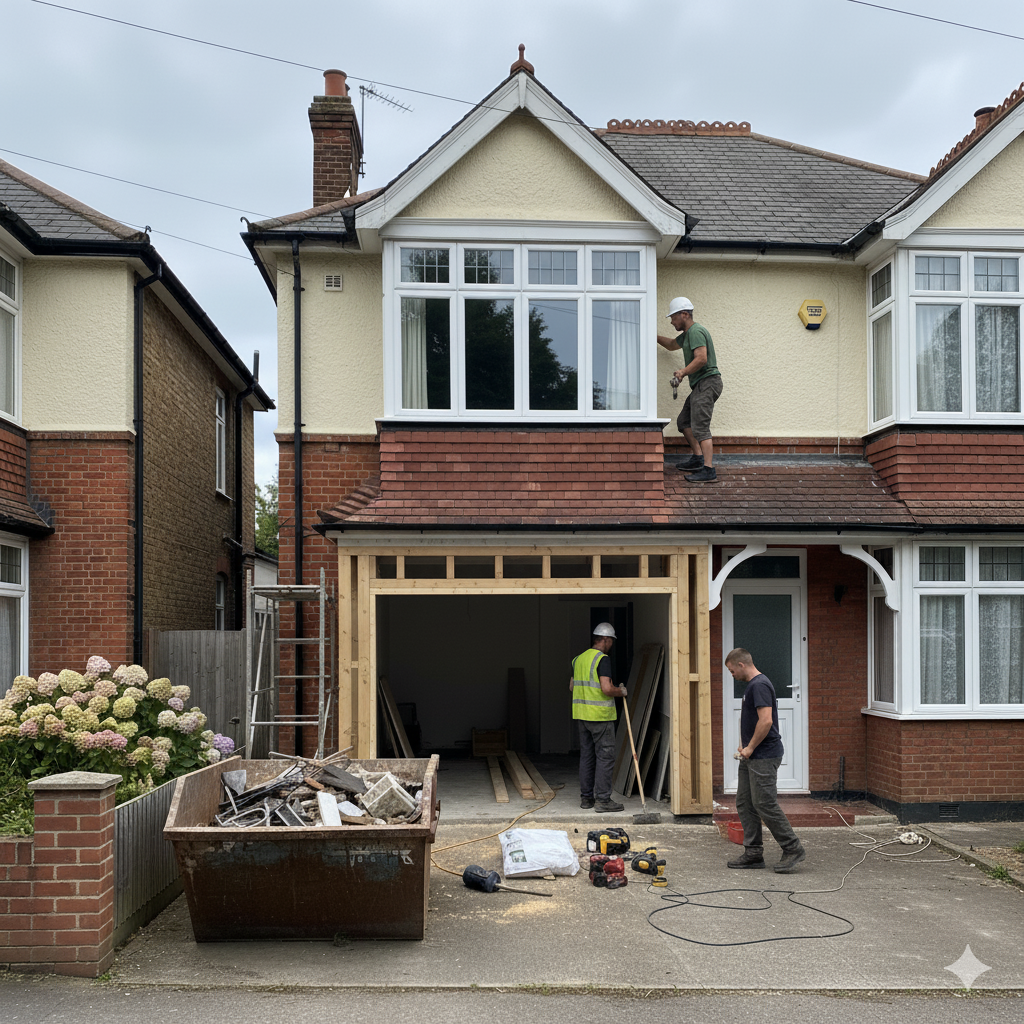
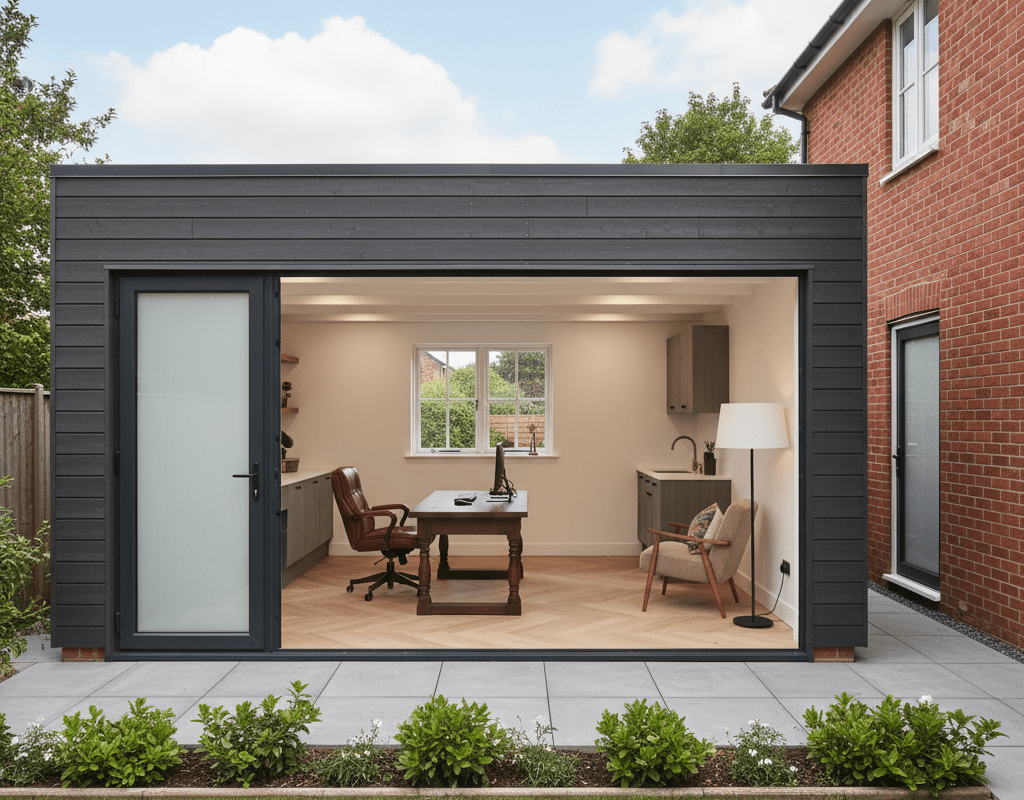
When undertaking garage conversions, consider how these spaces can serve as technical hubs for the rest of the house. Planning for future technology today prevents costly retrofitting projects in only a few years’ time.
AI-Driven Security and Maintenance
Security has evolved into a proactive service rather than a reactive alarm system in 2026. AI cameras can now distinguish between family members, delivery drivers, and genuine intruders with near-perfect accuracy.
Furthermore, predictive maintenance sensors can alert you to a pipe leak or a boiler fault before it becomes a disaster. This preventative approach saves UK homeowners thousands of pounds in emergency repair costs annually.
* Facial Recognition Entry: Secure, keyless access for trusted individuals.
* Leak Detection: Automatic shut-off valves that trigger the moment moisture is detected where it shouldn’t be.
* Structural Health Monitoring: Sensors within the foundations or extensions that track shift or damp levels.
Prefabricated AI Integration
Modular construction is playing a massive role in AI smart home renovation trends 2026. Many extensions are now prefabricated off-site with smart lighting systems and climate sensors already embedded in the walls.
This ‘Plug and Play’ approach reduces on-site construction time by up to 50%. It also ensures that the high-tech components are installed in a factory-controlled environment for maximum reliability.
Conclusion: Building the Intelligent Home
The construction landscape in 2026 is defined by the marriage of traditional craftsmanship and cutting-edge artificial intelligence. By prioritising AI energy management and robust infrastructure, you create a home that is both sustainable and exceptionally comfortable.
As you plan your next project, ensure your contractor understands the nuances of these digital integrations. A future-proof home is not just a place to live; it is an intelligent asset that grows with you.