

Acoustic Suspended Ceilings for Renovations: The 2026 UK Standard
Choosing the right acoustic suspended ceilings for renovations is now a critical requirement for meeting the 2026 Future Homes Standard. Modern homeowners prioritising acoustic comfort and thermal efficiency are moving away from traditional plasterboard in favour of high-performance grid systems.
At In-Hire, we have seen a massive surge in the adoption of these systems across London and the South East. Whether you are tackling a complex heritage refurbishment or a modern flat upgrade, understanding sound dynamics is essential.
Why Acoustic Performance Matters in 2026
Noise pollution is a significant factor in modern UK property valuations. With more professionals working from home, sound insulation has become a non-negotiable feature for any high-end house extension.
Acoustic suspended ceilings for renovations allow you to hide unsightly pipework while significantly reducing impact and airborne noise. These systems use specialised mineral wool or glass-fibre tiles to absorb sound energy before it reflects off hard surfaces.
Sound Absorbing Grid Systems: The Technical Edge
Modern sound absorbing grid systems are no longer restricted to bland office environments. The 2026 market offers textured, timber-effect, and monolithic finishes that blend seamlessly with high-end residential interiors.
These systems utilize a lightweight aluminium framework suspended from the structural joists using dampening clips. This decoupling effect is vital for breaking the vibration path between floors in a multi-storey renovation.
Key Benefits of Grid Systems
* Rapid Installation: Significantly faster to install than traditional timber battening and wet plastering.
* Easy Access: Allows for instant maintenance of hidden electrical and plumbing services without damaging the finish.
* Thermal Retention: Helps properties meet the updated Part L building regulations by reducing the heated volume of a room.
* Recyclability: Most 2026 grid components are fully circular, supporting your project’s Net Zero targets.
Optimising Basement Conversion Ceilings
Basement conversions present unique challenges regarding ceiling height and moisture resistance. Specifying specialised basement conversion ceilings is the most effective way to manage these constraints while ensuring fire safety.
In a basement conversion, the ceiling must act as a barrier against moisture and sound from the ground floor. We recommend high-density acoustic tiles with a humidity resistance rating of at least 95%.
Designing for Low Headroom
* Ultra-Slim Grids: Use low-profile aluminium hangers to preserve as much ceiling height as possible.
* Reflective Finishes: Opt for high-light-reflectance tiles to maximise the effect of natural light in subterranean spaces.
* Integrated Ventilation: Modern tiles can incorporate discreet air-purification vents to maintain air quality in enclosed areas.
Commercial to Residential Conversion: Acoustic Requirements
The trend of commercial to residential conversion continues to dominate the UK urban landscape in 2026. Converting former office spaces into luxury apartments requires strict adherence to updated Part E building regulations.
Industrial buildings often have high concrete soffits which create significant echo and reverberation. Installing acoustic suspended ceilings for renovations in these spaces is the only way to achieve a ‘homely’ acoustic profile.
LED Integrated Ceilings and Smart Tech
Lighting is no longer an afterthought in UK renovation projects. LED integrated ceilings are now the standard, offering smart-home compatibility and energy-efficient illumination.
These systems allow for flush-mounted light panels that mimic natural daylight, which is essential for wellbeing. You can control the colour temperature via mobile apps to align with your natural circadian rhythm.
Smart Home Integration Features
Meeting the 2026 Future Homes Standard
The UK government’s Future Homes Standard has redefined how we approach material selection. Every component of your ceiling must now contribute to a lower carbon footprint and higher thermal performance.
When planning your loft conversion, ensure your acoustic system uses bio-soluble mineral wool. This ensures that the materials are safe for installers and the environment alike.
Cost Considerations for 2026 Renovations
Material costs have stabilised in 2026, but labour for specialist acoustic installations remains a premium. You should budget between £45 and £85 per square metre for a high-specification residential system.
While the initial outlay is higher than standard plastering, the long-term value is undeniable. The reduction in heating bills and the increase in property desirability often provide a 200% return on investment.
Factors Influencing Your Budget
* Tile Material: Genuine timber veneers or bespoke metal finishes will increase costs compared to mineral fibre.
* Grid Complexity: Circular or tiered ceiling designs require more labour and specialised perimeter trims.
* Integrated Tech: The cost of pre-wired LED panels and integrated acoustic baffles should be factored into the early design phase.
Installation Best Practices for Trade Professionals
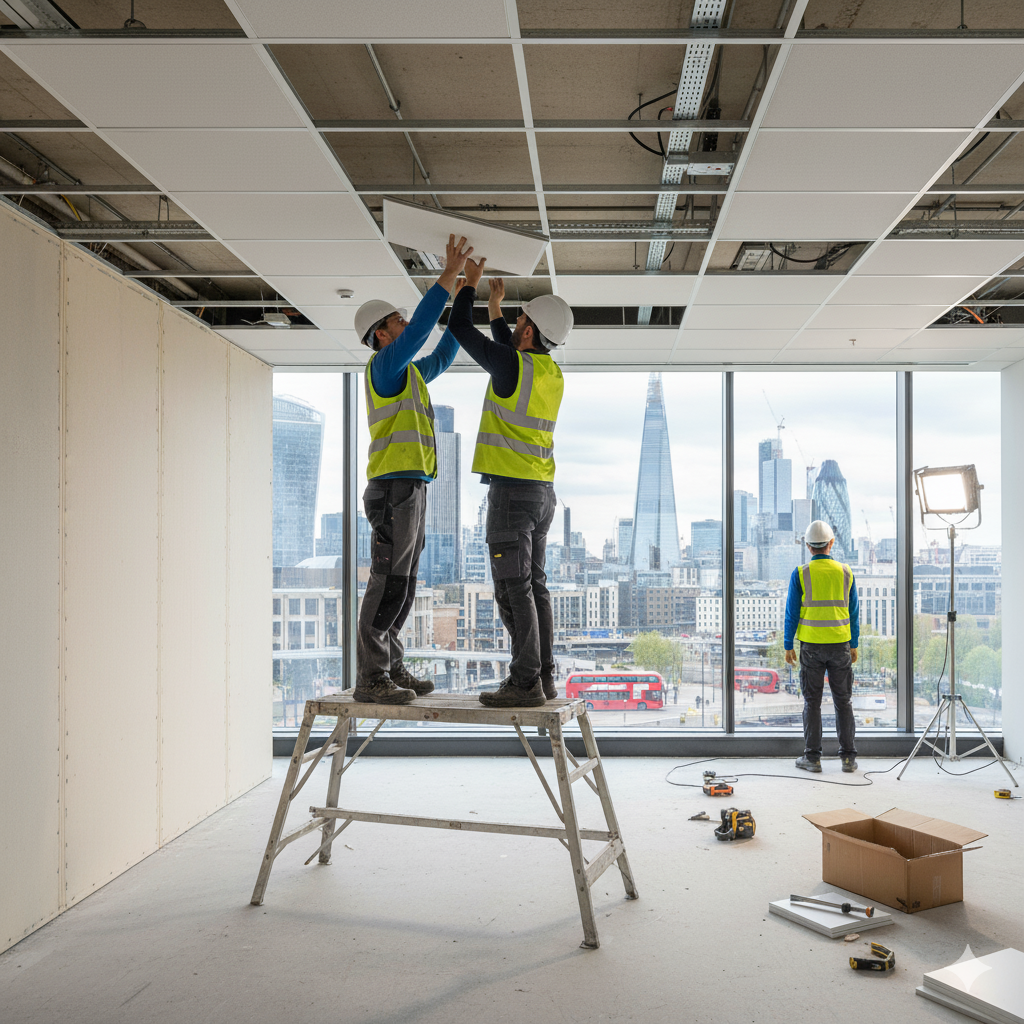
Achieving a professional finish requires precision and the right tools. Always ensure the perimeter ‘L’ trim is perfectly level using a 360-degree rotary laser level.
Main runners should be spaced at 1200mm centres, with cross tees at 600mm to provide a stable platform for the acoustic tiles. Always use high-quality galvanised wire to prevent any sagging over the lifespan of the renovation.
Conclusion: The Future of UK Interiors
Acoustic suspended ceilings for renovations are the ultimate solution for the modern UK home. They provide the perfect balance between aesthetic elegance, acoustic performance, and practical accessibility.
By choosing the right sound absorbing grid systems and LED integrated ceilings, you are future-proofing your property. Whether it is a commercial to residential conversion or a luxury basement project, quality always pays for itself.