

Acoustic Suspended Ceilings 2026: The Future of UK Commercial Design
Navigating the landscape of Acoustic Suspended Ceilings 2026 requires a deep understanding of the UK’s evolving Building Regulations. As we move further into the Future Homes Standard era, commercial and residential acoustic performance has never been more critical.
Modern workspaces now demand a blend of silence and sustainability to meet the rigorous Net Zero targets of 2026. High-performance ceiling solutions are no longer an afterthought; they are the backbone of environmental compliance and employee well-being.
Why Acoustic Performance Matters in 2026
The UK construction sector has pivoted significantly toward noise reduction as a primary health and safety metric. Effective acoustic management reduces stress and increases productivity by up to 20% in professional environments.
Choosing the right office ceiling tiles UK wide ensures your property meets Part E of the Building Regulations efficiently. Whether you are upgrading a Manchester tech hub or a London boutique office, sound absorption is the priority.
The Rise of LED Integrated Grid Systems
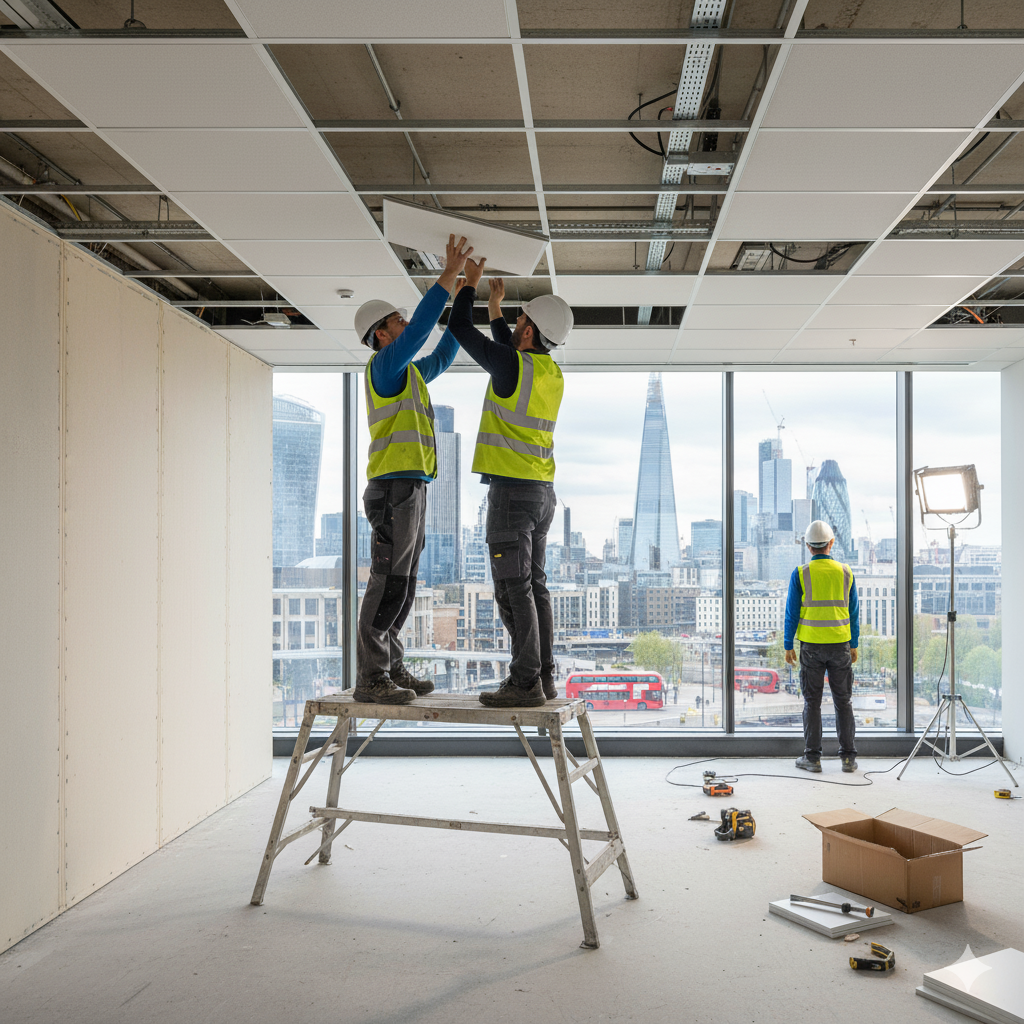
In 2026, we have seen a massive shift toward LED integrated grid systems that merge lighting and structure. These systems eliminate the need for bulky external fixtures, providing a sleek and minimalist aesthetic for modern interiors.
By embedding smart lighting directly into the aluminium framework, contractors can reduce installation times significantly. This integration is essential for projects aiming for BREEAM ‘Outstanding’ ratings and high energy efficiency.
Acoustic Ceiling Rafts: Design Flexibility
Acoustic ceiling rafts have become the go-to solution for open-plan spaces where a full suspended grid is not feasible. These floating panels offer targeted sound absorption exactly where it is needed most, such as over meeting pods.
They allow for the preservation of architectural features, like exposed house extensions beam work or industrial concrete ceilings. Rafts are particularly popular in the Cotswolds and London’s repurposed heritage buildings.
Benefits of Floating Acoustic Panels
* Improved speech clarity in high-ceiling environments.
* Versatile installation options that bypass HVAC ducting.
* Enhanced aesthetic appeal with customisable colours and shapes.
* Easier access to primary structural elements for maintenance.
Understanding MF Ceiling Installation Cost in 2026
The current MF ceiling installation cost in the UK typically ranges from £35 to £65 per square metre. This variation depends heavily on the complexity of the design and the specific acoustic performance required.
Labour rates in London and the South East remain at a premium due to high demand for specialist installers. Using high-quality metal furring (MF) systems ensures a seamless, monolithic finish that mimics traditional plasterboard.
Sustainability and the 2026 Material Shift
Sustainability is the driving force behind material selection in 2026, with a focus on circular economy principles. Most office ceiling tiles UK suppliers now provide products with at least 80% recycled content.
Timber-based acoustic systems are also gaining traction as carbon-negative alternatives to traditional mineral fibre. These materials help developers meet the stringent embodied carbon limits set by local councils in Birmingham and Manchester.
Installation Checklists for 2026 Projects
Successful installation requires meticulous planning and adherence to the latest safety protocols. Ensure your contractor provides a detailed project timeline and a clear breakdown of material lead times.
When planning your loft conversions or office fit-outs, consider the weight-bearing capacity of the existing structure. Always verify that your chosen grid system is compatible with modern smart sensors and IoT devices.
Key Steps for a Professional Finish
Future-Proofing with Smart Integration
Smart home and office integration is now standard, with ceilings acting as the primary hub for sensors. Your acoustic grid must accommodate air quality monitors, occupancy sensors, and high-speed Wi-Fi 7 access points.
For those looking at large-scale commercial refurbishments, these smart features provide invaluable data on space utilisation. This data allows for further energy savings by optimising heating and cooling based on real-time occupancy.
Maintenance and Long-Term Durability
To maintain acoustic integrity, tiles should be inspected annually for sagging or moisture damage. Dust accumulation can also impact the sound-absorptive properties of porous mineral fibre tiles over time.
Using anti-microbial coatings is standard in 2026, especially for healthcare and educational facilities across the UK. These coatings prevent the growth of mould and bacteria, ensuring a healthier indoor air environment for all occupants.
Conclusion: Selecting the Right Solution
Acoustic Suspended Ceilings 2026 represent the pinnacle of British engineering and interior design. By prioritising both sound quality and environmental impact, you ensure a high-value asset for years to come.
Whether you require the seamless look of an MF ceiling or the modular utility of an LED grid, the right choice depends on your specific sector needs. Consult with a qualified professional to ensure full compliance with the 2026 Future Homes Standard.