



Acoustic Dry Lining UK: The Ultimate 2026 Guide to Sound Insulation
Achieving superior sound insulation has become a primary requirement for modern British homeowners in 2026. As remote working and multi-generational living remain the norm, Acoustic Dry Lining UK standards have evolved significantly.
Today’s homeowners demand environments that offer both thermal efficiency and complete acoustic privacy. This guide explores the latest advancements in soundproofing technology and regulatory compliance.
Why Acoustic Dry Lining Matters in 2026
The UK’s shift towards the Future Homes Standard has redefined how we approach internal partitions. Acoustic dry lining is no longer just about luxury; it is about well-being.
Modern systems mitigate the ‘drum effect’ often found in cheaper, lightweight builds. By using high-density materials, we can now create near-silent environments even in busy London terraces.
The Role of Soundproof Plasterboard
High-performance soundproof plasterboard is the foundation of any successful acoustic project. These boards feature a much higher density core than standard 12.5mm gypsum boards.
In 2026, we frequently specify blue-faced acoustic boards that incorporate synthetic sound-dampening polymers. These materials effectively convert sound energy into heat through vibration resistance.
If you are planning a major renovation, integrating these materials into your house extensions is essential for long-term value.
Essential Partition Wall Insulation Techniques
Effective partition wall insulation involves more than just slapping on a sheet of plasterboard. A decoupled system is the industry standard for 2026.
Using resilient bars or acoustic clips creates a physical break between the wall frame and the finish. This prevents impact noise, like footsteps or vibrations, from travelling through the structure.
Internal Wall Insulation UK: Meeting 2026 Regulations
Internal wall insulation UK regulations have tightened under the latest Part L and Part O updates. These updates focus on thermal retention without compromising acoustic performance.
By using dual-purpose mineral wool, we can meet U-value targets while simultaneously providing class-leading sound absorption. This is particularly vital for urban properties near transport hubs.
When converting redundant space, professional loft conversions should always include upgraded acoustic insulation to block external noise.
Home Cinema Soundproofing Trends
Home cinema soundproofing has seen a massive surge in the UK luxury market this year. Clients are no longer satisfied with basic insulation; they want ‘Room-within-a-Room’ (RWAR) construction.
This involves a fully decoupled floor, ceiling, and wall system that contains low-frequency sub-woofer vibrations. Triple-layer acoustic dry lining with Green Glue damping compound is the current gold standard.
Advanced Materials for 2026 Cinemas
Cost Analysis for 2026 Projects
Material costs for acoustic dry lining in the UK have stabilised but remain higher than 2020 levels. Expect to pay a premium for high-density boards and specialist mineral wool.
Labour costs in the South East and London reflect the high demand for skilled dry liners. However, the investment significantly increases resale value by improving the property’s EPC and acoustic rating.
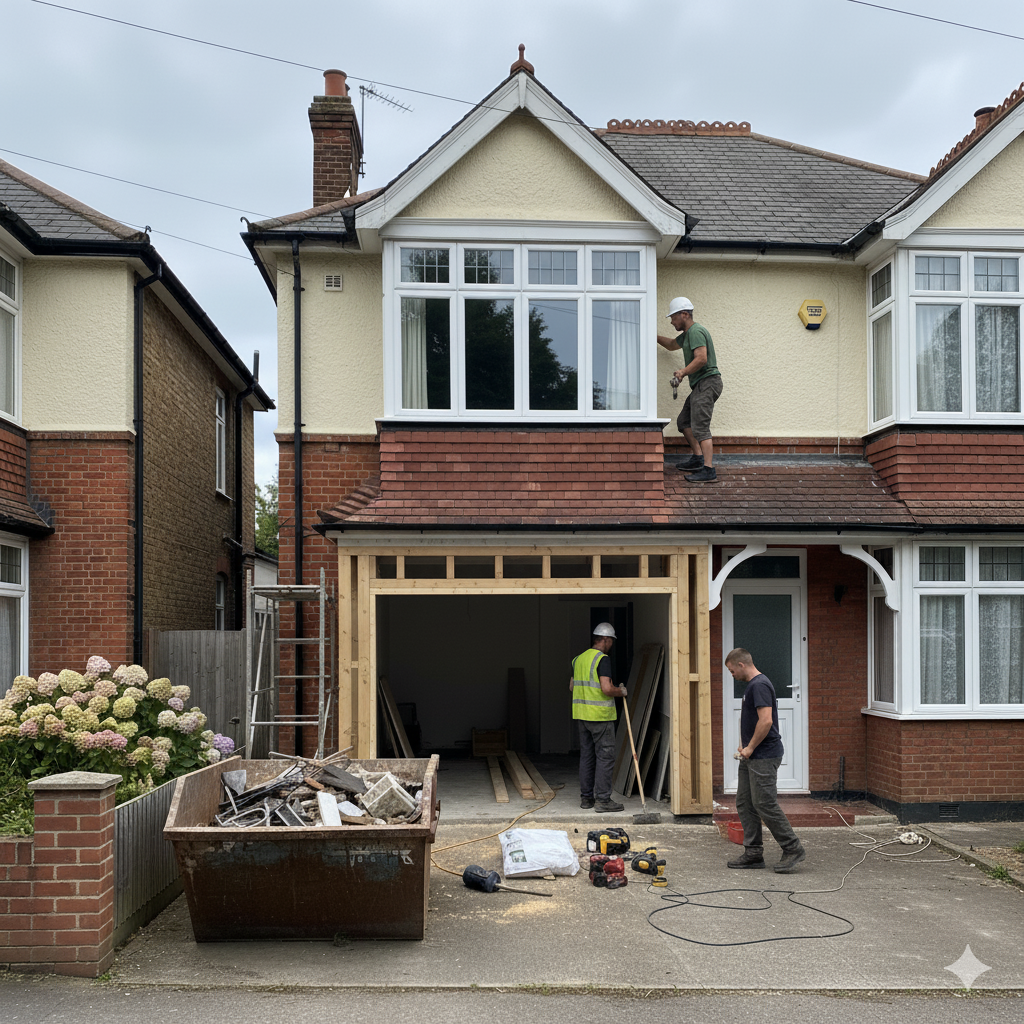
For those undertaking a garage conversion, soundproofing is the most frequent upgrade requested by UK homeowners in 2026.
Choosing the Right Substrate: Timber vs Metal
While timber is traditional, metal C-stud systems are preferred for acoustic dry lining in 2026. Metal is more flexible and does not transmit sound energy as rigidly as timber.
Furthermore, metal studs will not warp over time, ensuring that the acoustic seals remain airtight. This longevity is crucial for maintaining the soundproofing integrity of your home.
Troubleshooting Common Acoustic Leaks
Even the best soundproof plasterboard will fail if there are ‘flanking paths’. These are gaps where sound can bypass the insulated wall.
Always ensure your contractor uses an acoustic sealant (caulk) that remains flexible forever. If the sealant cracks, the soundproofing performance can drop by up to 50%.
Conclusion: Investing in Silence
Acoustic Dry Lining UK standards in 2026 represent the pinnacle of residential comfort. By combining high-density boards with intelligent decoupling, you can transform any room into a sanctuary.
Whether you are building a new extension or refurbishing a Victorian flat, prioritising acoustic insulation is a decision you will never regret. Silence, in the modern world, is the ultimate luxury.