

Acoustic Dry Lining London: The Definitive 2026 Guide to Soundproofing
Achieving silence in the heart of the capital has never been more challenging or necessary. As we move through 2026, Acoustic Dry Lining London projects have shifted focus toward high-performance sustainability and strict compliance with the Future Homes Standard.
Whether you are renovating a Victorian terrace in Chelsea or a modern apartment in Canary Wharf, sound insulation is a priority. Modern construction now demands smarter materials that offer both acoustic dampening and thermal efficiency.
At In-Hire, we specialise in delivering high-specification internal finishes for the most demanding urban environments. Our expertise ensures your house extensions meet the latest Part O and Part L building regulations.
Why Acoustic Dry Lining is Essential in 2026
London’s density means noise pollution from traffic, aircraft, and neighbours is a constant factor for property owners. High-quality acoustic dry lining provides a multi-layered shield against airborne and impact vibration.
With the 2026 updates to UK Building Regulations, developers must now prioritise acoustic comfort alongside carbon reduction. This has led to the rise of ‘blue’ high-density boards and decoupled framing systems.
Investing in professional installation protects your property value and enhances your daily wellbeing. Silence is no longer a luxury; it is a fundamental requirement for modern London living.
The Anatomy of Soundproof Stud Walls UK
Creating effective soundproof stud walls UK wide requires a deeper understanding of mass and decoupling. We no longer rely on simple timber frames and standard grey plasterboard.
Instead, we utilise resilient bars and acoustic sealants to break the path of sound vibrations. This ‘room-within-a-room’ approach is the gold standard for high-end residential refurbishments.
* Galvanised Steel Channels: Providing superior structural integrity and fire resistance over traditional timber.
* Acoustic Mineral Wool: High-density insulation placed within the cavity to absorb mid-to-high frequency sounds.
* Resilient Bars: Metal sections that decouple the plasterboard from the stud, preventing vibration transfer.
* Mass Loaded Vinyl (MLV): An optional thin membrane used for extreme soundproofing requirements.
Professional Acoustic Plasterboard Installation
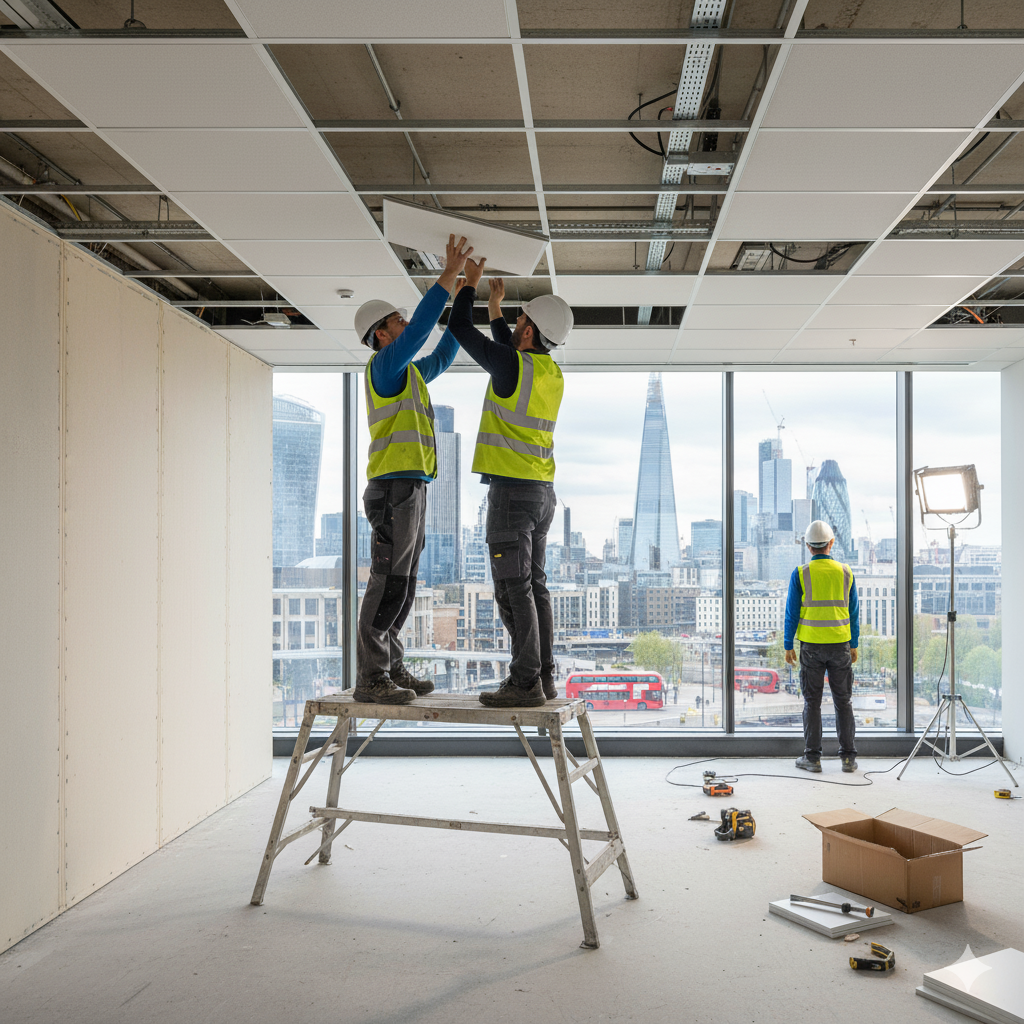
Modern acoustic plasterboard installation involves using high-density gypsum boards enriched with glass fibres. These boards are significantly heavier than standard wallboard, providing the mass needed to deflect sound waves.
In 2026, we frequently utilise ‘Twin Frame’ systems where two separate stud walls are built with a small air gap. This configuration is exceptionally effective for loft conversions where noise from external roofing is a concern.
Precision is vital during the installation process to avoid ‘flanking’ paths where sound leaks through small gaps. Our teams ensure every joint is staggered and every perimeter is sealed with acoustic-rated mastic.
Partitioning for Home Offices and Hybrid Work
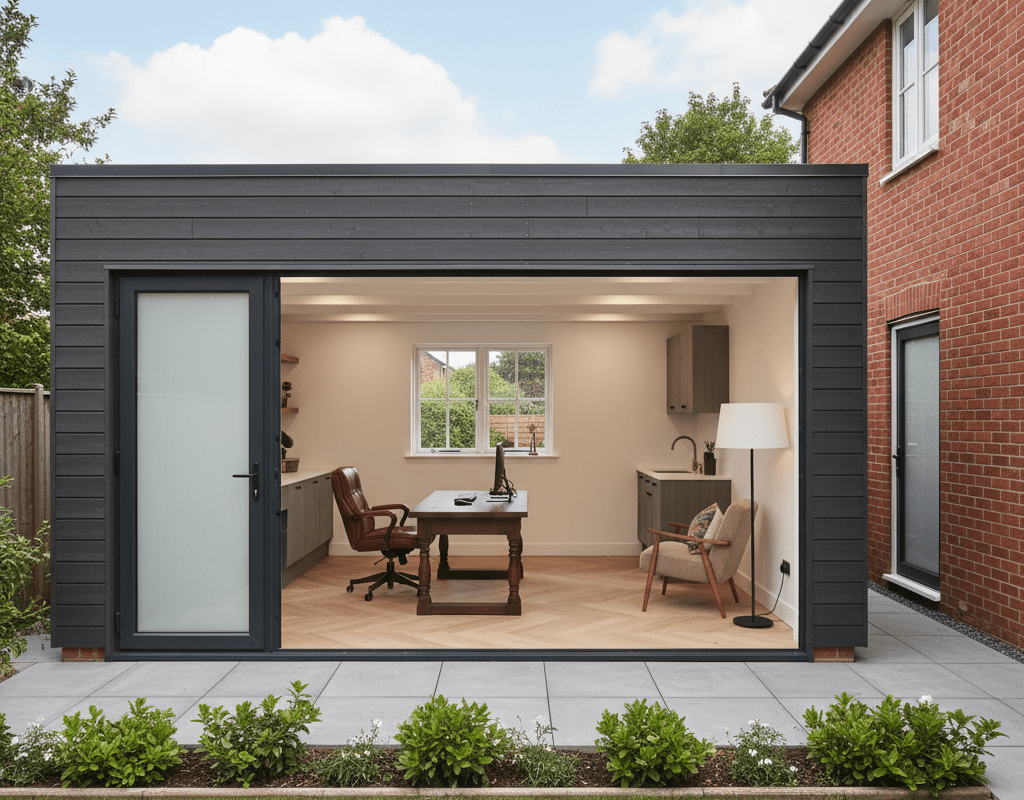
The 2026 London property market is dominated by the demand for dedicated, quiet workspaces. High-performance partitioning for home offices has become one of our most requested internal services.
Acoustic partitioning allows for a productive environment even in a busy family household. We integrate ‘quiet-zone’ technology that reduces decibel levels by up to 55dB in standard domestic settings.
Fire Rated Dry Lining London Requirements
Safety is paramount, and fire rated dry lining London regulations have become significantly more stringent this year. Most acoustic boards now serve a dual purpose, providing up to 120 minutes of fire protection.
In multi-occupancy buildings or flats, these systems are a legal necessity under the latest safety acts. We ensure all materials used are non-combustible and certified to current UK fire safety standards.
Choosing a fire-rated system doesn’t mean sacrificing aesthetics or acoustic performance. Our integrated solutions offer a seamless finish that is as safe as it is quiet.
Sustainable Materials and Net Zero Goals
As part of our commitment to a Greener London, we prioritise carbon-neutral boards and recycled insulation materials. In 2026, many clients opt for bio-based acoustic panels made from mycelium or recycled timber fibres.
These materials contribute to your home’s thermal mass, helping to maintain a steady temperature year-round. This synergy between acoustic performance and energy efficiency is a hallmark of renovations in the current climate.
By reducing the need for mechanical heating and cooling through better insulation, you lower your long-term energy costs. It is a holistic approach to building that benefits both the owner and the environment.
Cost Considerations for London Projects in 2026
While material costs have stabilised since the volatility of the early 2020s, high-performance acoustic materials remain a premium investment. Labour costs in London reflect the high level of skill required for specialist acoustic fitting.
* Standard Acoustic Lining: Expect to pay between £65 and £90 per square metre including materials.
* High-Spec Soundproof Stud Walls: These can range from £110 to £160 per square metre depending on the dB rating.
* Fire-Rated Upgrades: Typically add a 15-20% uplift to the base dry lining cost.
We provide transparent, itemised quotes that account for the specific challenges of London logistics and site access. Investing in quality now prevents the need for costly remedial work in the future.
Choosing the Right Contractor for Your Project
Acoustic dry lining is a specialist trade that requires more than just basic carpentry or plastering skills. A minor gap of just 1% in the surface area can reduce the sound insulation of a wall by 50%.
Always check that your contractor is familiar with the 2026 Building Regs and the Future Homes Standard. At In-Hire, our tradesmen undergo continuous training to master the latest acoustic dampening techniques.
We pride ourselves on our meticulous attention to detail and our ability to work within the tight constraints of London properties. From initial acoustic survey to the final coat of paint, we manage the entire process.