

Acoustic Dry Lining for Home Offices: The 2026 Professional Guide
Creating a sanctuary for productivity has become the cornerstone of modern UK residential design. As we navigate 2026, acoustic dry lining for home offices has evolved from a luxury addition to a technical necessity for the remote professional.
With the Future Homes Standard now fully embedded in UK building regulations, homeowners are seeking sophisticated ways to enhance thermal and acoustic performance. Achieving a ‘silence-first’ environment requires a deep understanding of modern material science and structural engineering.
Why Sound Insulation Matters in 2026
The shift towards high-density urban living in cities like London and Manchester has increased the demand for quiet internal environments. Acoustic dry lining for home offices provides the essential barrier needed to block out external traffic and internal household noise.
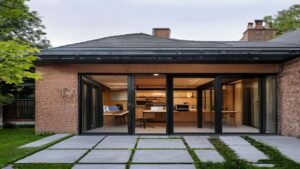
Modern house extensions often serve as multi-functional zones where noise bleed can disrupt professional focus. Implementing high-performance soundproofing ensures that your workspace remains a focused hub of productivity regardless of surrounding activity.
The Mechanics of Acoustic Plasterboard UK
Acoustic plasterboard UK standards have seen significant advancements in 2026, with higher density cores specifically designed to dampen vibration. These boards are engineered with an increased mass-to-thickness ratio compared to standard gypsum products.
By utilizing these specialised boards, you can significantly reduce decibel transfer between rooms. This is particularly effective when converting awkward spaces during loft conversions where roof noise can often be a distraction.
Key Benefits of High-Density Boards
* Superior sound reduction indices (SRI) for mid-to-high frequency dampening.
* Enhanced durability against impact in high-traffic residential areas.
* Integration with modern skim-coat finishes for a premium architectural look.
* Compliance with the latest Part E building regulations for internal sound resistance.
Building Soundproof Partition Walls
To achieve true silence, one must look beyond the surface and consider the entire wall assembly. Soundproof partition walls utilise a ‘room-within-a-room’ philosophy, decoupling the office space from the main structure.
Using resilient bars and mineral wool insulation between timber or metal studs creates an air gap that breaks the path of sound. This method is the industry standard for creating flexible living space solutions that do not compromise on privacy or comfort.
Safety First: Fire Rated Dry Lining
In 2026, safety and acoustics go hand-in-hand within the UK construction sector. Fire rated dry lining is a mandatory consideration for any home office located in a multi-storey dwelling or near a kitchen.
Most high-performance acoustic boards now incorporate fire-resistant properties, providing up to 60 minutes of protection. This dual-purpose approach ensures your workspace is not only quiet but also fully compliant with the latest life safety standards.
Essential Components of a 2026 Wall System
Flexible Living Space Solutions
The modern British home must be adaptable, and flexible living space solutions are at the forefront of this trend. High-quality dry lining allows for the rapid reconfiguration of internal layouts without the need for heavy masonry work.
Whether you are upgrading a Victorian terrace or a sleek new build, these systems provide the versatility required for evolving family needs. For those planning a total property overhaul, our home renovations team can integrate these acoustic systems seamlessly into your design.
2026 Material Costs and Sustainability
Sustainability is the primary driver of construction costs in 2026, with a focus on low-carbon manufacturing. Recycled gypsum and bio-based insulation materials are now the preferred choice for eco-conscious UK homeowners.
While initial material costs for acoustic systems are approximately 15-20% higher than standard dry lining, the value added to the property is substantial. A certified quiet home office is a major selling point in a market that prioritises wellbeing and ‘quiet luxury’.
Cost Considerations for Homeowners
* Standard Acoustic Board: £12.50 – £18.00 per square metre.
* Specialist Sound-Shield Systems: £25.00+ per square metre.
* Professional Labour: Varies by region, with London and the South East commanding higher rates.
* Ancillary Materials: Don’t forget the cost of specialist screws, tapes, and acoustic glues.
Installation Best Practices
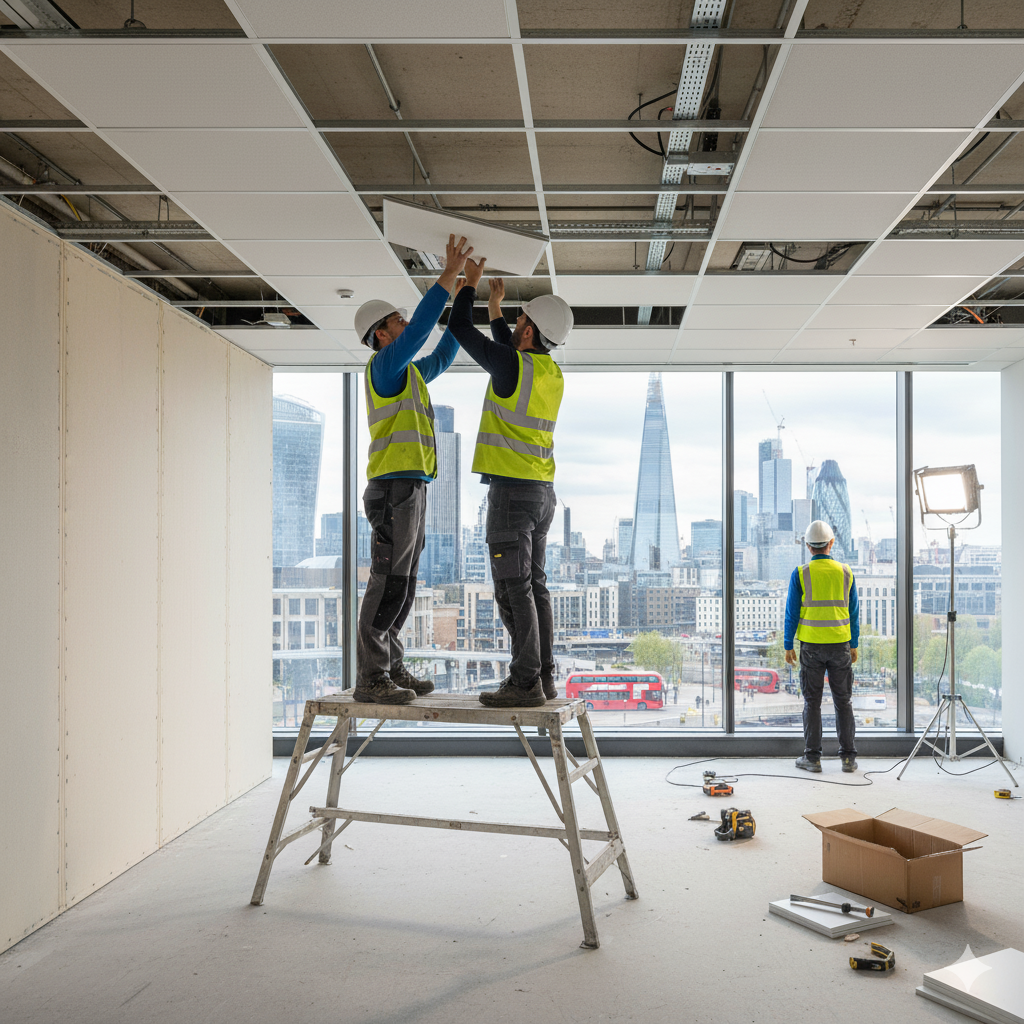
Expert installation is critical; even a small gap can reduce the effectiveness of a soundproof wall by up to 50%. Professional tradespeople ensure that all joints are staggered and that the board is not ‘short-circuited’ by rigid fixings.
When planning your project, ensure your contractor is familiar with the 2026 updates to Part O (Overheating). Modern acoustic dry lining can sometimes affect thermal mass, requiring a balanced approach to ventilation and soundproofing.
Smart Home Integration
In 2026, your acoustic walls should also be ‘smart’ walls. We are seeing a rise in integrated cable management systems hidden behind the dry lining for hidden smart home hubs.
This allow for a clutter-free environment where technology is embedded but invisible. High-end finishes, such as Venetian plaster or bespoke timber acoustic slats, are often applied over the dry lining to enhance the aesthetic appeal.
Final Checklist for Your Home Office
* Confirm the STC (Sound Transmission Class) rating of your chosen plasterboard.
* Verify the fire rating with your local building control officer.
* Ensure the floor and ceiling junctions are also treated for impact sound.
* Choose a contractor with specific experience in high-performance dry lining systems.
* Plan for integrated ventilation to maintain air quality in a sealed acoustic room.
Conclusion
Investing in acoustic dry lining for home offices is an investment in your professional longevity and mental health. By combining acoustic plasterboard UK tech with robust soundproof partition walls, you create a space that meets 2026 standards.
Ready to transform your home with professional-grade construction? Contact the experts at In-Hire to discuss how we can bring your vision of a silent, sustainable workspace to life with our comprehensive suite of building services.