


Acoustic Dry Lining for Home Flats 2026: The Professional Guide
As we navigate the UK construction landscape in 2026, the demand for high-performance acoustic dry lining for home flats 2026 has reached an all-time high. Modern urban living requires sophisticated noise mitigation strategies to ensure peace and privacy in high-density developments.
The evolution of the Future Homes Standard has redefined how we approach internal environments. Today, acoustic comfort is as critical as thermal efficiency for homeowners in London and across the South East.
Why Acoustic Dry Lining is Vital in 2026
The rise of hybrid living has transformed our requirements for residential spaces. Professional-grade acoustic dry lining for home flats 2026 is no longer a luxury but a functional necessity.
With more residents separating rooms for remote work, the need to block airborne and impact noise is paramount. Effective dry lining ensures that your professional calls remain private and your focused hours remain undisturbed.
Investing in quality soundproofing also increases property value significantly in the current UK market. Discerning buyers now prioritise acoustic performance alongside energy ratings and smart home integration.
The Technical Superiority of Soundproof Partitioning Walls
When designing modern interiors, installing soundproof partitioning walls is the most efficient way to manage noise transfer. These systems utilise high-density materials to absorb vibrations that traditional masonry often fails to stop.
In 2026, we utilise sophisticated decoupling techniques such as resilient bars and twin-stud frames. These methods physically separate the wall surfaces, preventing sound energy from travelling through the structure.
We recommend using bespoke internal wall insulation 2026 products within these partitions. These mineral wool or sheep’s wool batts provide the dual benefit of thermal retention and superior sound absorption.
Essential Acoustic Plasterboard Benefits
Modern acoustic plasterboard offers significantly higher density than standard boards. This added mass is the primary factor in reducing decibel levels between rooms and neighbouring flats.
Meeting 2026 Building Regulations and Fire Safety
Compliance with Part E (Sound) and Part B (Fire) of the UK Building Regulations is non-negotiable. Current standards demand that all loft conversions and flat renovations meet strict decibel reduction targets.
Fire rated dry lining is an integral component of any acoustic installation. In 2026, many acoustic boards are manufactured to provide up to 120 minutes of fire resistance as standard.
This dual-purpose approach ensures that your home remains safe while providing a sanctuary from noise. Always ensure your contractor provides a certificate of compliance for all fire-rated partitions installed.
Internal Wall Insulation 2026: Thermal and Acoustic Synergy
The UK’s push toward Net Zero has made internal wall insulation 2026 a central focus for renovators. Combining insulation with dry lining provides a holistic solution for older Victorian and Edwardian properties.
By installing vapour-permeable insulation behind your acoustic boards, you prevent damp and mould growth. This is particularly important in solid-wall properties found throughout Manchester and Birmingham.
Separating Rooms for Remote Work: A 2026 Priority
The modern flat is now a multi-functional space that must accommodate professional life. Separating rooms for remote work requires more than just a physical barrier; it requires an acoustic seal.
We frequently install acoustic dry lining in dedicated home offices to ensure a ‘studio-quiet’ environment. This involves treating not just the walls, but also the ceilings and floors to create a complete acoustic envelope.
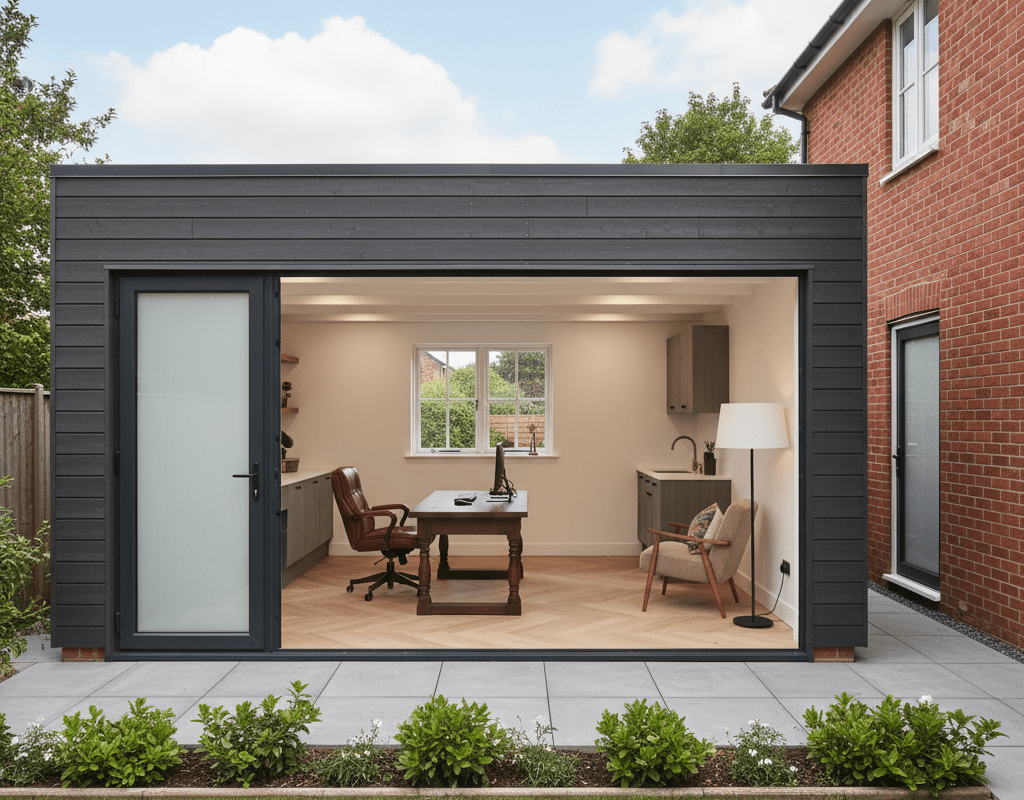
Consider house extensions designed specifically as garden offices if internal space is at a premium. These structures utilise the same high-spec acoustic dry lining to ensure total isolation from outdoor noise.
Choosing the Right Materials for Your Project
Material costs in 2026 have stabilised, but selection remains critical for long-term performance. You should choose materials based on the specific type of noise you are trying to block.
For airborne noise (voices and TV), mass is your best friend. For impact noise (footsteps and vibrations), resilient layers and decoupling are the most effective solutions.
The Installation Process: What to Expect
Professional installation is key to achieving the decibel ratings advertised by manufacturers. Even a small gap of 1% in the acoustic envelope can reduce performance by up to 50%.
Our expert teams begin by assessing the structural integrity of the existing walls. We then install the framing, ensuring that all contact points are treated with isolation tape.
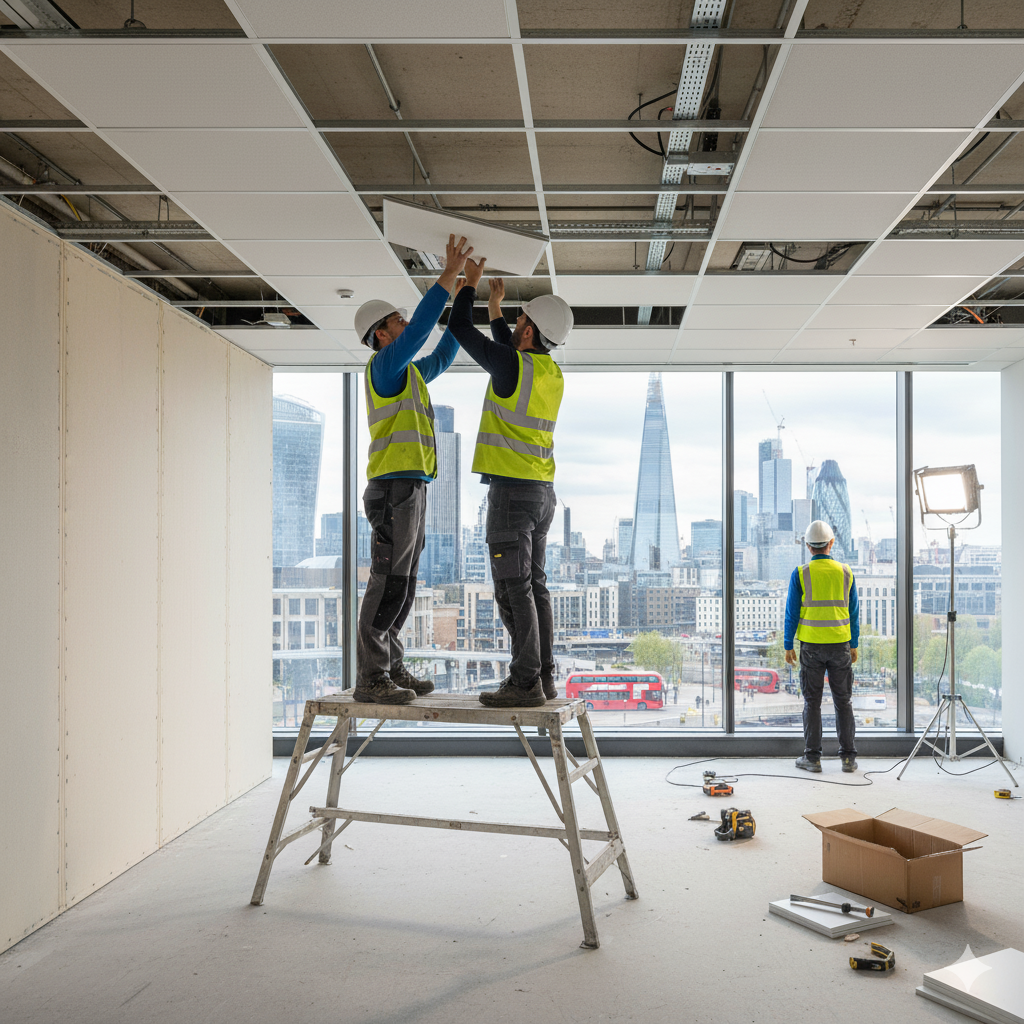
Once the insulation is in place, we double-board the partitions, staggering the joints to prevent sound leakage. The final step involves meticulous taping and jointing followed by a high-quality skim coat.
Conclusion: Future-Proofing Your Home
Implementing acoustic dry lining for home flats 2026 is an investment in your well-being and property value. By choosing high-spec soundproof partitioning walls, you create a versatile and peaceful living environment.
Whether you are upgrading a heritage flat or finishing a new build, prioritise acoustic performance. Consult with trade professionals who understand the 2026 UK building landscape to ensure the best results.