


Understanding the UK construction cost per square metre 2026 is essential for any developer or homeowner planning a project this year. With significant shifts in building regulations and sustainability requirements, budgeting has become more complex than ever before.
Navigating the current landscape requires a firm grasp of inflation-adjusted building budgets and local market volatility. This guide provides the high-level data needed to forecast your next residential or commercial build accurately.
Current Benchmarks for UK Construction Costs
As of early 2026, the average UK construction cost per square metre 2026 ranges from £2,100 to £4,500 depending on specification. These figures reflect the mandatory integration of Net Zero technologies and the latest Part L building regulation updates.
Residential New Build Cost Categories
* Basic Specification: £2,100 – £2,600 per m².
* Mid-Range Specification: £2,700 – £3,400 per m².
* High-End/Luxury Specification: £3,500 – £5,000+ per m².
Regional Variations and Market Factors
London and the South East continue to command a premium of 15-25% over the national average. Conversely, projects in Northern England and parts of Wales often see lower labour costs, though material price forecasts remain uniform across the UK.
Labour Rates 2026: The Impact of Skills Shortages
Labour rates 2026 have stabilised slightly compared to the volatility of previous years but remain at historic highs. A persistent shortage of certified heat pump installers and specialist bricklayers continues to drive up daily site costs.
Average Daily Rates for Skilled Trades
- Project Managers: £350 – £500 per day.
- Electricians (Smart Home Certified): £280 – £380 per day.
- Specialist Carpenters: £250 – £350 per day.
- General Labourers: £150 – £210 per day.
Recruiting the right team early is now a critical component of construction contingency planning. Delays in securing trade contracts can often lead to budget overruns exceeding 10% of the total project value.
Material Price Forecasts and Supply Chain Stability
Material price forecasts for 2026 suggest a period of moderate growth, primarily driven by the high cost of carbon-intensive products. Low-carbon concrete and sustainably sourced timber are now becoming the standard for modern UK builds.
Key Material Cost Trends
* Steel and Concrete: Rising 4-6% annually due to green energy levies on manufacturing.
* Insulation and Glazing: High demand for triple-glazing is keeping prices elevated.
* Smart Systems: Costs for integrated Home Energy Management Systems (HEMS) have decreased by 12% since 2024.
Using inflation-adjusted building budgets allows developers to mitigate the risk of mid-project price hikes. We recommend locking in material prices with suppliers at the point of tender whenever possible.
Enhancing Accuracy with Construction Contingency Planning
Successful projects in 2026 rely heavily on robust construction contingency planning to manage unforeseen site conditions. The traditional 10% contingency is often insufficient for complex renovations of older Victorian terraces or Georgian townhouses.
Recommended Contingency Allowances
* Greenfield New Builds: 10-12% contingency recommended.
* Brownfield/Urban Infill: 15% contingency recommended.
* Heritage/Listed Renovations: 20-25% contingency recommended.
This buffer protects your investment against fluctuating labour rates 2026 and potential delays in the planning permission process. Always ensure your financial lender approves of your contingency strategy before breaking ground.
Sustainable Building Requirements in 2026
The UK construction cost per square metre 2026 is heavily influenced by the Future Homes Standard. Builders must now prioritise airtightness, MVHR systems, and renewable energy generation as standard features.
Net Zero Features and Their Costs
* Air Source Heat Pumps: Adds £8,000 – £14,000 to the total build budget.
* Solar PV and Battery Storage: Typically costs between £7,000 and £12,000 per unit.
* High-Performance Insulation: Increases envelope costs by approximately 15%.
While these features increase initial capital expenditure, they significantly enhance the long-term value and saleability of the property. Modern buyers prioritising energy efficiency will pay a premium for homes with high EPC ratings.
Prefabricated and Modular Cost Advantages
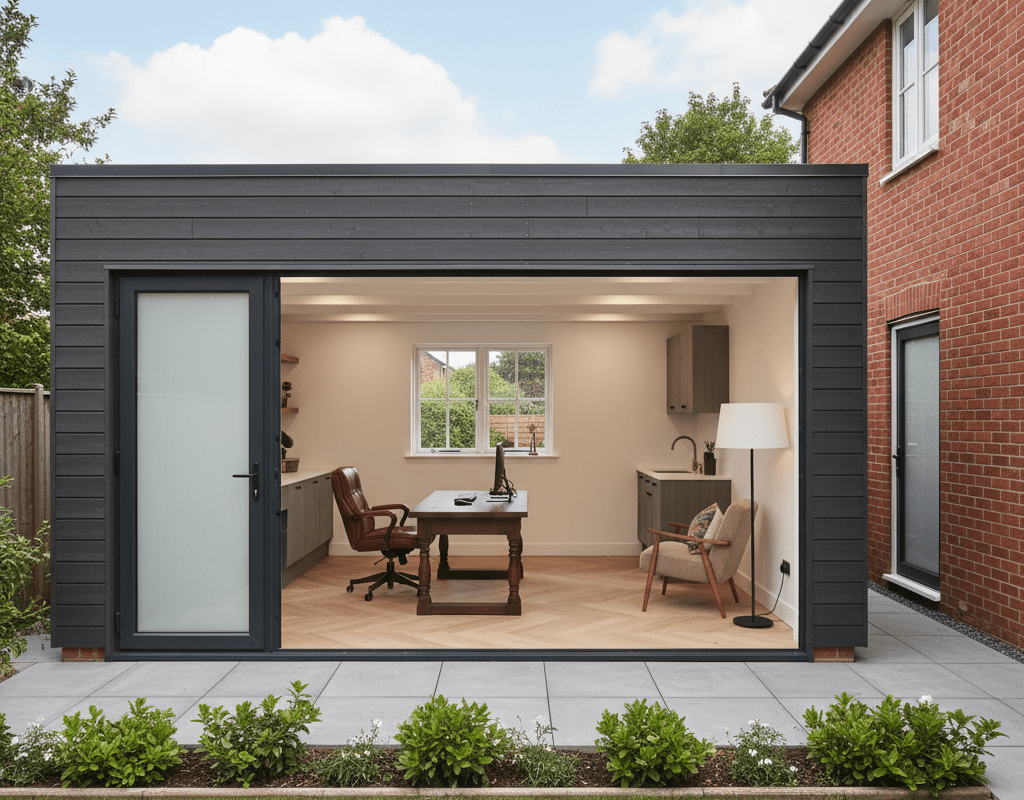
Prefabricated modular extensions and off-site manufacturing are now viable ways to control the UK construction cost per square metre 2026. These methods offer greater price certainty and drastically reduced timelines compared to traditional on-site masonry.
Benefits of Off-Site Construction
- Fixed Pricing: Contracts are often signed with fixed factory costs.
- Speed: Site preparation and module fabrication happen simultaneously.
- Quality Control: Built in climate-controlled environments to exacting standards.
- Waste Reduction: Significant decrease in on-site skip hire and material waste.
Choosing modular solutions can help manage labour rates 2026 by reducing the number of specialist trades required on-site. This approach is particularly effective for high-density urban areas like Manchester and Birmingham.
Conclusion: Navigating Your 2026 Build
Accurately calculating the UK construction cost per square metre 2026 requires a balance of current data and future-proofing. By integrating inflation-adjusted building budgets and strict contingency planning, you can ensure project viability.
Whether you are planning a modern minimalist masterpiece or a heritage restoration, staying informed on material price forecasts is vital. Expert consultation remains the best way to refine your specific project estimates for the year ahead.