

Acoustic Suspended Ceilings for Home Offices: The 2026 Efficiency Guide
Creating a productive workspace requires more than just a desk and a chair in the modern UK property market. As of 2026, Acoustic Suspended Ceilings for Home Offices have become the gold standard for professionals demanding peak performance and acoustic isolation.
With the final implementation of the Future Homes Standard, homeowners are now prioritising internal environments that balance thermal efficiency with superior sound management. Modern residential acoustic ceiling grids offer a sophisticated solution to the echoes and distractions common in contemporary minimalist architecture.
Why Acoustic Insulation is Critical in 2026
The rise of permanent remote working in the UK has necessitated a shift in how we view internal partitions and finishes. High-density urban living in London and Manchester means external noise pollution is a constant threat to professional focus.
Installing sound absorbing ceiling panels allows you to decouple your workspace from the rest of the household. This ensures that video conferences remain private and that ambient noise from heat pumps or ventilation systems is effectively dampened.
The Anatomy of Residential Acoustic Ceiling Grids
Unlike the industrial aesthetics of the past, 2026 grid designs utilise slimline aluminium profiles and timber-effect finishes. These systems are engineered to sit below the structural slab, creating a plenum space for essential services.
Whether you are planning luxury house extensions or a dedicated study, the grid provides a flexible framework. It allows for the easy integration of smart home sensors and high-speed data cabling without chasing into masonry.
Key Components of a Modern Grid:
* Main runners and cross tees with anti-corrosive coatings.
* Shadow-gap perimeter trims for a seamless, floating appearance.
* Quick-release clips for easy access to hidden infrastructure.
* Telescopic hangers for precise levelling in older Victorian properties.
Sound Absorbing Ceiling Panels: Material Innovations
Recent advancements in material science have introduced bio-based binders and recycled mineral wool into the UK market. These panels are no longer just functional; they are decorative assets that contribute to a building’s Net Zero rating.
For those undertaking comprehensive loft conversions, lightweight acoustic tiles are essential for managing weight loads. You can choose from felt-textured finishes or perforated timber veneers that align with 2026 interior design trends.
Performance Metrics to Consider:
Professional Home Studio Ceiling Design
If your home office also serves as a creative hub, a standard ceiling will not suffice for high-fidelity recording. Professional home studio ceiling design requires a strategic mix of absorption and diffusion to eliminate standing waves.
By staggering the depth of your acoustic panels, you can create a ‘cloud’ effect that breaks up sound reflections. This setup is particularly effective in high-ceilinged properties where flutter echo often degrades audio quality during professional broadcasts.
Integrated Lighting Grid Systems for 2026
Lighting is the cornerstone of workplace wellness, especially when complying with Part O of the UK Building Regulations regarding solar gain. Integrated lighting grid systems allow for flush-mounted LED panels that mimic natural daylight cycles.
These systems are often paired with smart sensors that adjust brightness based on the time of day and occupancy. When you hire professional builders, they can ensure your grid is perfectly aligned with your electrical plan for a clutter-free finish.
Benefits of Integrated Lighting:
* Elimination of glare on computer monitors and tablets.
* Reduced visual clutter compared to traditional hanging pendants.
* Seamless integration with smart home ecosystems like Matter or Thread.
* Easy maintenance via the removable ceiling tiles.
Costs and Building Regulations in 2026
Material costs in the UK have stabilised following the shifts of the early 2020s, but high-quality acoustic materials remain a premium investment. For a standard 15-square-metre home office, expect to invest between £1,800 and £3,500 for a fully installed professional system.
Compliance with Part L (Conservation of fuel and power) is mandatory for any significant renovation. Acoustic ceilings can actually improve thermal performance by reducing the volume of the room that requires heating, leading to lower operational costs.
Installation Checklist for UK Homeowners
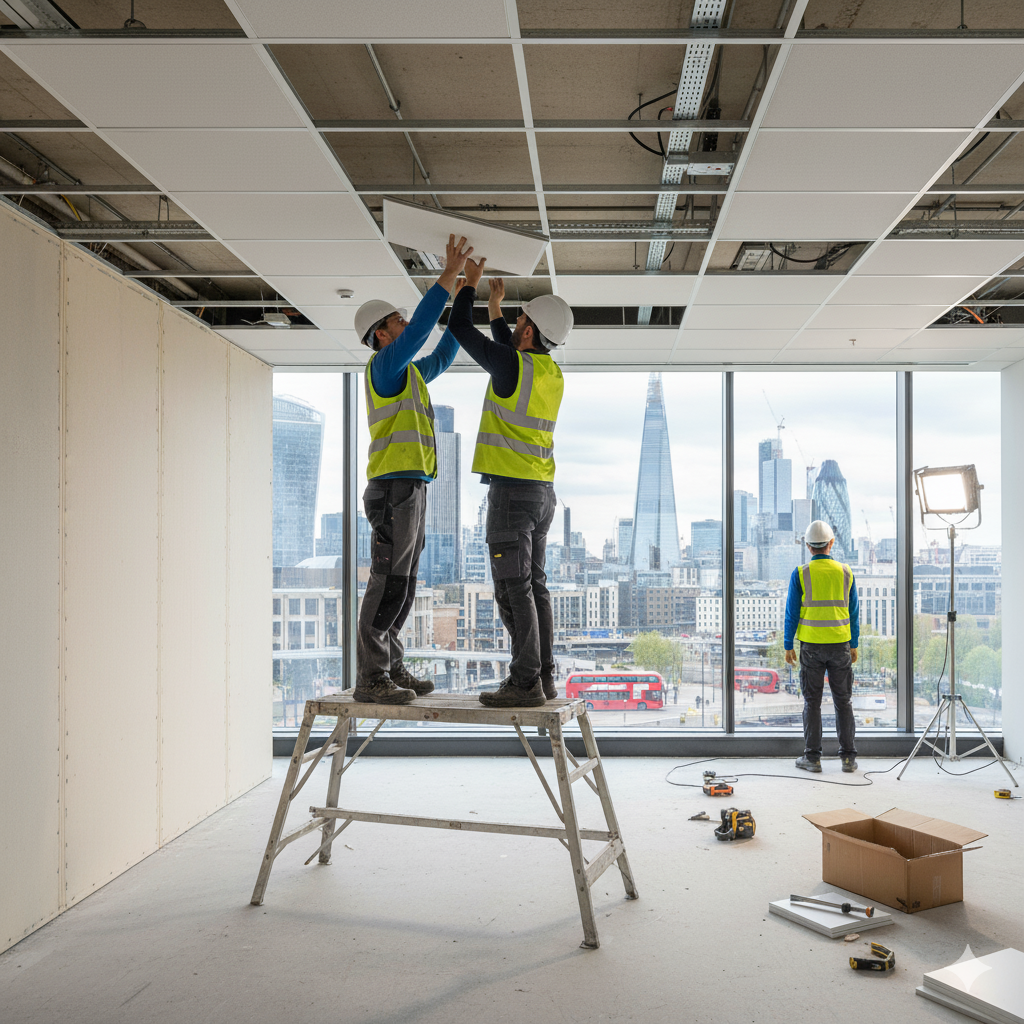
Before commencing your ceiling project, ensure your contractor follows a rigorous installation protocol. Precision is key to ensuring the acoustic seals are airtight and the grid remains perfectly square.
* Site Survey: Check for existing dampness and structural integrity of the joists.
* Plenum Clearance: Ensure there is at least 100mm of space for recessed lighting units.
* Fire Rating: All panels must meet UK Class 0 or Euroclass A1/A2 fire ratings.
* Waste Management: Utilise the manufacturer’s take-back schemes for offcuts to support circular economy goals.
Future-Proofing Your Workspace
The flexibility of a suspended system means your home office can evolve as technology changes. In 2027 and beyond, we expect to see even more integration of air purification technology directly into the ceiling tiles.
By choosing a high-specification acoustic suspended ceiling now, you are adding significant resale value to your property. Buyers increasingly look for dedicated, soundproofed workspaces as a non-negotiable feature in the post-pandemic UK housing market.
Conclusion: Investing in Silence
Acoustic Suspended Ceilings for Home Offices are no longer a luxury but a functional necessity for the modern UK professional. They provide the quietude required for deep work while enhancing the aesthetic and energy profile of your home.
From residential acoustic ceiling grids to bespoke sound absorbing ceiling panels, the options available in 2026 are diverse and highly efficient. Prioritise quality materials and professional installation to ensure your workspace remains a sanctuary of productivity for years to come.