



The Ultimate Guide to a Sustainable Kitchen Remodel 2026
Achieving a Sustainable Kitchen Remodel 2026 is no longer just a lifestyle choice; it is a requirement for modern UK homeowners. With the full implementation of the Future Homes Standard this year, carbon reduction is the new gold standard for property value.
Today’s homeowners are prioritising eco-conscious materials and high-efficiency systems to future-proof their investments. This guide explores how to navigate the 2026 landscape of green construction while maintaining luxury and functionality.
Understanding the Future Homes Standard in 2026
The UK construction industry has undergone a massive shift, with new regulations mandating a 75-80% reduction in carbon emissions. Every Sustainable Kitchen Remodel 2026 must now align with these strict thermal and energy efficiency targets.
Whether you are planning house extensions or a simple internal refit, understanding Part L compliance is essential. This ensures your renovation meets the legal requirements for airtightness and insulation.
Circular Economy Design Principles
Adopting a circular economy design approach means prioritising materials that can be reused, repurposed, or safely returned to the earth. In 2026, we avoid ‘fast furniture’ in favour of longevity and disassembly.
* Material Sourcing: Choose timber certified by the FSC or PEFC from UK woodlands.
* Waste Mitigation: Partner with contractors who offer comprehensive site waste management plans.
* Longevity: Select fixtures with long-term warranties that support the ‘right to repair’ movement.
Cutting-Edge Materials: Recycled Worktops UK
One of the most impactful choices in a green renovation is the selection of recycled worktops UK homeowners are now demanding. Gone are the days of virgin stone being the only luxury option for a high-end finish.
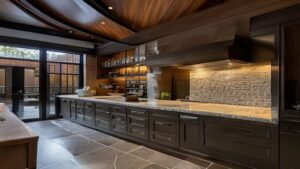
Advanced bio-resins and crushed post-consumer glass are now used to create surfaces that rival marble in beauty. These materials offer superior heat resistance and are non-porous, making them perfect for busy family kitchens.
Innovative Surface Options for 2026
Efficiency Beyond the Kitchen: Low-Flow Smart Bathrooms
While the kitchen is the heart of the home, many 2026 projects are part of wider renovations and refurbishments. Integrating low-flow smart bathrooms is a key component of a holistic sustainable strategy.
Smart sensors now monitor water usage in real-time, preventing leaks and reducing unnecessary waste. These systems are particularly valuable in high-density areas like London and Manchester where water pressure management is critical.
Water Saving Technologies to Consider
* Greywater Harvesting: Systems that repurpose kitchen sink water for garden irrigation or toilet flushing.
* Digital Thermostatic Valves: Precise temperature control that prevents water waste while waiting for the tap to run hot.
* Aerated Taps: Delivering high pressure while using significantly less water through air-induction technology.
The Rise of Modular Kitchen Units 2026
Prefabrication has revolutionised the UK market, leading to the massive popularity of modular kitchen units 2026 models. These units are manufactured in controlled factory environments to minimise offcut waste and ensure precision.
Modular design allows for easier upgrades in the future without the need for a full tear-out. This flexibility is a core pillar of sustainable living, as it extends the lifecycle of the kitchen cabinetry.
Benefits of Modular Construction
* Reduced Lead Times: Factory-built units can be installed in a fraction of the time compared to traditional joinery.
* Precision Engineering: Laser-cut components ensure a perfect fit, which is vital for maintaining airtightness in modern builds.
* Portability: In many cases, these modular elements can be moved or reconfigured if you decide to undertake loft conversions later.
Smart Energy Management and Induction Cooking
In 2026, gas hobs are largely a thing of the past in new renovations due to indoor air quality concerns. High-performance induction hobs are now the standard for any Sustainable Kitchen Remodel 2026 project.
Induction cooking is up to 90% energy efficient compared to gas, which loses significant heat to the surrounding air. Coupling this with smart energy monitors allows you to track the exact cost of every meal prepared.
Energy Storage and Solar Integration
* Battery Storage: Store excess solar energy during the day to power your kitchen appliances during peak evening hours.
* Heat Pump Integration: Using heat recovery systems to capture warmth from cooking and redirect it to the home’s heating loop.
* A-Rated Appliances: Ensuring every new appliance meets the 2026 ‘Ultra-Efficient’ rating for minimal power draw.
Lighting and Ventilation: Part O Compliance
Overheating has become a major concern in UK homes, leading to the strict Part O building regulations. A sustainable kitchen must balance natural light with thermal management to avoid the need for energy-heavy air conditioning.
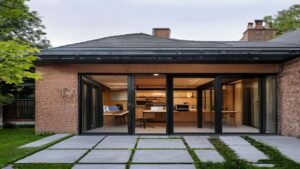
Using high-performance glazing with low-E coatings allows for beautiful views while reflecting solar gain. Integrated smart blinds can automatically deploy based on the sun’s position to maintain a constant internal temperature.
Optimising Natural Light
Final Considerations for your 2026 Project
Planning a Sustainable Kitchen Remodel 2026 requires a meticulous approach to material selection and contractor expertise. Always ensure your build team is familiar with the latest UK building codes and carbon-neutral construction techniques.
By focusing on the circular economy and energy efficiency, you create a space that is beautiful, ethical, and valuable. The future of UK housing is green, and your kitchen should be at the forefront of that transition.