

Suspended Ceilings for Home Renovations 2026: The Complete UK Guide
Suspended ceilings for home renovations 2026 have evolved into a sophisticated design choice for modern homeowners. Gone are the days of industrial-looking office tiles; today’s options focus on aesthetics and sustainability.
Whether you are planning a basement conversion or a high-end kitchen extension, these systems offer unparalleled versatility. They allow for seamless integration of 2026 technology while meeting strict building regulations.
Why Residential Acoustic Ceilings are Trending in 2026
Noise pollution is a growing concern for UK homeowners living in high-density urban areas. High-performance residential acoustic ceilings are now a standard requirement for many luxury renovations.
These systems significantly reduce impact noise from upper floors, making them ideal for multi-storey living. Modern materials absorb sound waves, creating a peaceful atmosphere in home offices and cinema rooms.
Acoustic Performance and the Future Homes Standard
Recent updates to UK building regulations emphasise the importance of thermal and acoustic insulation. Modern suspended systems help you meet these criteria while adding character to your living space.
When planning your house extensions, consider how a drop ceiling can house high-density mineral wool. This combination provides a superior thermal barrier and soundproofing layer.
Concealing Smart Home Cables and Infrastructure
The 2026 home is more connected than ever, requiring extensive wiring for Matter-enabled devices. Concealing smart home cables is the primary functional benefit of installing a suspended ceiling system.
Instead of chasing walls and damaging original plasterwork, cables can be run through the ceiling void. This provides easy access for future upgrades or repairs without the need for messy re-plastering.
Strategic Access for Home Automation
Homeowners now demand invisible technology that does not detract from their interior design. A suspended ceiling allows for the hidden installation of Wi-Fi 7 routers, security hubs, and multi-room audio processors.
If you are undertaking loft conversions, using a suspended system ensures your smart home infrastructure remains accessible. This flexibility is vital as technology evolves faster than traditional building cycles.
LED Integrated Grid Systems and Lighting Innovation
Lighting has moved beyond the simple central pendant to fully integrated environments. LED integrated grid systems offer a sleek, flush-mounted appearance that mimics natural daylight perfectly.
These systems are often controllable via smart apps, allowing you to adjust the colour temperature throughout the day. This bio-centric lighting supports circadian rhythms, a key trend in 2026 UK wellness-focused architecture.
Benefits of Integrated Lighting
* Energy Efficiency: Low-wattage LED panels reduce electricity consumption in line with Net Zero goals.
* Shadow Reduction: Even light distribution eliminates dark corners in large open-plan living areas.
* Minimalist Aesthetic: Eliminates the need for bulky surface-mounted light fixtures.
* Ease of Install: Modular panels allow for rapid installation by qualified electricians.
Modern Ceiling Panel Designs for UK Interiors
Modern ceiling panel designs have moved towards natural textures and sustainable materials. Timber slats, perforated aluminium, and textured bio-soluble fibres are now the preferred choice for London renovations.
These materials add depth and visual interest to a room while maintaining a clean, contemporary finish. You can choose from various colours, including anthracite grey and warm oak, to match your joinery.
Sustainability and Circular Construction
In 2026, the environmental impact of construction materials is a major consideration for UK planning. Most modern ceiling tiles are now 100% recyclable and made from high percentages of post-consumer waste.
Using these materials during your basement renovations helps lower the embodied carbon of your project. This alignment with circular economy principles is increasingly important for property valuations.
Basement Renovation Ceilings: Moisture and Height Challenges
Basement renovation ceilings require specific technical properties to handle potential moisture and lower head heights. Specialist moisture-resistant suspended systems are essential to prevent mould and sag in subterranean environments.
Compact grid systems are now available that only require a 50mm void, preserving vital ceiling height. This makes them the perfect solution for older Victorian properties where every centimetre of vertical space counts.
Selecting the Right Basement Materials
Cost Considerations for 2026 UK Projects
Material costs have stabilised in 2026, but labour remains a significant portion of your renovation budget. High-quality acoustic tiles typically range from £45 to £85 per square metre, depending on the finish.
Investing in a professional installation ensures the grid is perfectly level and the perimeter trims are seamless. A well-executed ceiling can increase the market appeal of your home significantly.
Budgeting Your Ceiling Installation
* Basic Mineral Fibre: £30 – £40 per m² (Installed).
* Designer Metal/Timber: £90 – £150 per m² (Installed).
* Integrated LED Panels: £120 – £200 per unit (Material only).
* Acoustic Upgrades: Add £15 – £25 per m² for high-density insulation.
Installation Process and Building Regulations
All suspended ceilings for home renovations 2026 must adhere to the updated UK Building Regulations. This includes structural integrity checks and adherence to Part L thermal performance standards.
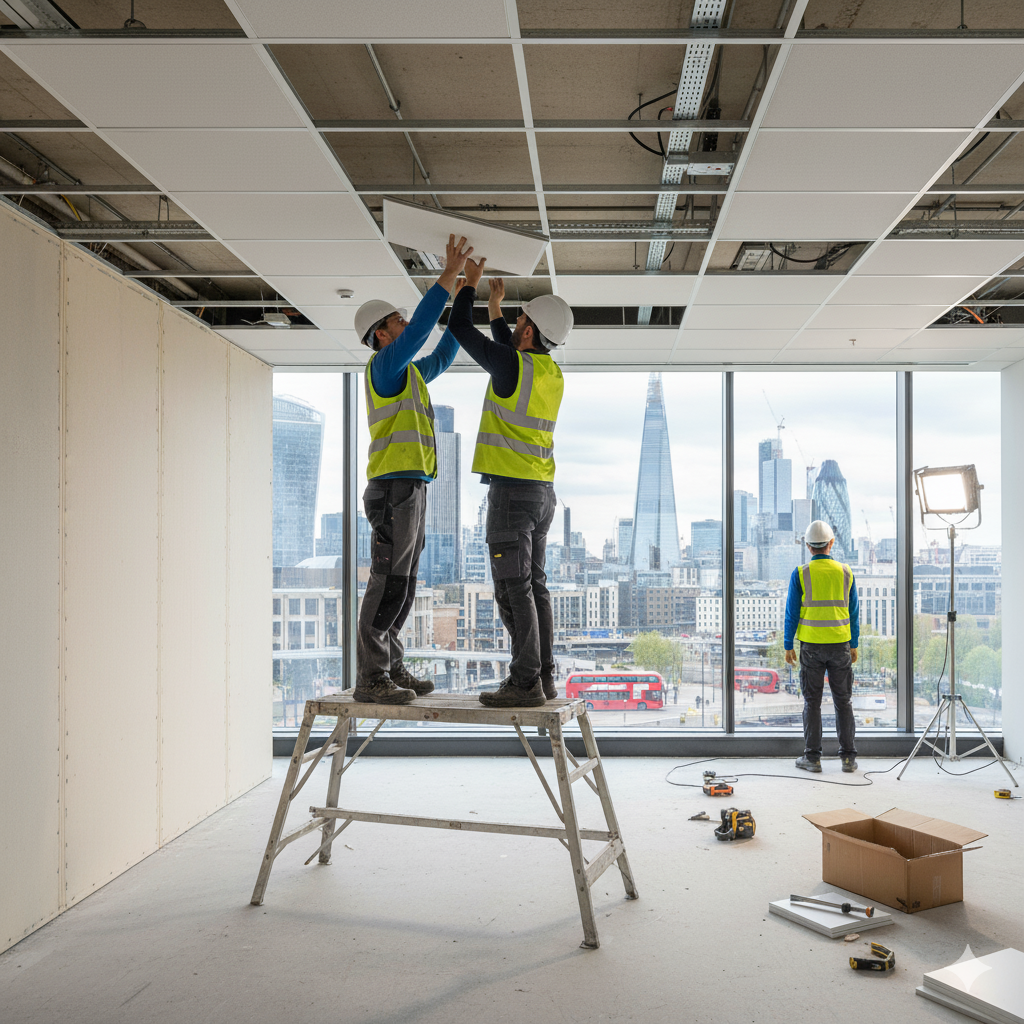
Your contractor will first install a perimeter ‘L’ trim before hanging the main ‘T’ runners from the joists. This creates a sturdy skeleton that supports the weight of the panels and any integrated smart technology.
Professional vs DIY Installation
While some modular systems are marketed as DIY-friendly, professional installation is highly recommended for acoustic performance. Expert fitters use laser levels to ensure a millimetre-perfect finish across large spans.
Incorrectly installed grids can vibrate or sag, leading to unsightly gaps and poor sound insulation. For complex projects involving structural changes, always consult with an expert before proceeding.
Conclusion: Elevating Your Home’s Potential
Suspended ceilings for home renovations 2026 offer a unique blend of form and function. They solve modern problems like cable management and noise pollution while providing a high-end architectural finish.
As we move towards more sustainable and technologically integrated homes, these systems will become even more prevalent. By choosing the right materials and expert installation, you can future-proof your property for years to come.