


Large Format Porcelain Tiles UK 2026: The Master Guide
In the luxury UK construction market of 2026, large format porcelain tiles UK 2026 have become the gold standard for high-end residential projects. These expansive slabs, often reaching dimensions of 3200mm by 1600mm, represent the pinnacle of modern architectural aesthetics and technical performance.
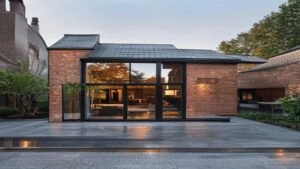
Property owners in regions like London and the Cotswolds are increasingly opting for these oversized surfaces to create a sense of scale and luxury. The reduction in grout lines provides a monolithic appearance that smaller tiles simply cannot replicate in contemporary house extensions.
Why Large Format Porcelain is Dominating 2026 Trends
The 2026 shift toward the Future Homes Standard has redefined how we select internal and external finishes for UK properties. Large format porcelain tiles UK 2026 offer exceptional thermal mass, making them the perfect partner for modern air-source heat pump underfloor heating systems.
Beyond thermal efficiency, these tiles offer a hygienic, low-maintenance surface that meets the rigorous demands of modern British family life. The sintered stone technology used in 2026 production ensures these slabs are virtually non-porous and resistant to the harshest UK weather conditions.
Achieving Seamless Indoor Outdoor Tiling
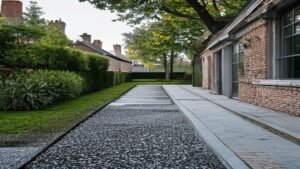
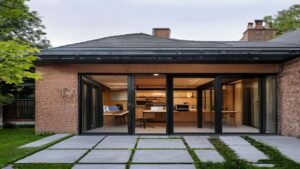
A primary driver for this material choice is the desire for seamless indoor outdoor tiling, blurring the boundaries between the kitchen and the garden terrace. By using the same porcelain profile across both environments, you visually double the perceived floor area of your ground-floor living space.
To achieve this successfully, it is essential to specify 20mm thickness for external areas and 6mm to 10mm for internal flooring. This ensures the structural integrity required for outdoor use while maintaining a flush, level threshold that complies with Part M of the UK Building Regulations.
Key Technical Specifications for 2026 UK Projects
When specifying materials for loft conversions, weight and thickness become critical factors that your structural engineer must account for. Modern porcelain technology allows for ultra-thin 6mm slabs that reduce the structural load without compromising on surface durability or impact resistance.
* R-Ratings for Safety: For external areas, always specify R11 or R12 anti-slip porcelain tiles to ensure safety during wet British winters.
* Rectified Edges: Ensure all tiles are rectified to allow for ultra-fine 1.5mm to 2mm grout lines for that premium, seamless finish.
* Sustainability: Only source materials from manufacturers using closed-loop water systems and recycled content to meet 2026 EPC targets.
The Importance of Anti-Slip Porcelain Tiles
With the UK experiencing higher rainfall intensity in 2026, the demand for high-performance anti-slip porcelain tiles has never been greater. These tiles utilise advanced surface textures that provide grip when wet while remaining smooth enough for easy cleaning and maintenance.
Modern ‘Grip+ ‘ technology allows for a tactile surface that feels comfortable underfoot for bare feet in bathrooms or around swimming pools. This technology is vital for homeowners planning ‘future-proof’ renovations that prioritise accessibility and long-term safety within the home environment.
Large Format Tile Installation Costs in 2026
Installing these massive slabs requires specialist equipment and highly skilled labour, which is reflected in the large format tile installation costs for the current year. You should budget for significantly higher labour rates compared to standard 600x600mm tiling due to the complexity of handling and substrate preparation.
Stone Cladding for Extensions and External Facades
Innovative architects are now utilising porcelain stone cladding for extensions to create high-performance rainscreen systems. These lightweight porcelain veneers mimic natural materials like Portland stone or Yorkstone but offer far superior resistance to frost and pollution staining.
Integrating porcelain cladding allows for the inclusion of high-performance insulation behind the facade, helping homeowners achieve the strict U-values required by the 2026 Building Regulations. This approach is particularly effective for modern commercial refurbishments where durability and aesthetic impact are equally prioritised.
Sustainable Stone Sourcing and Environmental Impact
In 2026, sustainable stone sourcing is no longer optional for UK developers; it is a core requirement of the planning process. Many homeowners are choosing porcelain over natural stone because it can be manufactured using a high percentage of recycled minerals and minerals sourced from ethical quarries.
* Low Carbon Logistics: Prioritise European manufacturers (Italy and Spain) over East Asian imports to significantly reduce the embodied carbon of your build.
* EPD Certification: Always request an Environmental Product Declaration (EPD) to verify the lifecycle impact of your chosen large format porcelain tiles UK 2026.
* Longevity: The 50-year lifespan of high-quality porcelain makes it one of the most sustainable flooring options available for modern construction.
Installation Best Practices for 2026
To ensure your investment lasts a lifetime, the substrate must be perfectly flat, with a tolerance of less than 3mm over a 3-metre span. Any deviation will cause ‘lippage,’ where the edges of the tiles do not align, ruining the seamless effect and creating a trip hazard.
Always insist on the ‘back-buttering’ technique, where adhesive is applied to both the floor and the tile to ensure 100% coverage. This eliminates air pockets which can lead to cracking under heavy point loads or during freeze-thaw cycles in external applications.
Precision Cutting and Finishing
Large format porcelain is incredibly hard, requiring water-cooled bridge saws or professional-grade rail cutters for clean, chip-free edges. In 2026, many contractors use CNC-machined mitred edges for corner details, providing a solid stone look that is far superior to metal trim strips.
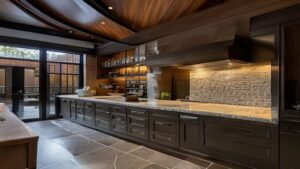
For kitchen islands and bathroom vanities, these same slabs can be fabricated to create matching worktops, ensuring a cohesive design language throughout the property. This level of detail is what separates a standard renovation from a truly bespoke, high-value architectural project in the current UK market.