


Garage Conversion to Home Office 2026: The Definitive UK Professional Guide
Transitioning to a permanent remote working model has never been more critical for UK professionals. A garage conversion to home office 2026 project represents the smartest way to add value and functionality to your property.
With the full implementation of the Future Homes Standard, your conversion must now meet rigorous energy efficiency benchmarks. Modern homeowners are moving away from simple storage toward high-spec, sustainable professional environments.
Understanding the 2026 Regulatory Landscape
Building regulations have evolved significantly over the last two years. Every garage conversion to home office 2026 must now strictly adhere to Part O overheating regulations to ensure occupant comfort.
This means incorporating solar shading or high-performance glazing to prevent summer heat gain. It is no longer just about keeping heat in; it is about managing the internal climate year-round.
Key 2026 Compliance Factors
* Part L Updates: Enhanced thermal bridging requirements for floor and wall junctions.
* Part O Compliance: Mandatory glazing-to-floor-area ratios to mitigate overheating risks.
* Ventilation: Advanced mechanical ventilation with heat recovery (MVHR) is now standard for airtight builds.
If your current structure cannot meet these standards, you might consider loft conversions as a viable alternative for high-performance workspace. Our team ensures every structural change meets the latest UK safety and efficiency codes.
Innovative Materials for 2026 Garage Renovations
Cost-effective garage renovations in 2026 rely on the use of prefabricated internal insulation panels. These ‘plug-and-play’ systems significantly reduce onsite labour costs while providing superior R-values.
We are seeing a surge in the use of hempcrete and sheep’s wool insulation. These breathable, carbon-sequestering materials are perfect for maintaining a healthy indoor air quality in small office spaces.
External Finishes and Aesthetics
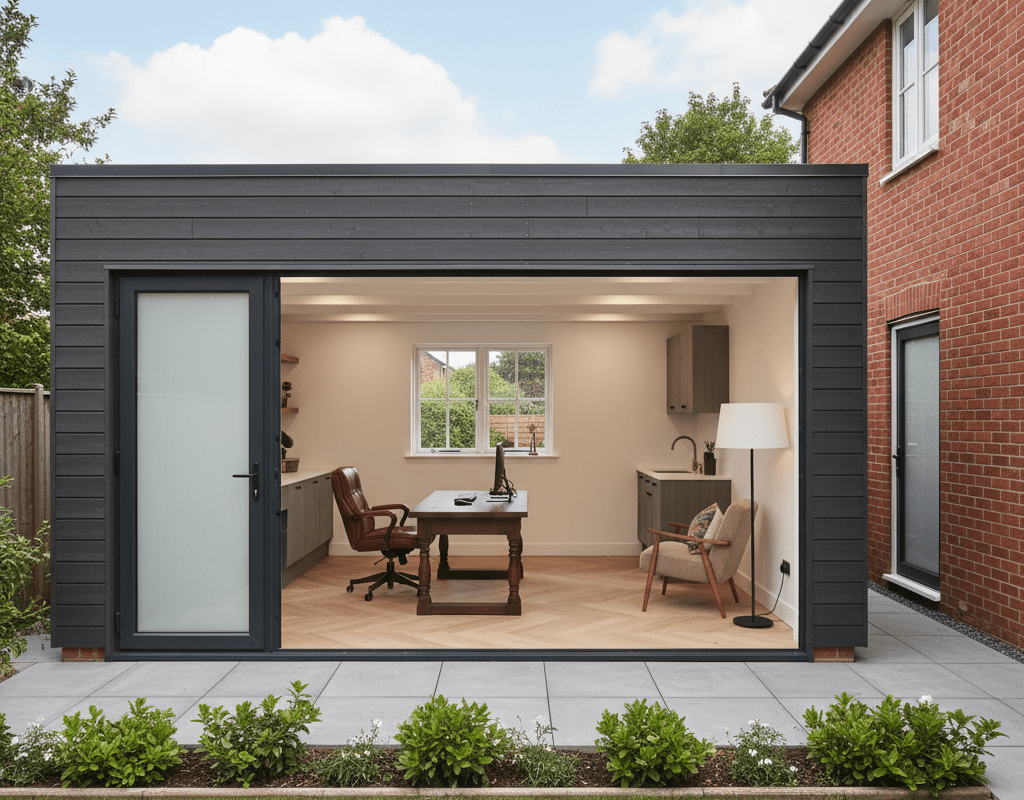
* Anthracite Zinc Cladding: Provides a sleek, modern finish that requires zero maintenance.
* Timber Slats: Sustainable larch or cedar cladding offers a natural aesthetic that blends with garden landscapes.
* Render Systems: High-performance silicone renders prevent cracking and offer excellent weather resistance.
For those requiring even more space, integrating house extensions alongside your garage project can create a seamless transition between your home and professional life.
Integrating Smart Technology and EV Charging
By 2026, a garage conversion is incomplete without addressing future transport needs. Integrating garage conversion EV charging points is now a standard requirement for forward-thinking homeowners.
Installing a 7kW or 22kW smart charger during the conversion phase saves thousands in future groundwork costs. This integration ensures your home remains future-proof as the UK moves toward a full electric vehicle mandate.
Smart Office Infrastructure
* Dedicated Fibre Lines: Direct CAT6a or CAT7 cabling to ensure lag-free video conferencing.
* Smart Lighting: Circadian rhythm lighting systems that adjust colour temperature throughout the day.
* Automated Climate Control: App-based heating and cooling that learns your working schedule.
Comparing Conversions vs. Insulated Garden Offices
Many clients ask whether they should convert their existing structure or opt for insulated garden offices. While garden pods offer flexibility, a garage conversion is typically more cost-effective as the primary structure is already in place.
Garage conversions also benefit from existing utility connections. This proximity to the main house makes heating and plumbing installation much simpler than running services to the bottom of a garden.
Strategic Advantages of Garage Workspaces
If you are planning a more significant overhaul of your property, our building contractors can provide a comprehensive quote for both the conversion and any structural repairs required.
Achieving Net Zero in Your Home Office
The 2026 construction market is defined by the drive toward Net Zero. Your garage conversion to home office 2026 project should aim for maximum airtightness and renewable energy integration.
Installing solar PV panels on the garage roof can often power your office equipment entirely for free. Excess energy can be stored in a home battery system or fed back into the National Grid.
Sustainable Design Checklist
* Triple Glazing: Use argon-filled units with low-E coatings as standard.
* Recycled Materials: Opt for flooring made from reclaimed timber or recycled rubber.
* Low VOC Paints: Ensure your workspace is free from harmful chemical off-gassing.
Budgeting for Your 2026 Conversion
While cost-effective garage renovations are possible, material price inflation in 2026 requires careful financial planning. Expect to invest between £1,500 and £2,500 per square metre for a high-spec, compliant office.
Structural repairs, damp proofing, and the installation of a new insulated floor slab often represent the largest portion of the budget. Do not cut corners on the ‘unseen’ elements like the DPC or vapour barriers.
Where to Save vs. Where to Spend
* Spend: Quality insulation and high-performance windows are non-negotiable for comfort.
* Save: Internal cosmetic finishes and furniture can be upgraded over time as budget allows.
* Spend: Professional electrical installation, especially when integrating EV charging and smart tech.
Managing the Construction Process
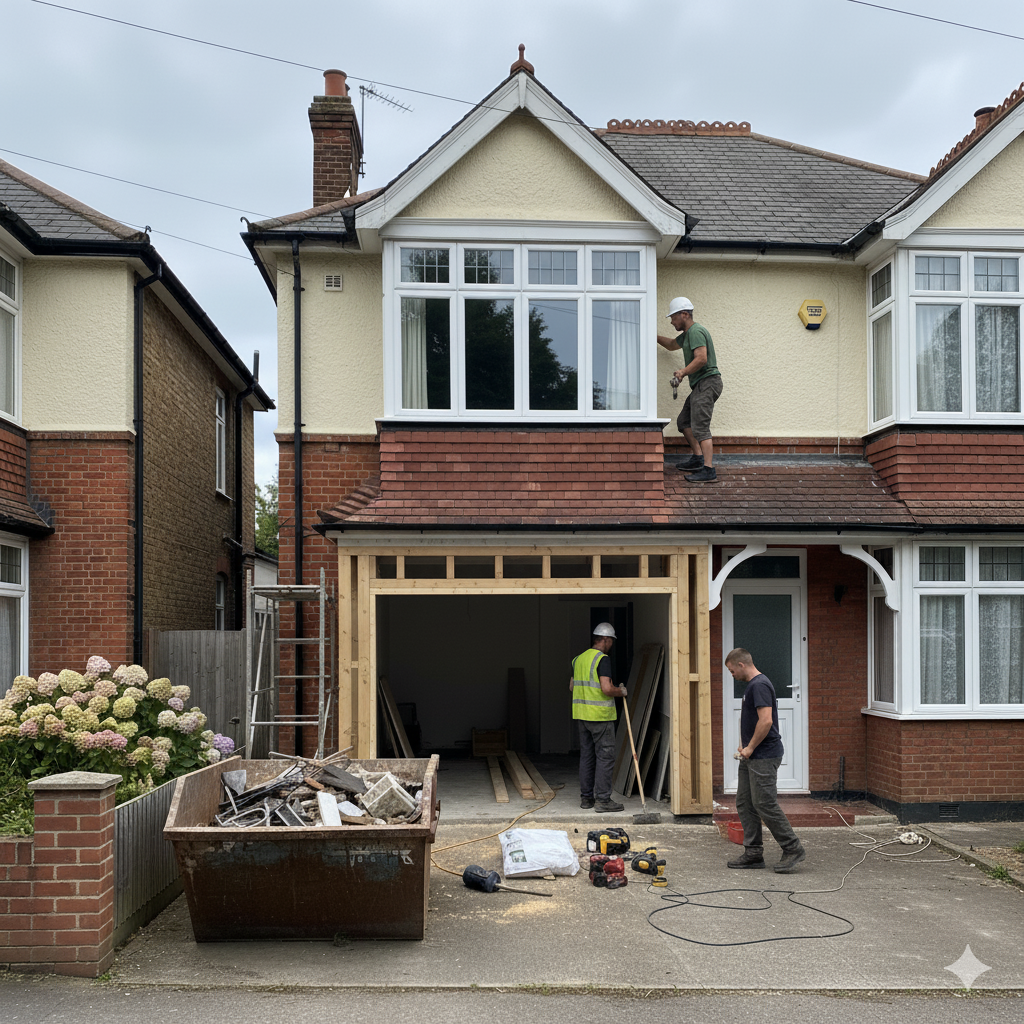
A typical garage conversion takes between 3 to 6 weeks to complete. Minimal disruption is a key benefit, as most of the work takes place outside the main living areas of your home.
Always ensure you have a JCT Minor Works contract in place. This protects both you and the contractor, defining clear timelines and payment schedules for the duration of the project.
The Final Sign-off
Ensure your local authority Building Control officer visits at key stages. You will need a completion certificate to prove the work is legal when you eventually sell your property.
This certificate confirms the build meets all Part L and Part O regulations. It is the most important document in your project file, alongside your electrical and gas safety certificates.