

Garage Conversion to Smart Home Office: The Definitive 2026 UK Guide
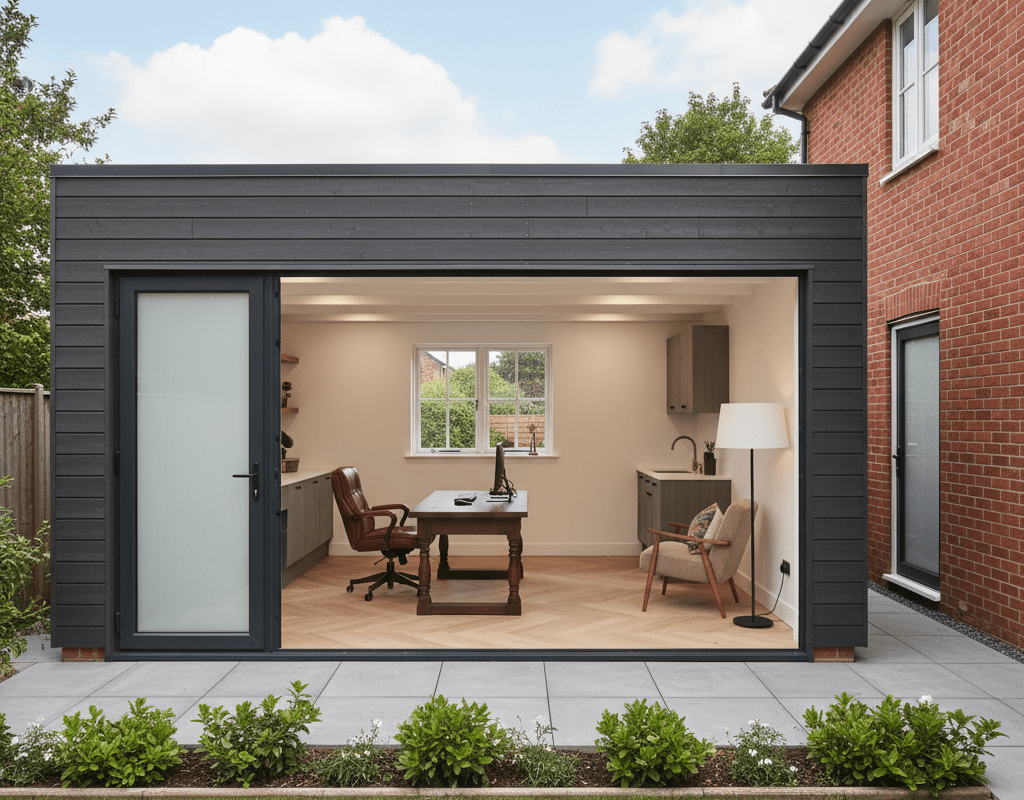
Transforming an underutilised garage into a high-tech workspace is the premier home improvement trend of 2026. A bespoke garage conversion to smart home office adds significant property value while providing a professional environment for remote leadership.
With the full implementation of the Future Homes Standard this year, modern conversions must balance advanced technology with strict energy efficiency. Navigating these requirements requires a deep understanding of current UK building regulations and smart home office design principles.
Why a Smart Office Conversion is Essential in 2026
Hybrid working has evolved into a permanent fixture of British professional life, demanding more than just a desk in a spare room. A dedicated garage conversion to smart home office provides the physical and psychological separation needed for high-level productivity.
Modern professionals now prioritise integrated systems that manage environment, connectivity, and security automatically. By utilising professional house extensions expertise, homeowners can turn a cold concrete box into a Net Zero sanctuary.
The Benefits of a Smart Conversion
* Increased property valuation typically exceeding the initial capital investment.
* Superior acoustics compared to traditional internal room conversions.
* Direct external access for visiting clients or independent deliveries.
* Integration with whole-home energy management systems for reduced running costs.
Navigating 2026 Building Regulations: Part O and Part L
Compliance with Part O overheating regulations is now a critical factor for any garage conversion to smart home office. Because garages often lack the thermal mass of the main house, preventing summer solar gain is vital for comfort.
Modern smart home office design utilises automated external shading and solar-control glazing to meet these standards. We recommend high-performance aluminium window frames with a thermal break to ensure your workspace remains cool during heatwaves.
Insulation and the Future Homes Standard
Achieving the required U-values for garage conversion insulation is more challenging than in previous years. We now utilise vacuum insulation panels (VIPs) or high-density spray foam to maximise floor-to-ceiling height while meeting 2026 targets.
Properly insulating the floor slab is often overlooked but essential for preventing rising damp and heat loss. For those also considering vertical space, our expert loft conversions team often advises on integrated thermal envelopes across the whole property.
Essential Smart Home Office Design Features
Creating a future-proof workspace involves more than just adding a few smart bulbs and a Wi-Fi extender. True smart home office design integrates the building fabric with the digital ecosystem for a seamless user experience.
In 2026, we prioritise hardwired infrastructure over purely wireless solutions to ensure 100% reliability for video conferencing. This includes dedicated conduits for fibre optic cabling and integrated charging hubs hidden within bespoke joinery.
2026 Technology Checklist
- Fibre Optic Home Office: Dedicated Cat 8 or fibre runs directly to the desk for lag-free 8k streaming.
- Circadian Lighting: Smart LED arrays that adjust colour temperature throughout the day to support focus.
- Automated HVAC: Sensors that monitor CO2 levels and trigger heat recovery ventilation (MVHR) automatically.
- Acoustic Management: Hidden timber acoustic panels that eliminate echoes during professional calls.
Construction Phases: From Shell to Smart Hub
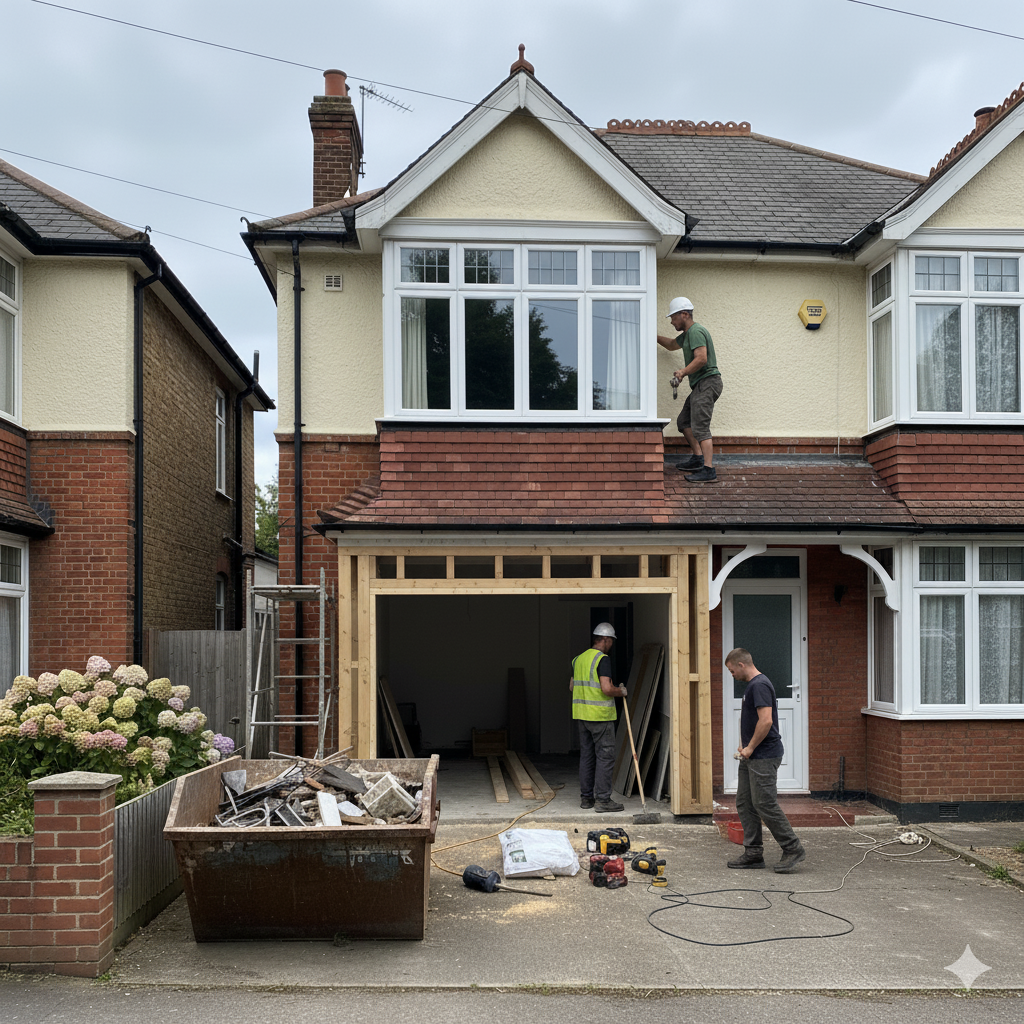
The first phase of any garage conversion to smart home office involves structural assessment and damp proofing. Most UK garages are built with single-skin brickwork, requiring a new internal timber frame or blockwork leaf to house insulation.
Once the shell is weather-tight, we focus on the ‘first fix’ of smart technology, ensuring all sensors and data points are positioned correctly. If you are planning a larger project, our comprehensive renovation services can ensure your office matches the aesthetic of your entire home.
Flooring and Finishes
Sustainable materials are the standard for 2026, with cork and reclaimed oak being popular choices for smart offices. These materials provide natural warmth and work perfectly with low-profile underfloor heating systems integrated into the smart hub.
For walls, we recommend using Graphene-infused paints which improve thermal regulation and provide a durable, professional finish. Darker ‘anthracite’ or ‘sage green’ tones are currently trending for high-end UK home offices to reduce screen glare.
Connectivity: The Fibre Optic Home Office Advantage
In a world of virtual reality meetings and AI-driven workflows, a standard Wi-Fi connection is no longer sufficient. A true fibre optic home office utilizes dedicated termination points within the garage to bypass the household’s shared bandwidth.
This infrastructure allows for consistent speeds regardless of how many devices are active in the main residence. It also provides a more secure network for sensitive professional data, which is a key requirement for many UK corporate sectors.
Managing Heat and Air Quality: Part O Compliance
As mentioned, Part O overheating regulations have fundamentally changed how we approach garage conversions in the south of England and urban centres like London. Over-glazing a south-facing garage can lead to uninhabitable temperatures without expensive air conditioning.
We solve this by installing smart actuators on skylights that open automatically when internal temperatures rise. This passive cooling strategy is far more sustainable and aligns with the UK’s 2050 Net Zero targets.
Air Quality and Productivity
* Install VOC sensors to monitor air purity and trigger ventilation.
* Use HEPA-filtered intake fans to reduce urban pollution in city-centre conversions.
* Integrate indoor biophilic elements with automated irrigation systems.
Cost Expectations for 2026
Material costs have stabilised in 2026, but high-performance components for a garage conversion to smart home office remain a significant investment. A basic conversion starts at approximately £20,000, while a fully automated, high-spec smart office can reach £45,000.
These figures include the cost of complying with the latest structural and thermal regulations. While the initial outlay is higher than in previous decades, the energy savings and productivity gains offer a rapid return on investment.
Final Thoughts on Your Smart Conversion
Investing in a garage conversion to smart home office is the smartest way to upgrade your lifestyle and your property’s tech stack. By focusing on insulation, connectivity, and regulatory compliance, you create a workspace that will remain relevant for decades.
Ready to transform your unused garage into a 2026-ready professional hub? Contact our team today to discuss how we can bring your smart office vision to life with precision and expertise.