


RAAC Concrete Survey for Homeowners: Ensuring Structural Integrity in 2026
Since the structural crisis of 2023, Reinforced Autoclaved Aerated Concrete (RAAC) has become a primary concern for UK property owners. Ensuring your building meets the latest 2026 safety standards requires a comprehensive RAAC concrete survey for homeowners to mitigate long-term risk.
While originally identified in public buildings, many private residential properties from the 1950s to 1990s are now undergoing rigorous RAAC inspection UK wide. Understanding the condition of your planks is essential for both safety and maintaining your home’s market value in today’s stringent climate.
Why You Need a RAAC Concrete Survey for Homeowners Today
RAAC is a lightweight, ‘bubbly’ concrete that was frequently used for flat roofs, floors, and walls due to its thermal properties. However, its limited lifespan and susceptibility to water ingress mean that many installations have now exceeded their design life.
By 2026, the Building Safety Act has tightened requirements for structural safety checks across all residential sectors. A professional survey identifies potential ‘plank’ deflection or corrosion of the internal steel reinforcement before catastrophic failure occurs.
The Process of a Professional RAAC Inspection UK
When you commission a specialist survey, the engineer will conduct a non-destructive assessment of your property’s structural components. They will focus on high-risk areas such as roof decks and floor spans where RAAC was most commonly utilised.
* Visual inspection for cracking or transverse fractures in concrete planks.
* Measurement of bearing widths to ensure they meet the modern 75mm minimum requirement.
* Cover meter surveys to locate and assess the condition of internal steel reinforcement.
* Moisture monitoring to identify areas where water ingress may be accelerating degradation.
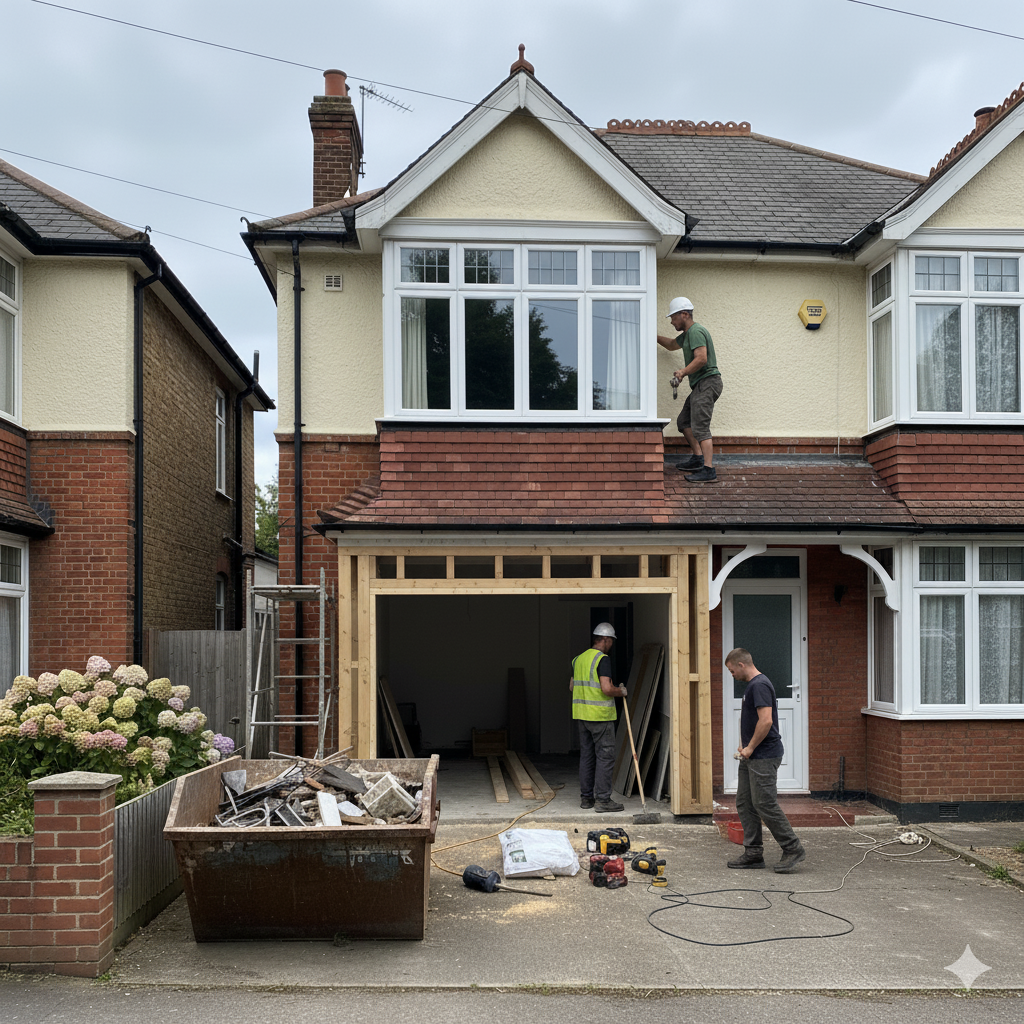
If your survey reveals significant issues, you may need to consider more extensive house extensions or structural remodelling to replace failing sections. Modern materials like glulam timber or lightweight steel frames are now the preferred 2026 alternatives for these replacements.
Understanding Concrete Remediation Costs in 2026
If RAAC is detected, the financial implications vary depending on the severity of the structural compromise. Concrete remediation costs in 2026 typically range from £2,500 for minor propping to over £40,000 for full roof deck replacements.
* Propping and strengthening: £2,000 – £5,000 per room.
* Timber secondary support systems: £3,500 – £8,000 per span.
* Full structural replacement: £15,000 – £50,000+ depending on property size.
* Specialist disposal of aerated concrete: £500 – £1,500 per tonne.
Many homeowners are opting to combine these essential repairs with loft conversions to maximise the value added during the remediation phase. This allows for the removal of the failing material while creating modern, energy-efficient living spaces that comply with the Future Homes Standard.
The Risks of Buying a House with RAAC
Buying a house with RAAC requires extreme due diligence to avoid inheriting a significant financial liability. Most UK lenders now mandate a specific structural report before approving mortgages on properties built within the high-risk 1950-1995 window.
- Request a Level 3 RICS Building Survey as a minimum requirement.
- Negotiate a retention or price reduction based on estimated remediation costs.
- Check if the property has a history of flat roof leaks, as this accelerates RAAC failure.
- Confirm if previous remediation work was certified by a structural engineer.
If you are looking to renovate a newly purchased property, exploring architectural design services can help you integrate modern structural solutions seamlessly. Replacing RAAC with sustainable, high-performance materials is often the most cost-effective long-term strategy.
Safety Indicators: When to Call an Engineer
Homeowners should be vigilant for specific ‘red flags’ that indicate a RAAC plank is reaching its limit. If you notice any of the following, an immediate structural assessment is non-negotiable for your safety.
* Visible sagging or ‘bowing’ in flat roof ceilings.
* Spalling concrete where small chunks fall from the surface.
* Rust stains or ‘bleeding’ through the concrete, indicating internal steel corrosion.
* New, horizontal cracks appearing on the underside of floor or roof planks.
In 2026, the integration of smart sensors can help monitor these structural changes in real-time. This technology is increasingly used alongside traditional methods during a RAAC concrete survey for homeowners to provide ongoing peace of mind.
Future-Proofing Your Home: Beyond RAAC
Once RAAC has been identified and managed, focus should shift to the 2026 Future Homes Standard. Replacing failing concrete provides a unique opportunity to drastically improve your home’s thermal envelope and carbon footprint.
* Install high-performance PIR insulation during roof replacements.
* Upgrade to triple-glazed aluminium skylights for better U-values.
* Consider integrated solar PV arrays on newly strengthened roof structures.
* Use low-carbon cement alternatives for any new foundation or structural work.
By addressing structural safety checks early, you protect both your family and your investment. A clear survey report is a vital document in the 2026 UK property market, ensuring a smooth sale process in the future.
The Role of Specialist Structural Contractors
Managing RAAC is not a DIY task; it requires the ‘Expert Voice’ of trade professionals with decades of experience in the UK market. Specialist contractors use advanced carbon fibre wrapping or structural steel plates to reinforce planks that do not yet require full replacement.
These modern techniques are faster and less intrusive than traditional demolition. However, the first step is always a professional RAAC concrete survey for homeowners to determine the most appropriate and cost-effective path forward.