

House Extensions London 2026: A Definitive Guide to Modern Expansion
Navigating the landscape of house extensions London 2026 requires a deep understanding of evolving building regulations and sustainable technology. As we move further into the decade, homeowners are prioritising carbon neutrality alongside architectural elegance.
The demand for high-quality living space in the capital remains at an all-time high. Consequently, the way we design and build has fundamentally shifted to meet stringent environmental targets.
Understanding the Future Homes Standard 2025 Impact
The Future Homes Standard 2025 impact is now fully realised across all London boroughs. This legislation has transformed how we approach insulation, ventilation, and heat loss in residential extensions.
Every project must now demonstrate a significant reduction in carbon emissions compared to previous standards. This means that house extensions must be designed with a fabric-first approach from the initial architectural drawing.
New Triple Glazing Requirements UK
One of the most notable changes involves the latest triple glazing requirements UK. Standard double glazing often fails to meet the U-value targets required for new 2026 thermal performance certificates.
Modern triple-glazed units now feature argon-filled cavities and low-emissivity coatings as standard. These installations are essential for maintaining stable internal temperatures during London’s increasingly volatile weather patterns.
Low Carbon Heating Systems and Net Zero Goals
By 2026, the transition away from gas boilers has accelerated significantly. Integrating low carbon heating systems is no longer an option but a necessity for most major London renovations.
Air source heat pumps (ASHPs) are now the primary choice for heating new living spaces. These systems are often paired with underfloor heating to maximise efficiency and free up valuable wall space.
* Air Source Heat Pumps: Efficiently extract heat from the external air.
* Solar PV Integration: Many extensions now include integrated solar roof tiles.
* Mechanical Ventilation with Heat Recovery (MVHR): Ensures fresh air without heat loss.
When planning your loft conversions, consider how these systems will be housed. Dedicated plant rooms or acoustic enclosures for external units are now standard features in high-end London designs.
Modular Extension Costs London in 2026
Off-site manufacturing has revolutionised the speed of delivery for London homeowners. Modular extension costs London now reflect a mature market where precision engineering meets architectural luxury.
While the initial price point can be higher than traditional builds, the reduction in on-site labour time is significant. In a busy city like London, reducing the weeks of construction noise and skip movements is a major benefit.
- Small Rear Modular Pods: Starting from £85,000.
- Full Two-Storey Modular Additions: Ranging from £180,000 to £350,000.
- Bespoke Architectural Modules: Highly variable depending on cladding choices like anthracite zinc or charred timber.
Navigating London Planning Permissions in 2026
London councils have updated their Local Plans to align with the latest national sustainability frameworks. Securing permission for house extensions London 2026 requires detailed energy statements and biodiversity gain assessments.
Permitted Development rights still exist, but they are increasingly subject to stricter environmental caveats. For instance, many boroughs now require a ‘Green Roof’ or ‘Living Wall’ component for certain types of rear extensions.
The Rise of Multi-Generational Living
We are seeing a surge in ‘annexe-style’ extensions across the South East. These spaces are designed to provide independent living for older family members or adult children.
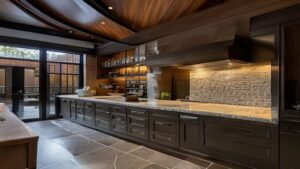
High-quality kitchen extensions often serve as the social hub for these expanded homes. Open-plan layouts with seamless transitions to outdoor ‘biophilic’ gardens are the hallmark of 2026 design trends.
Material Selection for the 2026 Climate
Material choices are now heavily influenced by their embodied carbon footprint. Architects are moving away from traditional concrete and towards sustainable alternatives like cross-laminated timber (CLT).
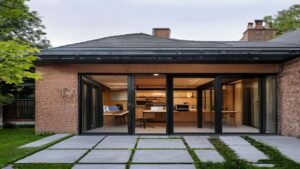
London stock brick remains a staple for heritage matching, but it is now often used as a slip over high-performance insulation. This allows for a traditional aesthetic while meeting the 2026 Part L building regulations.
* Recycled Aluminium: Used for slim-profile bifold and sliding doors.
* Lime Mortar: Revitalised for its breathability and lower carbon impact.
* Reclaimed Stone: Frequently specified for high-end projects in the Cotswolds and London heritage zones.
Smart Home Integration and Energy Management
A 2026 extension is incomplete without an integrated Building Management System (BMS). These smart systems automatically adjust heating, lighting, and shading based on real-time weather data.
Automated external solar shading is now common to prevent overheating, especially in south-facing glass-heavy designs. This addresses the Part O regulations which focus specifically on mitigating overheating in residential dwellings.
Budgeting for Your London Extension
Inflationary pressures on raw materials have stabilised in 2026, but labour costs for specialist trades remain high. A comprehensive contingency fund of at least 15% is recommended for all central London projects.
Professional fees for architects, structural engineers, and party wall surveyors should be factored in early. These typically equate to 10-15% of the total construction budget in the current market.
Summary Checklist for 2026 Projects
* Verify Regulations: Ensure compliance with the latest Future Homes Standard updates.
* Select Professionals: Hire contractors with proven experience in low-carbon builds.
* Review Glazing: Confirm all windows meet the 2026 U-value requirements.
* Plan Heating: Shift from gas to heat pumps or infrared heating panels.
* Internal Connections: Ensure your new space flows logically from the existing structure.
By following these modern standards, your London extension will not only add significant value to your property but also provide a future-proofed, sustainable environment for decades to come.