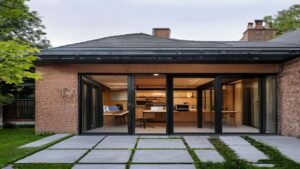
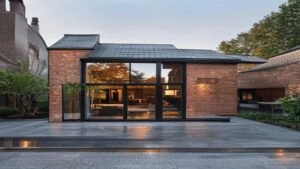
The Ultimate Guide to a Whole-House Retrofit in Manchester for 2026
Achieving a carbon-neutral home is no longer a luxury but a necessity for Manchester homeowners. A Whole-House Retrofit in Manchester represents the gold standard in transforming draughty, historic properties into high-performance, future-proof residences.
By taking a fabric-first approach, you can drastically reduce energy bills while improving indoor air quality. Whether you are modernising a semi-detached in Didsbury or a city-centre flat, 2026 building regulations demand higher standards than ever before.
Why a Whole-House Retrofit in Manchester is Essential in 2026
Greater Manchester has some of the oldest housing stock in the UK, with many homes lacking adequate insulation. A comprehensive retrofit addresses the building’s entire thermal envelope to ensure long-term sustainability.
With the 2026 updates to Part L and Part O of the Building Regulations, focus has shifted toward overheating prevention and thermal efficiency. Our house extensions often serve as the perfect catalyst for these holistic energy upgrades.
The Benefits of Integrated Retrofitting
* Significant Bill Reductions: High-performance insulation can slash heating demand by up to 80%.
* Increased Property Value: Energy-efficient homes in Manchester now command a premium in the 2026 property market.
* Enhanced Comfort: Elimination of cold bridges and draughts ensures a consistent temperature year-round.
* Future-Proofing: Prepare your home for the total phase-out of gas boilers by integrating low-carbon technologies.
Understanding Deep Retrofit Costs UK 2026
Navigating Deep retrofit costs UK 2026 requires a clear understanding of current material prices and labour rates. In Manchester, a full-scale renovation focusing on energy efficiency typically ranges from £80,000 to £150,000 for a standard three-bedroom property.
While these initial investments are higher than traditional renovations, the long-term ROI is bolstered by government grants and energy savings. Professional refurbishments that include structural insulation are more cost-effective when managed as a single project rather than piecemeal repairs.
Breakdown of Typical 2026 Retrofit Expenses
Sustainable Victorian Terrace Upgrade: Manchester’s Heritage Challenge
Manchester is famous for its red-brick Victorian architecture, but these buildings present unique challenges for modern energy standards. A Sustainable Victorian terrace upgrade must balance heritage preservation with cutting-edge thermal performance.
Using breathable materials like lime plaster and wood fibre insulation is vital to prevent damp issues. We specialise in loft conversions that integrate high-spec roof insulation to secure the building’s upper thermal boundary.
Essential Steps for Victorian Upgrades
* Internal Wall Insulation (IWI): Essential for maintaining the iconic red-brick exterior while trapping heat.
* Floor Insulation: Using vacuum insulation panels (VIPs) to keep ceiling heights high while insulating solid floors.
* Draught Proofing: Specialist restoration of original sash windows with integrated slim-line double glazing.
* Chimney Remediation: Sealing redundant fireplaces to eliminate one of the biggest sources of heat loss.
Heat Pump Ready Renovations and Air-source Heating Integration
In 2026, gas boilers are no longer the standard for modern Manchester renovations. Heat pump ready renovations focus on ensuring the home’s flow temperature is low enough for efficient operation.
Effective Air-source heating integration requires larger radiator surfaces or, ideally, underfloor heating. This transition is most successful when paired with a airtightness strategy to ensure the generated heat doesn’t escape.
How to Prepare for an Air-Source Heat Pump
Navigating Planning and Regulations in Greater Manchester
Manchester City Council and Salford City Council have introduced stricter environmental mandates for 2026. A Whole-House Retrofit Manchester project must now prove its carbon reduction credentials to gain swift planning approval.
Passive House principles are increasingly encouraged for major domestic works across the North West. Ensuring your project meets these standards requires expert architectural oversight and precise construction execution.
2026 Regulatory Checklist
* Part L Compliance: Enhanced requirements for U-values in walls, floors, and roofs.
* Part O (Overheating): Ensuring that highly insulated homes have adequate cooling and solar shading.
* Airtake Quality: Integrating MVHR systems to ensure healthy CO2 levels in airtight environments.
* Biodiversity Net Gain: Small-scale urban greening requirements for external renovations.
The Role of Smart Technology in Modern Retrofits
A truly modern retrofit goes beyond just insulation and heating. Smart home integration allows Manchester residents to monitor their energy production and consumption in real-time.
Solar PV panels combined with battery storage are now standard components of a deep retrofit. These systems allow you to store energy during cheap off-peak hours and use it when demand is highest.
Choosing the Right Partner for Your Manchester Project
Executing a Whole-House Retrofit Manchester project requires a contractor who understands the synergy between old structures and new tech. Managing the intersection of insulation, ventilation, and heating is the key to avoiding interstitial condensation.
At In-Hire, we coordinate expert teams to deliver seamless, high-performance home transformations. Our experience in Manchester’s unique urban landscape ensures your project is delivered on time and to 2026 regulatory standards.
Questions to Ask Your Retrofit Contractor
* Do you have experience with breathable insulation for Victorian properties?
* How do you ensure airtightness levels meet the 2026 Part L requirements?
* Can you provide a detailed breakdown of 2026 material lead times?
* Are you certified for heat pump and MVHR system integration?