




Retrofitting for Energy Efficiency UK: The 2026 Homeowner Guide
Retrofitting for energy efficiency UK properties is no longer just a trend for the eco-conscious. It is now a financial and regulatory necessity for homeowners in 2026.
With the latest updates to Building Regulations Part L and Part O, future-proofing your property requires a strategic approach. This guide explores how to maximise your property value while achieving Net Zero targets.
Why Retrofitting for Energy Efficiency UK is Essential in 2026
The UK housing market has shifted dramatically towards high-performance, low-carbon living. Properties with poor EPC ratings now face significant market devaluation compared to upgraded counterparts.
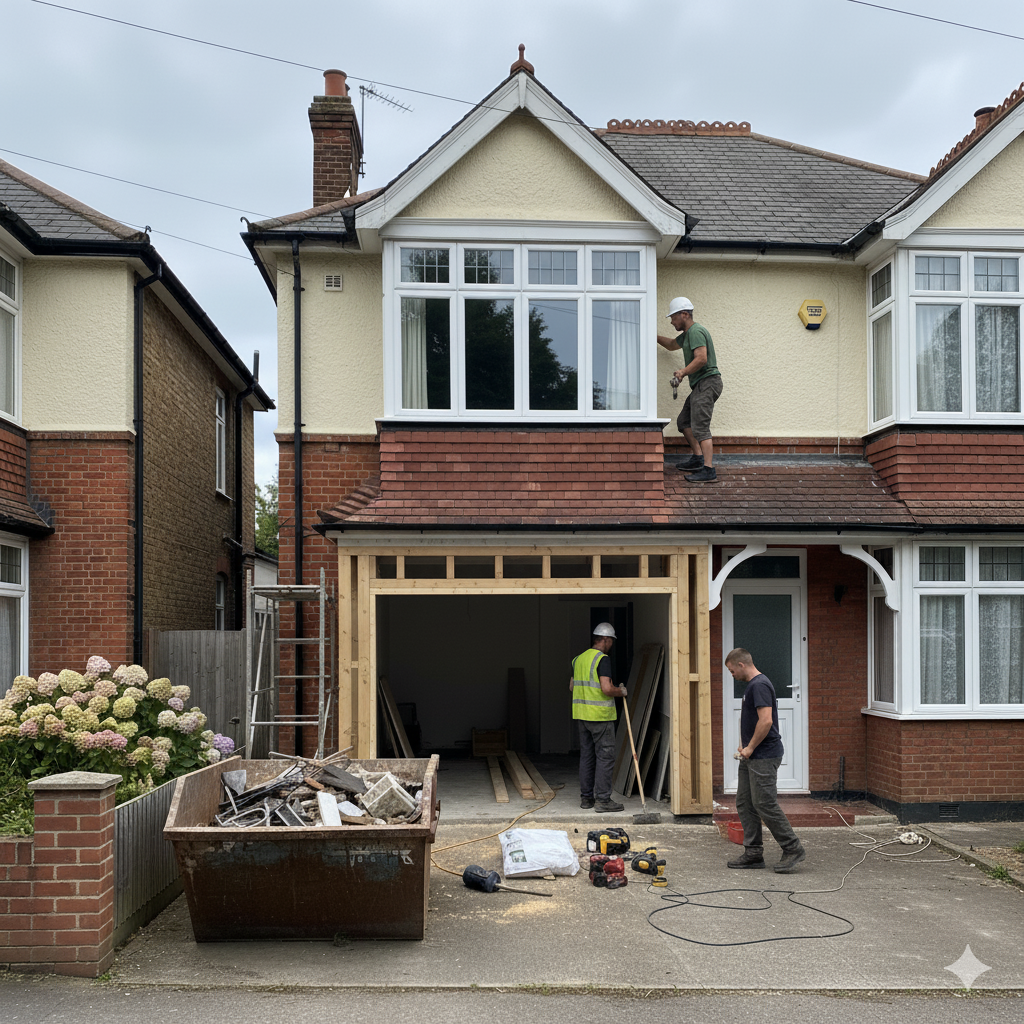
Investing in house extensions often provides the perfect opportunity to integrate these energy upgrades. Modern retrofitting ensures your home remains comfortable during extreme summer heatwaves and freezing winters.
The Financial Impact: Deep Retrofit Energy Savings
A comprehensive deep retrofit can reduce household energy bills by up to 80% compared to 2022 benchmarks. These deep retrofit energy savings are achieved by moving beyond simple DIY fixes to a ‘whole-house’ fabric-first approach.
By addressing the building envelope, you eliminate thermal bridging and air leakage. This holistic method ensures that high-tech heating systems like air-source heat pumps operate at maximum efficiency.
Key Financial Benefits of Retrofitting
* Significant reduction in monthly utility expenditure.
* Increased property resale value by up to 15% in major UK hubs.
* Exemption from certain carbon taxes being phased in for residential properties.
* Eligibility for preferential ‘Green Mortgage’ interest rates.
Critical Home Insulation Upgrades UK
Quality insulation remains the cornerstone of any successful renovation project. In 2026, home insulation upgrades UK standards have moved toward natural, breathable materials like wood fibre and hempcrete.
These materials manage moisture effectively, preventing the damp issues often associated with older synthetic foams. Professional installation is vital to ensure that the thermal envelope remains continuous and effective.
Top Insulation Priorities for 2026
External Wall Insulation London Solutions
For many homeowners in the capital, external wall insulation London projects are the most effective way to upgrade solid-walled properties. This process involves fixing insulation boards to the outside of the building and finishing with high-quality render or brick slips.
It preserves internal floor space while completely transforming the building’s thermal performance. You can find specialist contractors for these complex tasks via our refurbishment services.
Navigating UK Government Green Grants 2026
The landscape for financial assistance has evolved with the 2026 Net Zero Delivery Plan. The current UK government green grants 2026 provide substantial subsidies for low-income households and ‘early adopters’ of smart grid technology.
Most grants now require projects to be overseen by TrustMark-registered coordinators. Ensure your project meets the PAS 2035 standards to qualify for the latest round of decarbonisation funding.
Smart Home Integration and Micro-Generation
A modern retrofit is incomplete without intelligent energy management. Integrating solar PV arrays with battery storage allows homeowners to become ‘prosumers’ who sell energy back to the grid.
When planning a loft conversion, consider the structural capacity for high-density solar tiles. These integrated systems offer a seamless aesthetic compared to traditional bolt-on panels.
Essential Smart Technologies for 2026
* AI-driven thermal thermostats that predict weather patterns.
* Biometric ventilation systems (MVHR) for constant fresh air.
* Vehicle-to-Home (V2H) charging stations for EV integration.
* Automated solar shading to prevent overheating during summer months.
The Retrofitting Checklist for UK Homeowners
Before starting your project, you must conduct a thorough assessment. A professional retrofit coordinator will identify the ‘low-hanging fruit’ that offers the fastest return on investment.
* Step 1: Conduct a thermal imaging survey to find heat leaks.
* Step 2: Check eligibility for the 2026 Green Grant schemes.
* Step 3: Secure planning permission for external modifications or heat pump units.
* Step 4: Hire vetted contractors experienced in Net Zero construction standards.
* Step 5: Monitor performance post-installation using smart meters.