
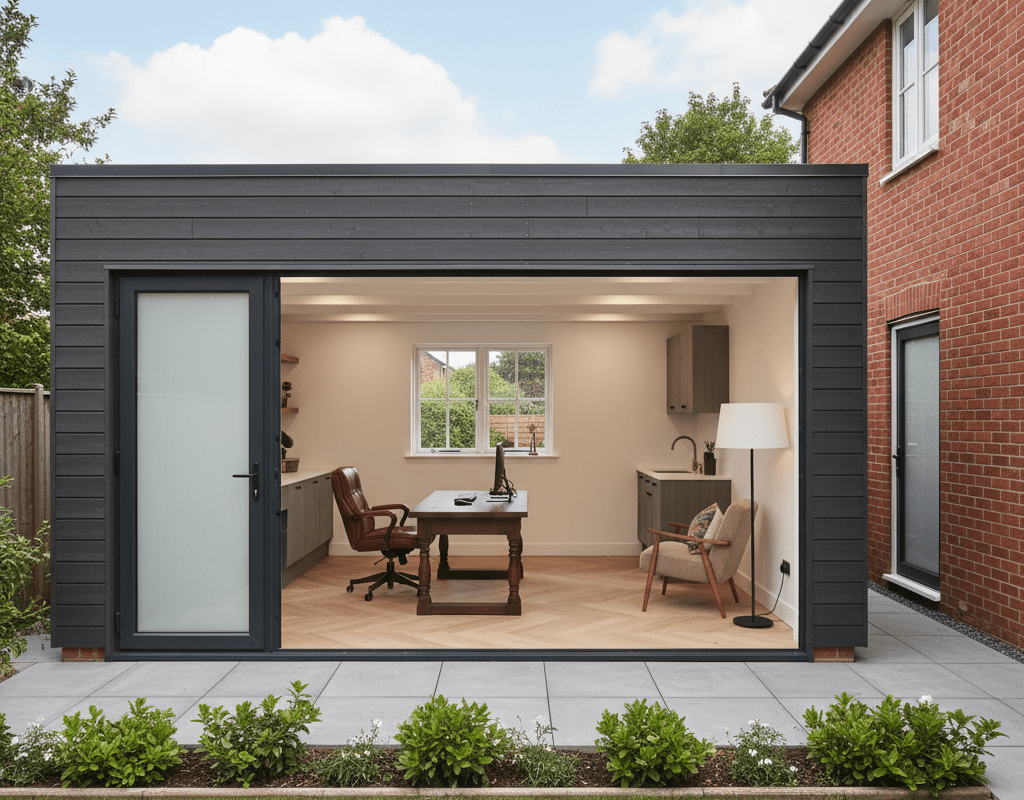


1. Choose the Right Paving Material
Not all paving is created equal when it comes to maintenance. While natural stone is beautiful, some types require far more upkeep than others.
Porcelain: The Modern King of Low Maintenance
If your goal is “zero effort,” vitrified porcelain paving is the gold standard.
-
Non-Porous: Unlike sandstone, porcelain doesn’t absorb water. This means it is highly resistant to algae, moss, and lichen growth—the green “film” that often plagues British patios.
-
Fade Resistant: It won’t lose its colour in the sun (on the rare occasions it shines!).
-
Easy Clean: A simple wipe with soapy water is usually enough; you rarely need a heavy-duty pressure washer.
Natural Stone: Indian Sandstone vs. Limestone
-
Indian Sandstone: Very popular in the UK but porous. It requires sealing to prevent staining and algae.
-
Limestone: Offers a more uniform look but can fade over time if not treated.
2. Design for Durability and Drainage
A low-maintenance garden must be technically sound to prevent future issues like standing water or shifting slabs.
The Importance of a Weed Membrane
Before any sub-base is laid, a heavy-duty geotextile weed membrane is essential. This prevents weeds from growing up through the joints from the soil below, though it won’t stop “surface weeds” (seeds dropped by birds), which leads us to our next point.
Professional Jointing Compounds
Old-fashioned sand and cement joints often crack over time, allowing weeds to take root. Modern brush-in jointing compounds (often called “polymeric sand”) create a flexible but rock-hard seal that is:
-
Weed-resistant: Roots cannot penetrate the material.
-
Permeable: It allows water to drain through, reducing puddles.
-
Durable: It won’t wash away during a heavy British downpour.
3. Comparison of Paving Types for Maintenance
| Feature | Porcelain Paving | Indian Sandstone | Concrete Slabs |
| Porosity | Extremely Low | High | Medium |
| Algae Resistance | Excellent | Poor (needs sealer) | Moderate |
| Cleaning Effort | Very Low | Moderate | High |
| Lifespan | 20+ Years | 15+ Years | 10-15 Years |
| Typical Cost | £££ | ££ | £ |
4. Zoning Your Garden
To avoid the “concrete jungle” look, use different paving styles or textures to create zones. This adds visual interest without adding work.
-
The Dining Zone: Use large-format slabs to create a stable, level area for garden furniture.
-
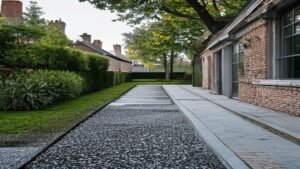
The Path: Use matching smaller pavers or even decorative gravel (with a honeycomb grid to keep it in place) to connect different areas.
-
Raised Beds: Instead of ground-level borders, use sleepers or brickwork to create raised beds. This keeps soil contained, prevents grass from creeping into your patio, and makes what little pruning you do much easier on the back.
5. Drainage and “SuDS” Compliance
In the UK, you must consider where rainwater goes. Paving over a large area can lead to surface flooding.
Important Note: To stay within Sustainable Drainage Systems (SuDS) guidelines, ensure your patio is tilted slightly (a “fall”) towards a flower bed or a dedicated soakaway. Alternatively, use permeable paving or leave small “gravel strips” between the patio and the house to catch run-off.
6. Essential Maintenance Tips (The Minimalist Version)
Even a low-maintenance garden needs a little love. Follow this annual routine:
-
Spring Sweep: Use a stiff broom to clear away winter debris.
-
The Occasional Wash: A quick hose down once a month prevents dirt build-up.
-
Check the Joints: Once a year, check for any cracks in the pointing. Filling a small gap now saves a massive weeding job later.
-
Seal Natural Stone: If you chose sandstone, re-apply a high-quality sealer every 2–3 years to keep it looking new.