



1. Enhancing Acoustics: The Science of Silence
In any open-plan environment, sound management is critical. Hard surfaces like plastered walls and glass reflect sound, leading to echoes and “reverberation,” which makes communication difficult and increases stress levels.
Sound Absorption vs. Sound Attenuation
Suspended ceilings address acoustics in two distinct ways:
-
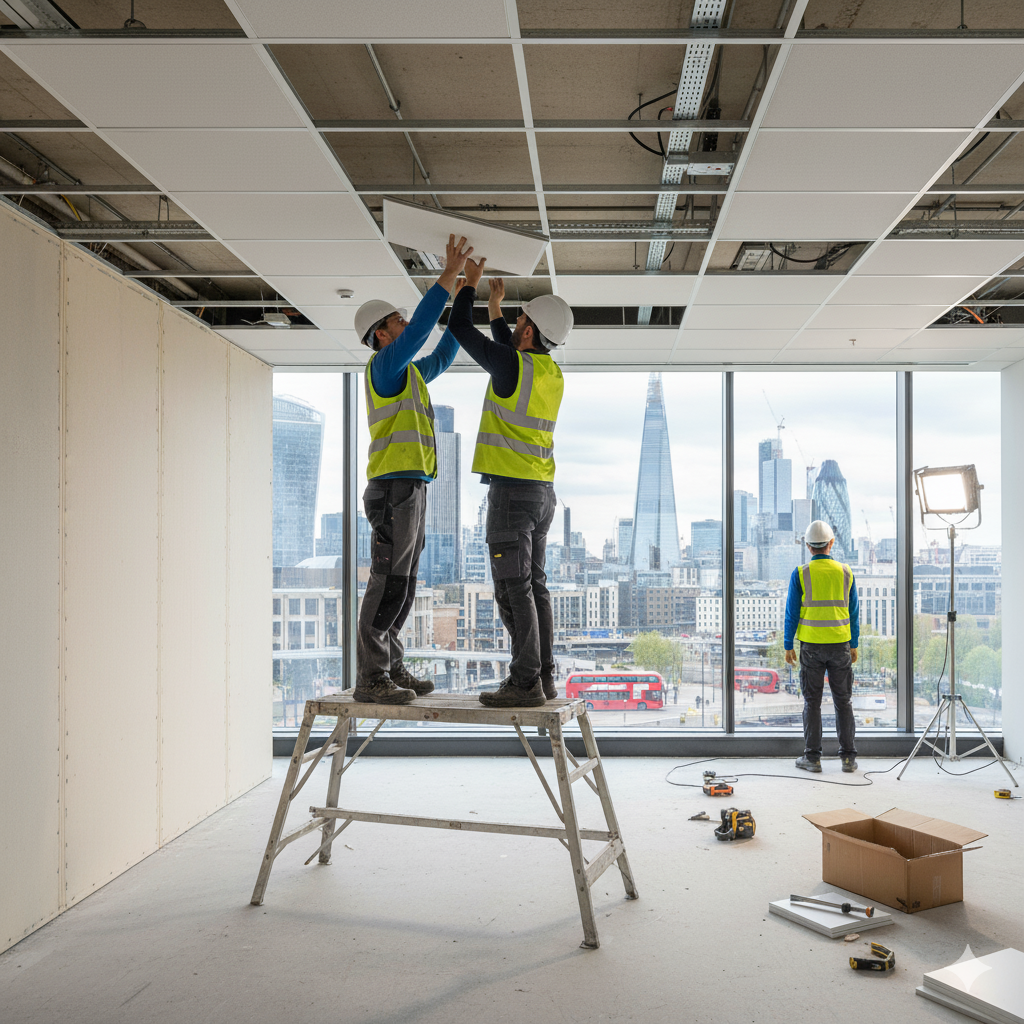
Sound Absorption (NRC): This refers to the ceiling’s ability to “soak up” sound within a room, preventing it from bouncing back. High-performance mineral fibre or glass wool tiles act like a sponge, significantly reducing echo in large spaces.
-
Sound Attenuation (CAC): This is the ability of the ceiling to block sound from travelling between rooms or floors. By creating a physical barrier and an airtight “void,” a suspended ceiling helps prevent the sound of footsteps from the floor above or chatter from the office next door.
Expert Tip: Look for tiles with a high Noise Reduction Coefficient (NRC). A rating of 0.70 means the ceiling absorbs 70% of the sound that hits it, reflecting only 30% back into the room.
2. Boosting Energy Efficiency: Thermal Insulation
With energy prices remaining a primary concern for UK homeowners and businesses alike, the thermal benefits of a suspended ceiling provide a significant return on investment.
Reducing the “Heated Volume”
One of the simplest ways to save energy is to reduce the volume of space you need to heat. Many older UK properties have unnecessarily high ceilings. By installing a suspended system, you lower the “effective” height of the room. This means your central heating system has less air to warm up, leading to faster heating times and lower utility bills.
The Insulating Void
The gap between the original structural ceiling and the new suspended tiles creates a static air buffer. This trapped air acts as a natural insulator, slowing down the transfer of heat out through the roof.
| Feature | Impact on Efficiency |
| Lower Ceiling Height | Less cubic space to heat/cool; reduces boiler workload. |
| Insulation Overlay | Mineral wool batts can be laid atop the grid for extra thermal resistance. |
| Light Reflectance | High-gloss white tiles reflect natural light deeper into the room, reducing the need for artificial lighting. |
3. Practicality: Hiding Services and Improving Light
Beyond the hidden physics of sound and heat, suspended ceilings offer practical advantages that modernise the feel of a property.
-
Discreet Infrastructure: The “plenum” (the space above the tiles) is the perfect place to hide unsightly electrical wiring, plumbing, and ductwork for air conditioning. This allows for a clean, minimalist aesthetic without the cost of chasing cables into solid masonry.
-
Integrated Lighting: Modern LED panels can be fitted flush into the grid system. These panels provide more uniform light distribution than traditional pendants and are far more energy-efficient.
-
Easy Access: Unlike a traditional plasterboard ceiling, which must be cut open for repairs, suspended tiles can be easily lifted. This makes maintenance of pipes or wires simple and non-destructive.
4. Choosing the Right Material
The effectiveness of your ceiling depends largely on the material of the tiles you choose:
-
Mineral Fibre: The “all-rounder.” Excellent for both sound absorption and fire resistance.
-
Metal Tiles: Durable and easy to clean, often used in high-end commercial kitchens or modern foyers.
-
Acoustic Foam/Plaster: Often used in home cinemas or recording studios where sound quality is the absolute priority.
Conclusion
A suspended ceiling is much more than a cosmetic fix; it is a strategic upgrade. By significantly lowering reverberation times and creating a thermal barrier, these systems create environments that are quieter, warmer, and cheaper to run. Whether for a school, an office, or a residential conversion, the long-term savings on energy and the improvement in acoustic comfort make it an essential consideration for any renovation.