
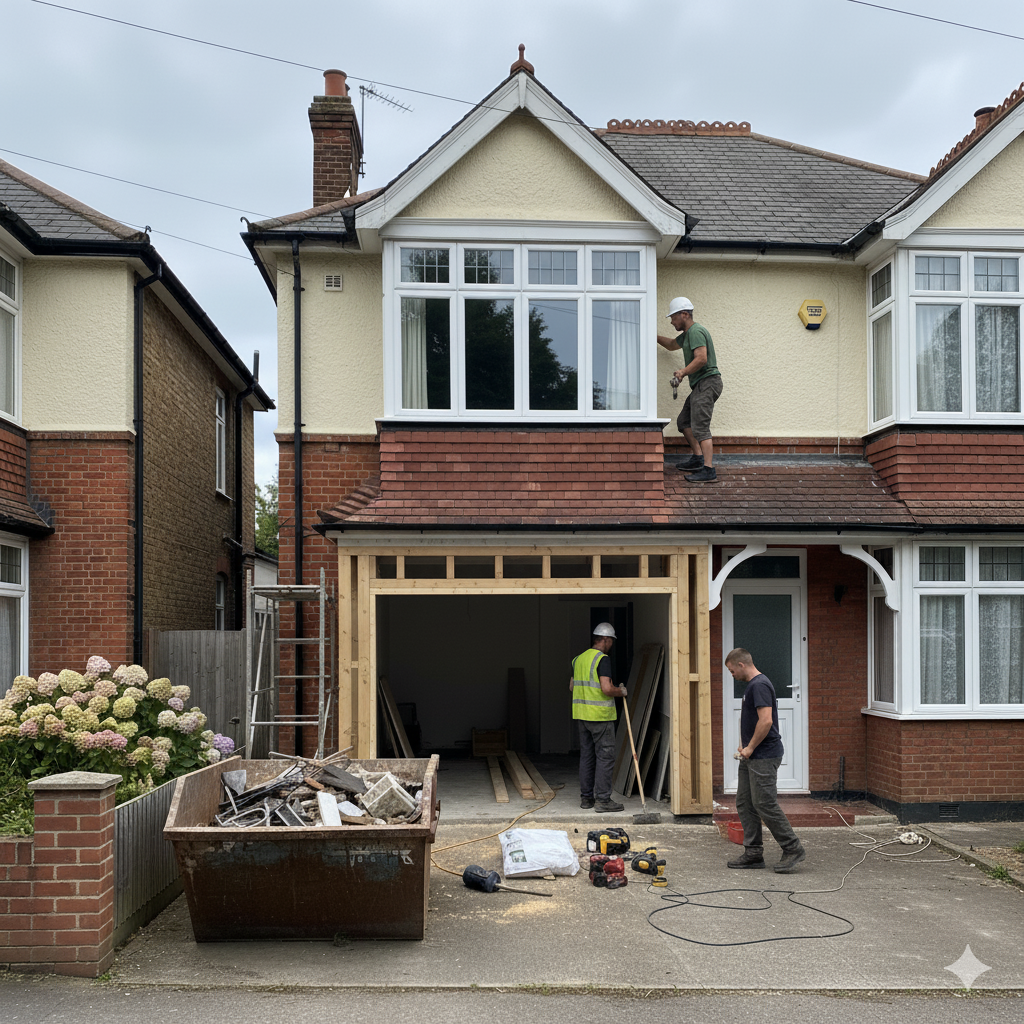





In 2026, the British building industry has entered a new era of accountability. The image of the “builder with a van” is being replaced by highly regulated professionals who must navigate a complex landscape of digital records, strict safety legislation, and green energy standards.
For a homeowner or developer, understanding what makes a professional builder in the UK is no longer just about checking references—it’s about verifying compliance with a new set of national benchmarks.
1. Regulatory Compliance: The “Golden Thread”
Following the full implementation of the Building Safety Act 2022, a professional builder must now maintain a “Golden Thread” of information. This is a digital record of how a building was designed, built, and managed.
-
The Building Safety Regulator (BSR): As of January 2026, the BSR has expanded its oversight. A professional builder works transparently with this body, ensuring all work is logged and compliant with the latest Approved Documents.
-
Competent Person Schemes: A true professional is registered with a government-approved scheme (such as NICEIC for electrics, Gas Safe for heating, or FENSA for windows). This allows them to self-certify that their work meets Building Regulations, saving you the hassle of separate council inspections.
2. Professional Accreditations
Membership in a trade body is the most reliable “litmus test” for quality. These organisations vet their members for financial stability, site safety, and craftsmanship.
-
Federation of Master Builders (FMB): Members must pass an independent inspection and abide by a strict Code of Practice.
-
Chartered Institute of Building (CIOB): For larger projects, look for a “Chartered Builder.” This indicates a degree-level understanding of construction management and ethics.
-
National House Building Council (NHBC): For new builds, the 2026 NHBC Standards are the benchmark. A professional builder will be familiar with the latest updates on sustainable drainage (SuDS) and thermal imaging requirements for insulation.
3. Insurance and Protection
A professional builder protects your home—and their business—against the unexpected. Never hire a contractor who cannot produce current certificates for:
-
Public Liability Insurance: Protects against damage to your property or injury to third parties (usually a minimum of £2m–£5m).
-
Employer’s Liability Insurance: A legal requirement if they have any staff or sub-contractors on-site.
-
All-Risks Cover: Protects the work itself (e.g., if a partially finished extension is damaged in a storm).
4. The “Paper Trail”
Professionalism is defined by clarity. A professional builder will never rely on “handshake deals.” You should expect:
-
Detailed Written Quotes: Not just a total figure, but a breakdown of labour, materials, and VAT.
-
JCT or FMB Contracts: Using a standard industry contract protects both parties regarding payment schedules, timelines, and dispute resolution.
-
The 2026 Building Safety Levy: For residential developments, professional builders are now well-versed in the Building Safety Levy (introduced October 2026), ensuring these costs are accounted for in the initial planning.
Key Identifiers of a UK Professional
| Feature | The Professional Standard | The “Cowboy” Red Flag |
| Payment | Staged payments via bank transfer. | Requesting large cash deposits upfront. |
| Safety | Clear PPE, tidy site, and a health & safety plan. | Disorganised site with no safety protocols. |
| Communication | Regular “toolbox talks” and digital updates. | Vague timelines and unreturned calls. |
| References | Can provide recent, local projects to visit. | Reluctant to share previous client details. |
5. Technical Expertise in 2026 Standards
With the Future Homes Standard now in full swing, a professional builder must be a “thermal expert.” They should be able to discuss:
-
U-Values: How well your walls and windows prevent heat loss.
-
Airtightness: Using specialist tapes and membranes to stop draughts.
-
Heat Pump Integration: Ensuring your home’s radiators or underfloor heating are correctly sized for low-carbon heating systems.
6. Sustainable Material Sourcing
In 2026, “professional” also means “responsible.” Top-tier builders prioritising the environment will source:
-
FSC-Certified Timber: Ensuring wood comes from managed forests.
-
Low-VOC Finishes: Protecting your indoor air quality.
-
Recycled Aggregates: Reducing the carbon footprint of your foundations.
Final Thoughts
A professional builder in the UK is a blend of craftsman, lawyer, and environmentalist. They provide a buffer between you and the risks of construction, ensuring that your project is not only beautiful but also legal, safe, and energy-efficient for the 2026 market.
