
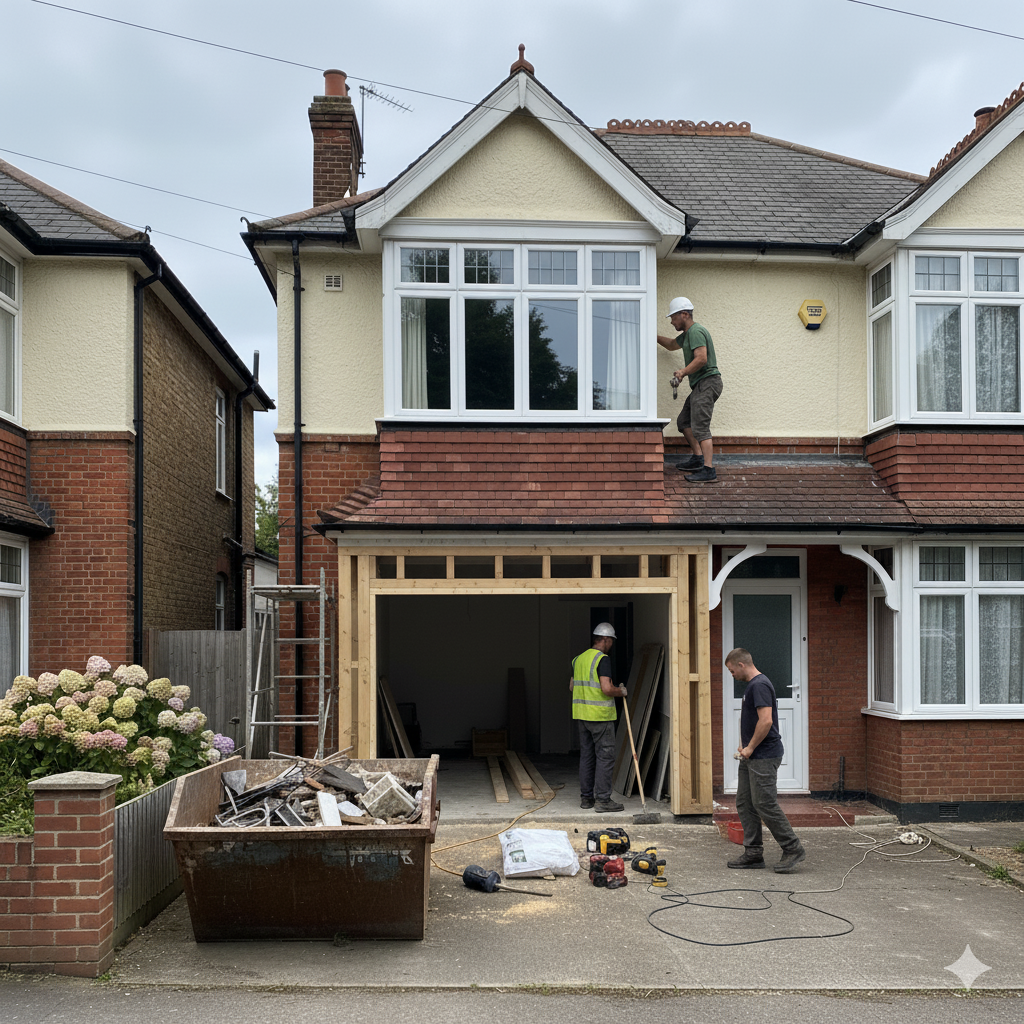





Hiring a construction company or main contractor in the UK is arguably the single most important decision for any major home project, be it an extension, a full renovation, or a new build. The quality of this choice determines whether your experience is a smooth success or a protracted, stressful nightmare.
To help you vet candidates like a professional surveyor, here is a detailed, step-by-step guide to finding a reliable, high-quality builder that is the best fit for your specific project.
1. 🔍 Specialism and Experience
Never hire a generalist for a specialist job. Your contractor must have direct, recent experience with the type of work you need done.
-
Look for Specialism: A company that specialises in basement conversions will have different expertise, equipment, and insurance than a company that only does interior remodels. Ask if they specialise in:
-
Loft or Rear Extensions (e.g., Dormer, Hip-to-Gable).
-
Period Property Renovation (e.g., working with Georgian or Victorian homes).
-
New Builds.
-
-
Request Proof of Similar Work: Ask to see a portfolio with high-quality images of projects similar to yours completed within the last 18 months.
-
Visit Active and Completed Sites: Viewing a completed project lets you assess the quality of the finish and longevity of the work. Visiting an active site shows you how they work: is the site tidy, safe, and are the tradespeople professional?
2. 🛡️ Credentials, Insurance, and Legal Compliance
This is the non-negotiable checklist for legal and financial protection. Always ask to see the original documents, not just verbal confirmation.
| Document/Accreditation | Why It Matters | UK Requirement |
| Public Liability Insurance | Protects you against damage to your property or injury to a third party (e.g., a neighbour’s house damaged by falling scaffolding). | Essential. Most clients require a minimum of £2 million cover. |
| Employers’ Liability Insurance | Legally mandatory if the company employs staff. Protects against injury claims from their workers. | Compulsory in the UK if they employ anyone, even casual labour. |
| Trade Body Membership | Memberships (e.g., Federation of Master Builders (FMB) or TrustMark) indicate the company has been vetted for quality and professional standards. | Highly recommended; shows commitment to quality. |
| Specialist Certification | Confirms competence for high-risk work. | Must use Gas Safe Registered engineers and NICEIC or ELECSA certified electricians. |
| VAT Registration | While not mandatory for smaller firms, a VAT registration number provides an extra layer of business legitimacy and is required if they hit the turnover threshold. | Check the number on the HMRC website for assurance. |
Red Flag Alert: Be extremely cautious of any builder who asks for the full payment in cash to “avoid VAT.” This is illegal and indicates a serious lack of financial professionalism.
3. ✍️ The Quote and Contract Transparency
A reliable contractor provides a quote that is detailed and leaves no room for ambiguity.
-
Itemised Quote: Insist on a written quote (tender) that is broken down, separating costs for: labour, materials, subcontractor fees (e.g., plumbing), and skip hire/waste disposal.
-
Fixed Price vs. Estimate: For large projects, push for a fixed price wherever possible. An estimate is just a guess and can spiral wildly. The quote must clearly state that all prices include VAT.
-
Payment Schedule: A fair schedule involves a small deposit (5-10%), followed by staggered payments tied to the completion of specific, measurable milestones (e.g., foundations complete, roof watertight, plastering finished). Never pay the entire balance upfront.
-
The Contract: For significant work, a formal contract (such as a standard JCT Homeowner Contract) is essential. It defines the scope of work, timeline, payment terms, and procedures for dispute resolution and unforeseen circumstances.
4. 🗣️ Communication and Reliability
You need a company that you can trust and communicate effectively with, as they will be in your home for weeks or months.
-
Responsiveness: How quickly and professionally do they respond to your initial enquiries and quote requests? Poor initial communication is a major red flag for how they will manage problems mid-build.
-
Designated Contact: Ensure you have one named Site Manager or Project Manager who is your single point of contact for daily updates and queries.
-
Ask About Problems: A good builder knows that things go wrong. Ask: “Can you give me an example of when a problem arose (e.g., hitting a concealed drain), and how you communicated and resolved it with the client?” Their honest, transparent answer reveals their reliability.
5. ✅ Post-Completion Assurance
A professional relationship doesn’t end when the builder leaves.
-
Snagging Period: The contract should include a retention period (holding back a small percentage of the final payment, e.g., 2.5-5%) for a period of time (e.g., six months) after completion. This ensures the builder returns to fix any minor defects (snags) that appear once you start using the house.
-
Warranties and Certification: Confirm you will receive all necessary documentation: the Building Control Completion Certificate, electrical certificates, gas safety certificates, and any manufacturer warranties for installed systems (e.g., boilers, windows).
By diligently following these vetting tips, you will significantly reduce your risk and be well-equipped to select a construction partner in the UK who will deliver your project to a high standard, on budget, and on time.
