



Whether you are looking to add value to a Victorian terrace or modernise a 1970s semi, here are the most popular home renovation trends in the UK right now.
1. The “Green” Renovation: Energy Efficiency First
In previous decades, a new kitchen was the top priority. Today, the “fabric-first” approach is leading the way. With high energy prices and a national drive towards Net Zero, homeowners are investing in the “invisible” parts of their homes.
-
Insulation Upgrades: Retrofitting loft, cavity wall, and underfloor insulation to improve EPC (Energy Performance Certificate) ratings.
-
Alternative Heating: A surge in the installation of air-source heat pumps and solar panels, supported by government grants like the Boiler Upgrade Scheme.
-
High-Performance Glazing: Moving beyond standard double glazing to triple glazing or vacuum-insulated glass to eliminate draughts in period properties.
2. From “Open-Plan” to “Broken-Plan”
The era of the cavernous, single-room ground floor is evolving. While we still love the light of an open space, the reality of working from home has highlighted the need for acoustic privacy.
-
Zoning with Crittall: Using internal glass partitions (often in the industrial Crittall style) to separate a home office or “snug” from the main kitchen-diner without losing the flow of light.
-
The Second Lounge: A return to the traditional “front room” as a sanctuary away from the noise of the television and kitchen appliances.
3. The Rise of the “Shoffice” (Shed-Office)
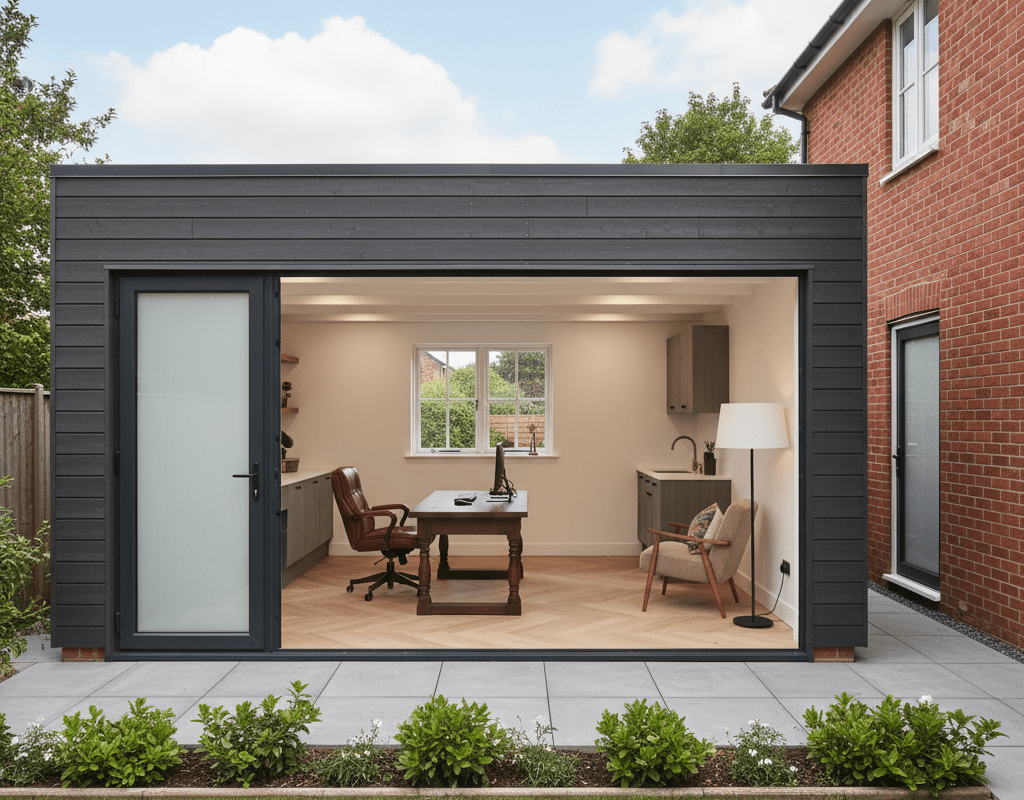
With hybrid working now firmly established in the UK, the garden office has become one of the most requested additions.
-
Year-Round Usability: Modern garden rooms are now built to the same standards as a house extension—fully insulated, double-glazed, and connected to the high-speed internet.
-
Multifunctional Spaces: These structures are often designed as “shoffices”—part high-end workspace, part gym, or part guest annexe, significantly increasing the property’s square footage without the need for a complex house extension.
4. Biophilic Design: Bringing the Outside In
British homeowners are increasingly seeking a stronger connection to their gardens. This trend, known as biophilic design, focuses on natural light and organic materials.
-
Living Walls and Indoor Trees: Integrating greenery directly into the architecture of the home.
-
Picture Windows: Replacing standard windows with large, fixed-pane “picture windows” that frame the garden like a piece of art.
-
Natural Materials: A move towards cork flooring, stone worktops, and exposed timber beams, moving away from high-gloss plastics and chrome.
5. Multigenerational Living & Annexes
The housing crisis and an ageing population have made multigenerational living a major trend. Many renovations now focus on how to house three generations under one roof.
-
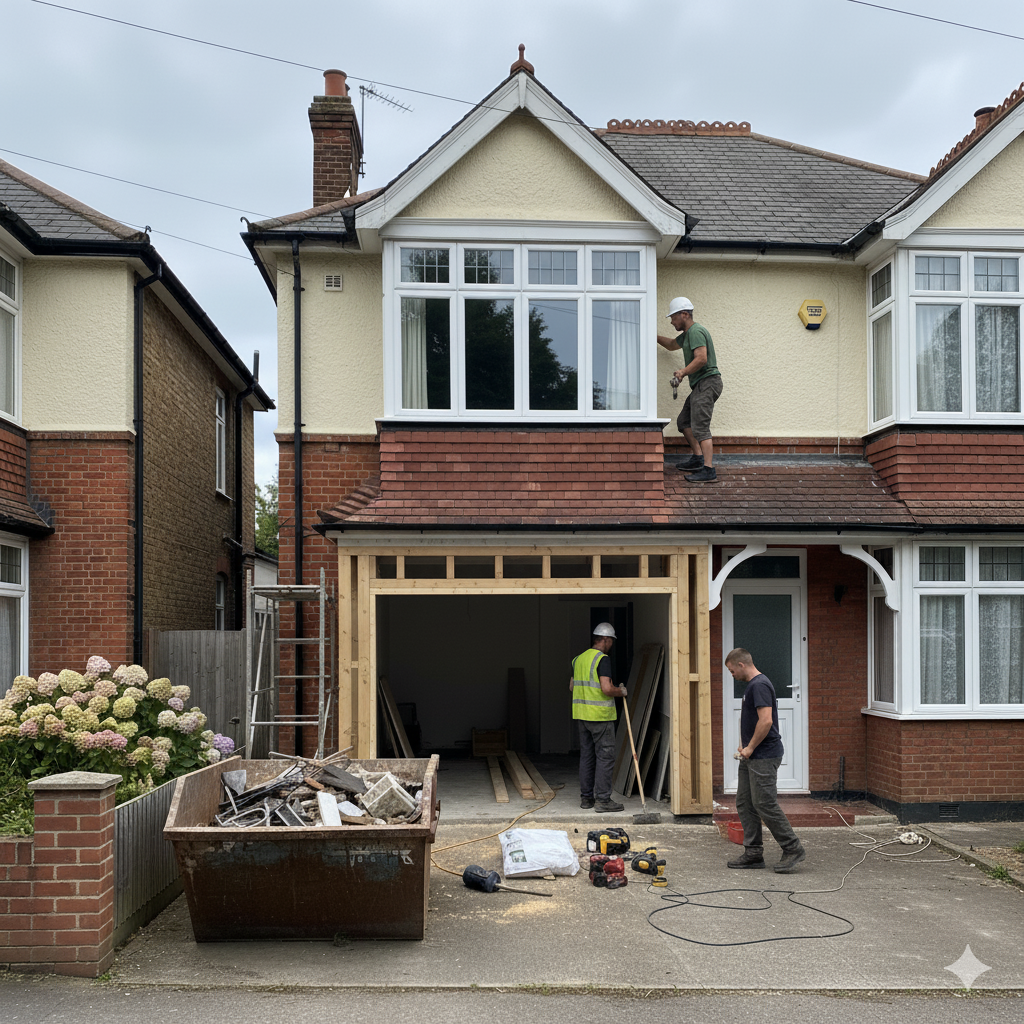
Garage Conversions: Transforming underutilised garages into “granny flats” or independent living spaces for adult children.
-
Dual-Access Renovations: Designing extensions with their own front doors or separate kitchenettes to provide autonomy for different family members.
6. Luxury Utility Rooms and “Bootility” Spaces
The utility room has been promoted from a cramped laundry cupboard to a high-end design feature.
-
The “Bootility”: A hybrid of a boot room and a utility room. These spaces feature bespoke cabinetry for dog washing stations, dedicated coat storage, and high-end laundry appliances.
-
Aesthetic Functionality: Homeowners are now using bold colours, patterned tiles, and brass hardware in these practical spaces to match the rest of the home’s interior design.
Summary
The current trends in the UK reflect a desire for homes that work harder for us. We want properties that are cheaper to heat, provide quiet corners for work, and allow us to stay connected to our families and the natural world.
