
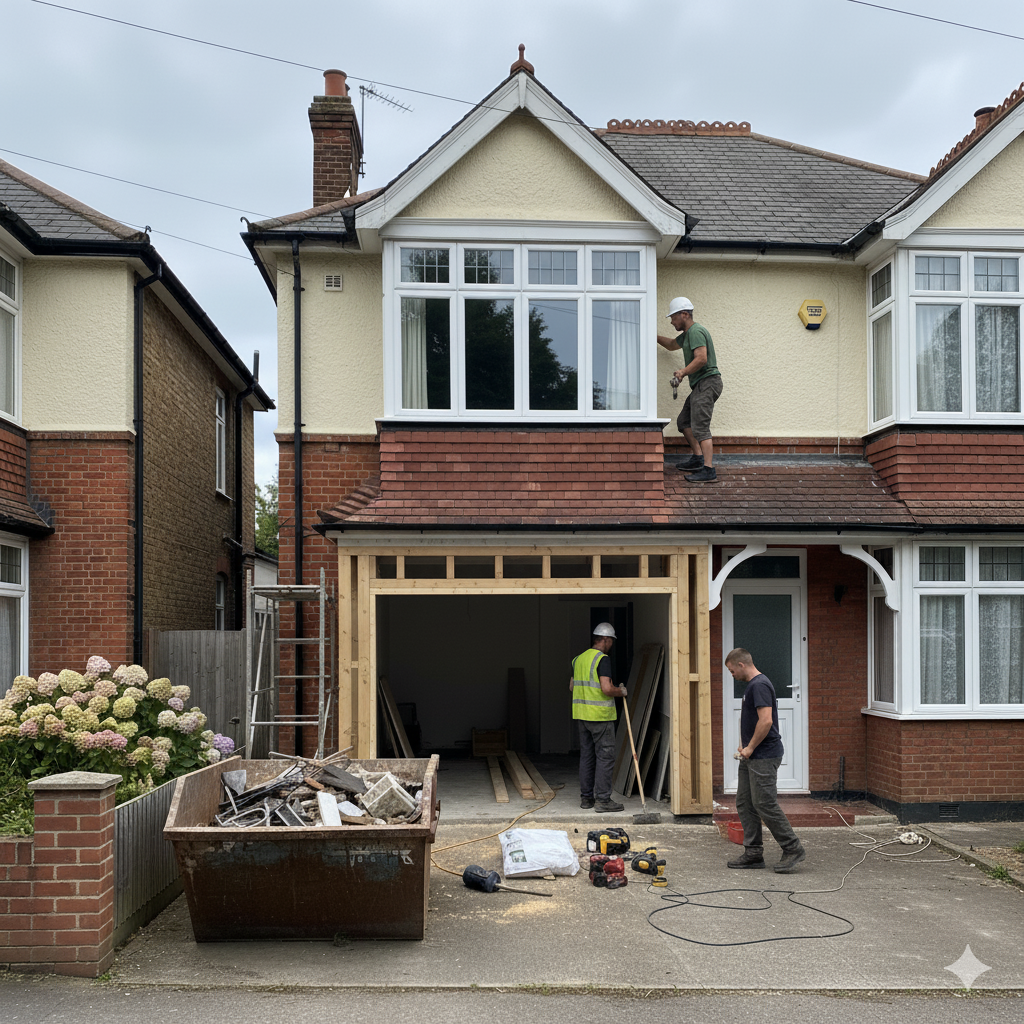




1. Establish Your “Sanctuary Zone”
Before the first sledgehammer swings, you must designate at least one room—ideally a bedroom or a snug—as a strictly construction-free zone.
-
The Golden Rule: This room must be 100% finished or left entirely untouched. It should be a clean, comfortable space where you can retreat at the end of the day to escape the sight of exposed brickwork and floorboards.
-
Sealing it off: Use heavy-duty plastic sheeting and adhesive “zipper doors” to create a literal barrier against dust.
-
Climate Control: If it’s winter, ensure this room has a reliable heat source (like a plug-in oil radiator) in case the central heating needs to be drained or disconnected during the works.
2. Master the Art of Dust Containment
Construction dust in the UK is notorious; it is incredibly fine and has a magical ability to find its way into closed wardrobes and even sealed cereal boxes.
-
Zonal Living: Create a physical divide between the “living” and “working” areas of the house.
-
Tape the Vents: If you have an older home with floor vents or modern air conditioning, tape them shut in the living areas to prevent dust from circulating through the ductwork.
-
Professional Protection: Use Proplex (corrugated plastic sheets) to protect your flooring in high-traffic hallways.
3. The Temporary Kitchen Strategy
If you are renovating your kitchen, you will likely be without a sink, cooker, or dishwasher for several weeks.
4. Managing Trades and Schedule
Living on-site means you are essentially the de-facto site manager. Clear communication with your builders is vital.
-
The “Morning Briefing”: Have a five-minute chat with the lead builder every morning at 8:00 AM. Confirm what is being done that day and, crucially, which services (water, electricity, gas) will be turned off and for how long.
-
Toilet Facilities: If you only have one bathroom and it’s being renovated, you must arrange a solution. Whether it’s a “portaloo” in the garden or staying with a neighbour for the “no-water” days, plan this well in advance.
-
Deliveries and Skips: Be prepared to move your car frequently. Ensure your neighbours are warned about skips and delivery lorries to maintain peace on the street.
5. Protecting Your Mental Wellbeing
The “renovation fatigue” is real. Living in a building site can be overstimulating and exhausting.
Top Tip: Schedule “Site Escape” days. Once a week, get out of the house entirely. Go to a cinema, visit a friend, or stay in a hotel for one night. A hot shower in a clean bathroom can do wonders for your morale.
-
Keep a Clean Routine: Even if the rest of the house is a mess, keep your sanctuary zone spotless. Vacuum it daily to prevent “dust tracking” from your clothes into your bed.
-
Value the Small Wins: Celebrate when a room is plastered, or when the first coat of paint goes on. These milestones keep you motivated when the project feels never-ending.
6. Safety First
When you live on a building site, safety hazards are everywhere.
-
Loose Floorboards: Ensure builders “plate over” any holes in the floor before they leave for the evening.
-
Child & Pet Safety: If you have children or pets, they must be strictly barred from the work zone. Even when the builders have left, there may be exposed wires or sharp debris.
-
Security: Ensure the house is fully secured every night. Builders often leave windows on “vent” or doors unlocked by accident.
