
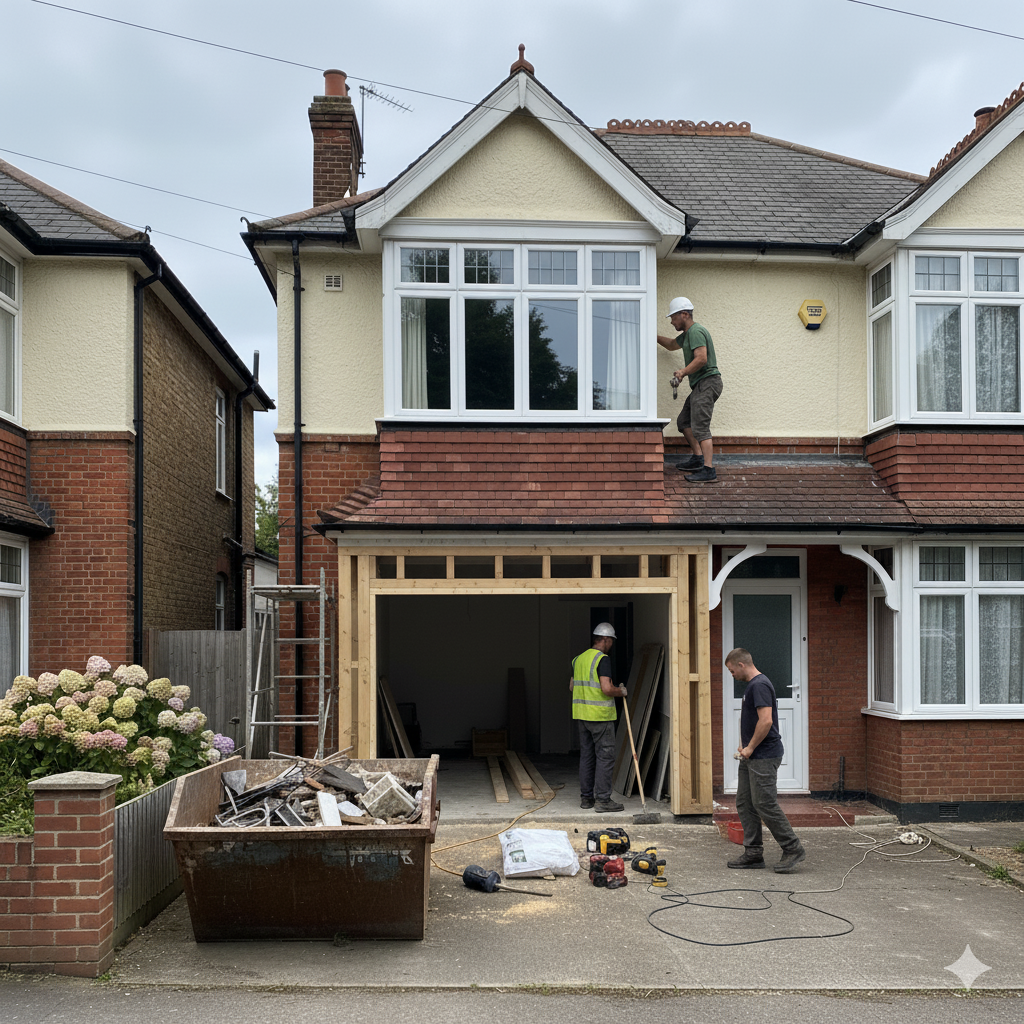





In the UK, we have some of the oldest and “draughtiest” housing stock in Europe. Whether you are tackling a damp Victorian terrace or a chilly 1930s semi, a renovation is your golden window to transform a cold house into a high-performance, energy-efficient home.
Here is the professional’s guide to improving insulation from the ground up during your refurbishment.
1. Walls: The Biggest Source of Heat Loss
Approximately 35% of heat escapes through uninsulated walls. Your strategy depends on whether you have “solid” or “cavity” walls.
-
Cavity Wall To-Ups: If your home was built between the 1920s and 1990s, you likely have a cavity. During a renovation, check if the existing insulation has settled or degraded. Professional installers can “top up” these cavities with modern mineral wool or EPS beads.
-
Internal Wall Insulation (IWI): For solid-wall properties where you cannot change the exterior, IWI is the standard. Use insulated plasterboard (PIR foam bonded to board) or build a separate stud wall filled with wool.
Pro Tip: When installing IWI, ensure you maintain a “vapour control layer” to prevent interstitial condensation—moisture trapped between the new insulation and the old cold wall.
-
External Wall Insulation (EWI): If you are rendering the outside of your house anyway, EWI is the gold standard. It “wraps” the building in a thermal blanket, eliminating “cold bridges” where floors meet walls.
2. The Roof: Achieving 2026 Standards
Heat rises, and an uninsulated roof accounts for 25% of heat loss. Current UK Building Regulations (2026) target a U-value of 0.16 W/m²K for renovations.
-
Cold Roof (Loft Floor): The cheapest and easiest method. Lay mineral wool between the joists (usually 100mm) and then a second layer crosswise over the joists (170mm) to reach the recommended 270mm total depth.
-
Warm Roof (Rafters): If you are converting the loft into a bedroom or office, you must insulate between and under the rafters. Use rigid PIR boards (like Celotex or Kingspan) as they offer better thermal resistance for their thickness than wool, preserving precious head height.
3. Floor Insulation: Banishing the Chill
If you have “cold feet” even when the heating is on, your floors are to blame.
-
Suspended Timber Floors: If you’ve lifted the floorboards to re-wire, don’t put them back without insulating. Suspend “netting” between the joists and fill with mineral wool or sheep’s wool.
-
Solid Concrete Floors: If you are pouring a new screed, lay high-density rigid insulation boards (PIR) underneath. This is essential if you are installing underfloor heating (UFH), as it ensures the heat travels up into the room rather than down into the earth.
4. Airtightness and Draught-Proofing
Insulation is only half the battle; the other half is airtightness.
-
The “Envelope” Seal: Use expanding foam or specialist airtightness tape around window frames, door frames, and where joists enter walls.
-
The Loft Hatch: An often-overlooked “chimney” for heat. Ensure your loft hatch is insulated on the back and fitted with a draft-excluding seal.
-
Pipe Lagging: While the floorboards are up, insulate your hot water pipes. It costs pennies but prevents heat from being lost before it even reaches your radiators.
5. Check for UK Government Grants
Before you buy materials, check your eligibility for the Great British Insulation Scheme (GBIS). Running until March 2026, this scheme provides free or heavily subsidised insulation for homes in lower Council Tax bands (A–D in England) or those with an EPC rating of D or below.
Summary of Insulation Materials
| Material | Best For | Benefit |
| PIR Boards | Roof rafters & solid floors | Best performance for its thickness. |
| Mineral Wool | Loft floors & stud walls | Excellent fire rating & acoustic dampening. |
| Sheep’s Wool | Suspended floors | Sustainable, breathable, and handles moisture well. |
| Multifoil | Tight spaces | Reflects radiant heat; great for thin roof build-ups. |
Final Thoughts
Improving insulation is the “invisible” part of a renovation, but it provides the highest return on investment. By choosing the right materials and focusing on airtightness, you will lower your bills, increase your EPC rating, and create a far more comfortable living environment.
