



1. Reclaim the “Dead Space” with a Side Return
For many Victorian and Edwardian terraced or semi-detached homes, the side return—the narrow strip of land running alongside the kitchen—is often a neglected “alley” used only for bins.
-
The Benefit: A side return extension expands the internal width of your kitchen or living area without touching the main rear garden.
-
The Result: You gain a large, open-plan kitchen-diner and a more “square” floor plan, transforming the flow of your ground floor while preserving every inch of your lawn.
2. Think Vertically: The Loft Conversion
If you need an extra bedroom or a home office, the most garden-friendly extension is one that doesn’t have a footprint at all.
-
Upwards, Not Outwards: Converting your loft into a habitable space can add up to 20% to your property’s value and typically falls under Permitted Development (up to 40 or 50 cubic metres depending on the house type).
-
Garden Views: Incorporating large dormer windows or Juliette balconies allows you to enjoy an elevated, panoramic view of the garden you’ve worked so hard to save.
3. The “Small Footprint” Glazed Extension
If you must extend into the garden, opt for a structure that feels invisible. A glass-box extension or an orangery uses slim-framed glazing to blur the boundaries between indoors and out.
-
Visual Continuity: Unlike a solid brick wall, floor-to-ceiling glass (like slimline sliding doors) makes the garden feel like part of the room.
-
Light Infiltration: Even a small 3-metre extension can feel massive if it’s flooded with natural light from a roof lantern, meaning you don’t need to build as “deep” into the garden to achieve a sense of space.
4. Summary of Garden-Saving Extension Types
| Extension Type | Impact on Garden | Best For… |
| Loft Conversion | Zero | New bedrooms or master suites. |
| Side Return | Minimal | Period properties with narrow side alleys. |
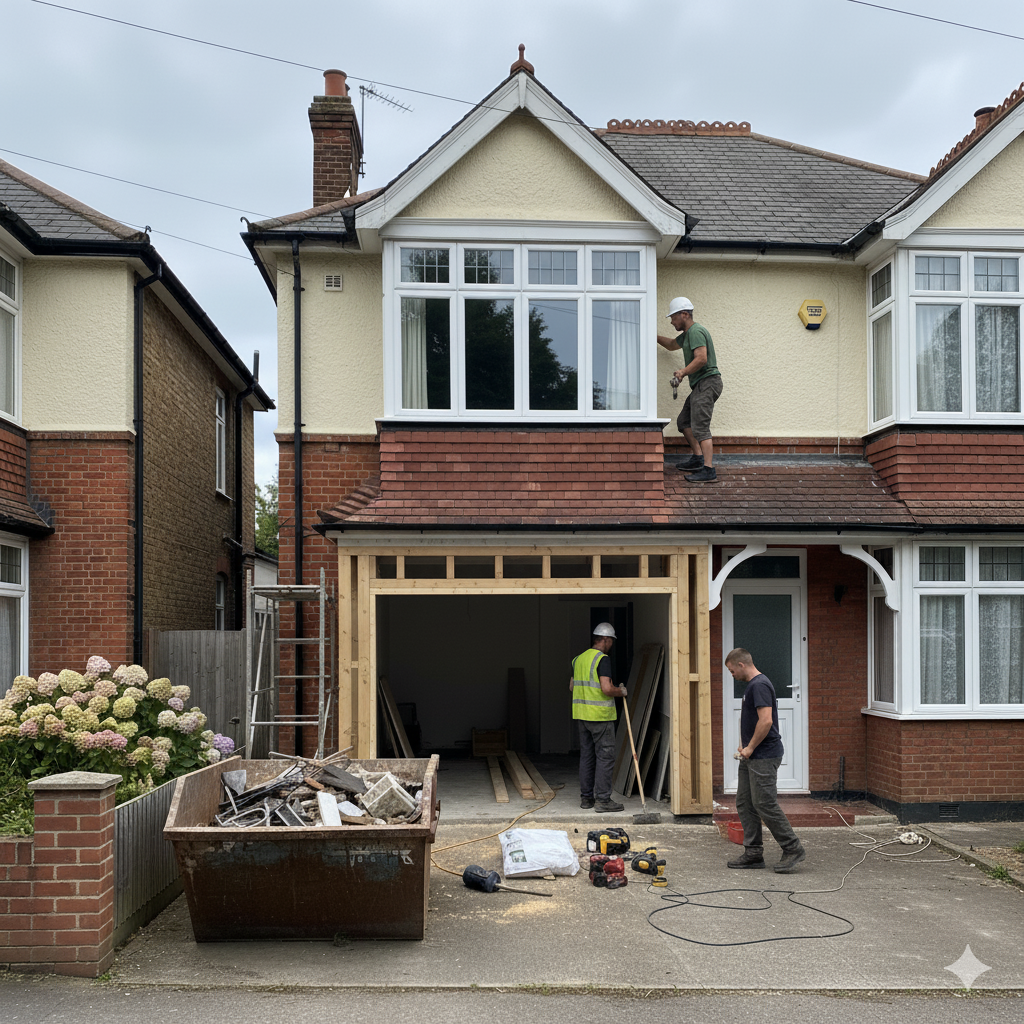
| Vertical Extension | Zero | Adding a second storey over an existing garage. |
| Glass Box | Low | Small extensions that need to feel “open”. |
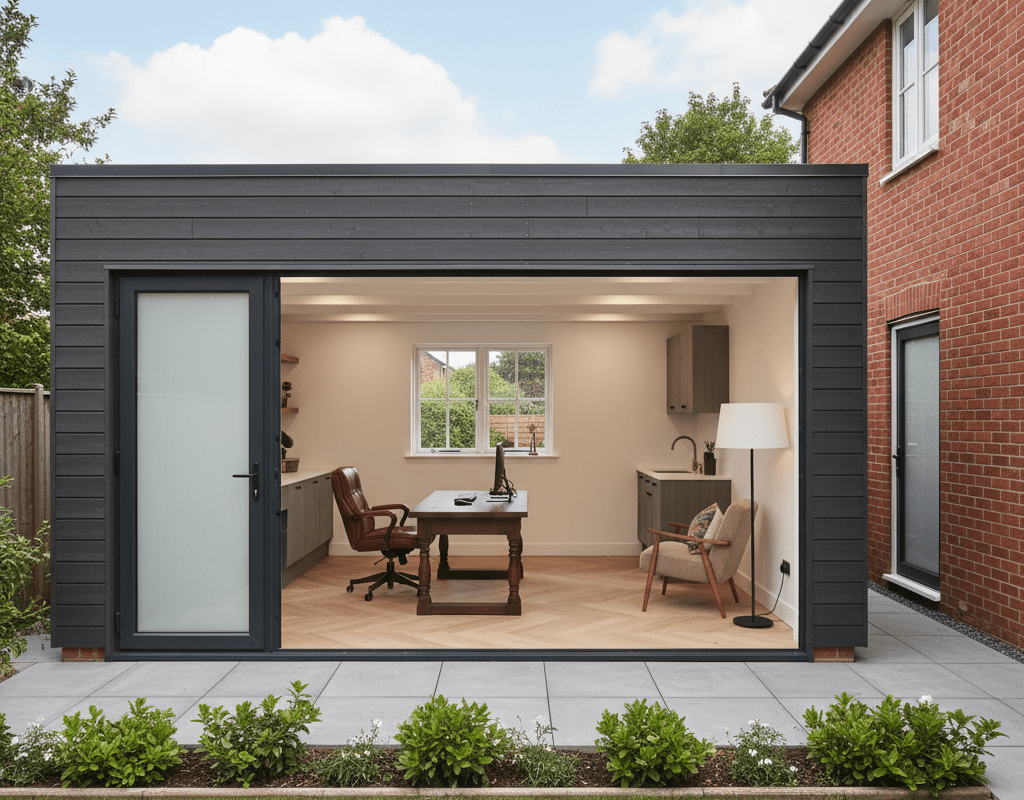
| Garden Room | Variable | Detached offices (keeps the main house clean). |
5. Master the 50% Rule and Permitted Development
In the UK, you must be aware of the “curtilage” rules set by your local planning authority.
The 50% Rule: Under Permitted Development, you cannot cover more than 50% of the land around the “original house” (as it stood in 1948) with extensions or outbuildings.
If you have a small garden, a side return or a two-storey extension is often a better “use” of your 50% allowance than a deep rear extension that eats up the entire patio.
6. Biophilic Design: Bringing the Garden Up
If you do lose a small patch of grass, you can compensate for it using biophilic design—the practice of integrating nature into the architecture.
-
Living Roofs: Install a sedum or “green roof” on your new single-storey extension. This replaces the lost greenery, provides insulation, and looks beautiful from the upstairs windows.
-
Vertical Gardening: Use the new external walls created by your extension to host a “living wall” or trellis. This adds lush greenery to the garden without using any floor space.
Conclusion
Extending your home in 2025 is no longer a choice between “more room” or “more garden.” By looking at underutilised areas like the loft and side return, or by using high-spec glazing to bring the outdoors in, you can achieve the best of both worlds. The key is to design a space that complements your garden rather than replaces it.
