
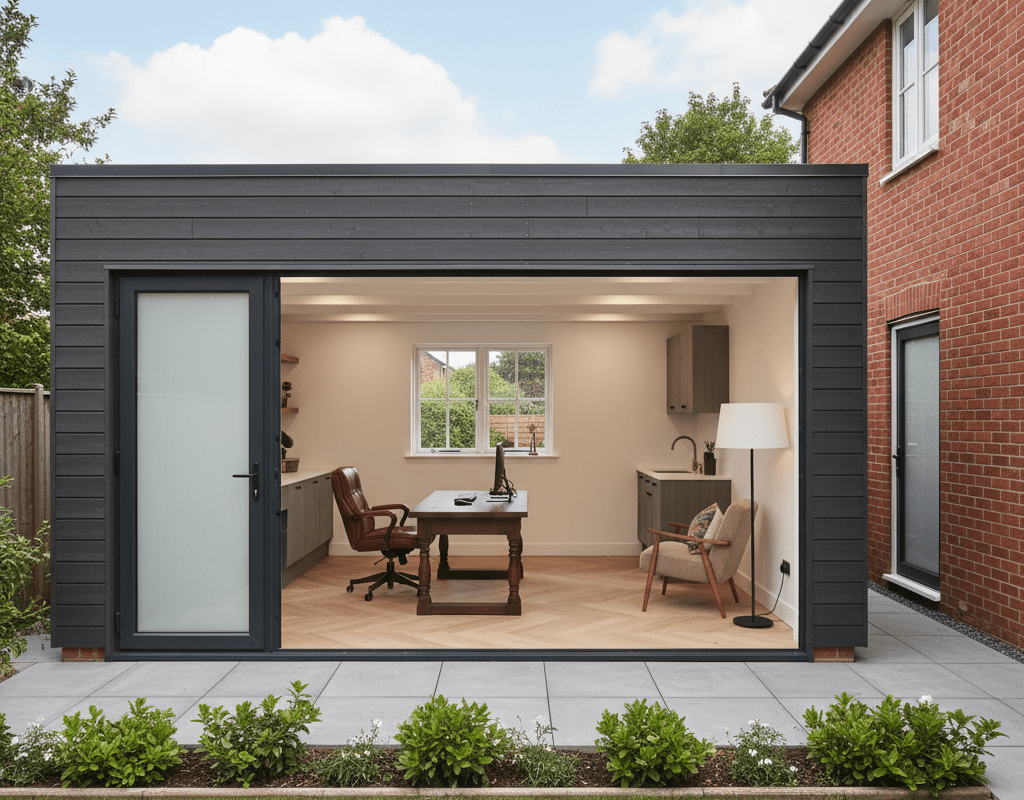



In the UK’s 2026 property market, space is the ultimate currency. With the cost of moving house—including Stamp Duty and legal fees—remaining high, many homeowners are looking “inwards” to find extra square footage. Converting an underutilised garage is arguably the most cost-effective way to add a high-spec home office, a guest bedroom, or a much-needed playroom without the footprint-expanding price tag of a full extension.
Knowing how to convert a garage into a living space is about navigating the balance between structural integrity, UK building regulations, and smart interior design. This guide provides the definitive 2026 roadmap for a successful conversion.
1. Initial Feasibility and Planning
Before picking up a sledgehammer, you must determine if your garage is a viable candidate for conversion.
-
The Structural Check: Most modern UK garages are built with a single-skin brick wall and a concrete slab. While fine for a car, this is not “habitable” standard. You will need to assess the foundations to see if they can support the additional weight of insulation and internal masonry.
-
Head Height: A comfortable living space requires a finished ceiling height of at least 2.2m to 2.4m. Remember that adding floor insulation and a screed will “eat” into your vertical space.
-
Planning Permission vs. Permitted Development: In 2026, most integral or attached garage conversions fall under Permitted Development (PD), meaning no formal planning application is required. However, you must check for “Article 4 Directions” in your local area, especially in New Builds or Conservation Areas, where these rights may have been removed to preserve parking.
2. Navigating 2026 Building Regulations
Even if you don’t need planning permission, you always need Building Regulations approval. This is non-negotiable for the legal safety of the build and for your home’s future resale.
-
Part L (Energy Efficiency): 2026 standards require high U-values (thermal performance). You will need to insulate the floor, walls, and roof to ensure the room isn’t a “icebox” in winter.
-
Part F (Ventilation): Habitable rooms must have adequate background ventilation, usually achieved through trickle vents in windows or mechanical extractors if you’re adding a bathroom.
-
Part B (Fire Safety): If the garage leads directly into a hallway, you may need to upgrade the connecting door to a FD30 fire door and install mains-linked smoke alarms.
3. The Construction Workflow
A typical garage conversion takes between 3 to 6 weeks depending on the complexity.
Step 1: The Floor and Damp-Proofing
Most garage floors are lower than the house floor. You’ll need to install a Damp-Proof Membrane (DPM), followed by high-performance rigid insulation (like Celotex or Kingspan), and then a floor screed or timber deck to bring the levels level with the rest of your home.
Step 2: The “In-Fill” Wall
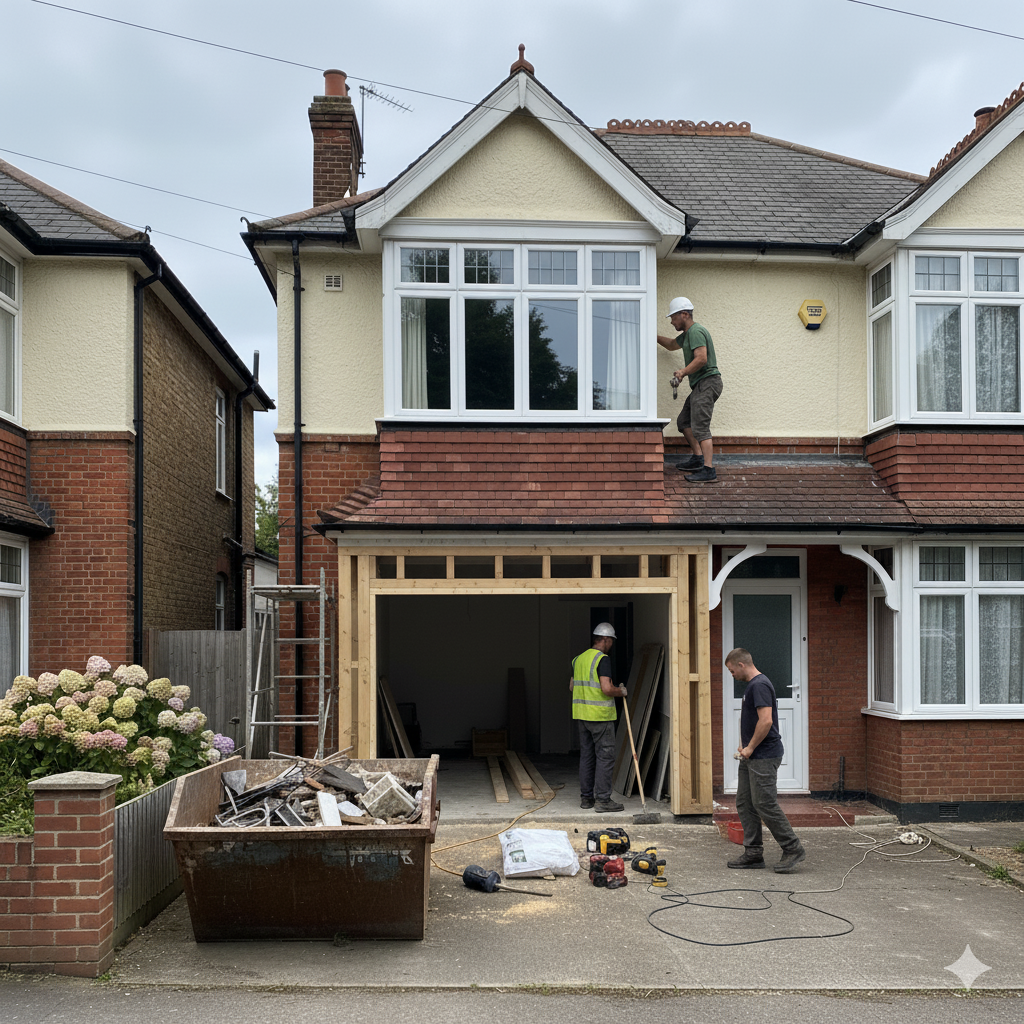
Replacing the garage door is the most visible change. Usually, a small footing is dug where the door was, a dwarf wall is built, and a window is installed. Ensuring the brickwork matches the existing house is key to maintaining kerb appeal.
Step 3: Wall and Roof Insulation
-
Internal Battening: For single-skin walls, timber battens are fixed to the interior, filled with acoustic and thermal insulation, and finished with moisture-resistant plasterboard.
-
The Roof: If you have a flat roof, a “Warm Roof” conversion (insulation on top of the deck) is often more efficient than a “Cold Roof” (insulation between joists).
Garage Conversion Costs vs. ROI (2026 UK Averages)
| Conversion Type | Average Cost (Inc. VAT) | Value Added (Est.) | Best Use Case |
| Integral (Single) | £10,000 – £15,000 | 10% – 15% | Home Office / Playroom |
| Attached (Double) | £20,000 – £35,000 | 15% – 20% | Master Suite / Kitchen Diner |
| Detached (Shell) | £15,000 – £25,000 | 5% – 10% | Gym / Cinema Room |
| Granny Annexe | £30,000+ | 20% – 25% | Multi-generational living |
4. Light and Life: Making it “Feel” Like a Room
The biggest challenge with garage conversions is preventing them from feeling like “a long, thin box.”
-
Natural Light: Beyond the front window, consider adding Roof Lanterns or Velux windows if the structure allows. In 2026, “Grazing Light” (light that washes down walls) is a popular design trend to make narrow spaces feel wider.
-
The Access Point: Don’t just put a door in the middle of a wall. Think about the “flow.” Can you create an open-plan archway into your kitchen? Or perhaps a hidden “Jib door” that blends into the cabinetry?
-
Heating: Extending your existing gas central heating is usually the cheapest option, but electric underfloor heating is increasingly popular in 2026 for its low-profile installation and comfort.
5. The “Completion Certificate”
Once the work is done, your local Building Control officer will visit for a final inspection. They will check the electrics (signed off by a Part P registered electrician), the insulation, and the fire safety. Do not make the final payment to your builder until you have that certificate in your hand. Without it, you cannot legally count the space as a bedroom when you sell the property.
