




A “trusted” company in 2026 is one that combines master-level craftsmanship with high-level digital and regulatory literacy. To find one, you must move beyond the “word-of-mouth” recommendation and perform a rigorous three-stage vetting process.
1. Verify the “2026 Compliance” Credentials
The UK building industry has moved away from “minimum compliance.” A reputable firm should be able to demonstrate their alignment with current 2026 standards:
-
BSR & Building Safety Act: Ask how they manage the “Golden Thread” of digital information. A trusted company will use project management software to store every material certificate and inspection photo.
-
The Future Homes Standard: If they aren’t talking about airtightness, U-values of $0.8 W/m²K$, and low-carbon heating, they are likely behind the times.
-
TrustMark & FMB: Look for the Government-endorsed TrustMark. Members of the Federation of Master Builders (FMB) or the National Federation of Builders (NFB) have undergone independent inspections of their work and financial history.
2. The “Insurance Four” Checklist
Never take “I’m fully insured” at face value. In 2026, scammers can easily forge certificates. Ask for the policy numbers and verify them directly with the insurer.
| Insurance Type | Minimum 2026 Requirement | Why It’s Non-Negotiable |
| Public Liability | £2 million – £5 million | Covers damage to your property or injury to the public. |
| Employer’s Liability | £5 million (Legal minimum) | Essential if they use any staff or sub-contractors. |
| Contract Works | Total Project Value | Covers the build itself if it’s destroyed by fire/flood mid-way. |
| Professional Indemnity | £250,000+ | Vital if the builder provides design advice or “design & build.” |
3. Financial Stability and the “Paper Trail”
A common cause of project failure in the UK is contractor insolvency.
-
Check Companies House: Look for a stable trading history. If the directors have a string of “dissolved” companies behind them, walk away.
-
VAT Registration: A legitimate construction company doing significant work will be VAT registered. Beware any “cash-in-hand” offers; they leave you with no legal recourse and no valid warranties.
-
Staged Payments: Trusted companies will never ask for the full amount upfront. Expect a deposit (typically $10–20\%$) followed by payments linked to physical milestones signed off by an independent surveyor or Building Control.
4. Assessing Technical Competence
In 2026, high-quality firms are proud to show off their technical process, not just the finished “glossy” photos.
-
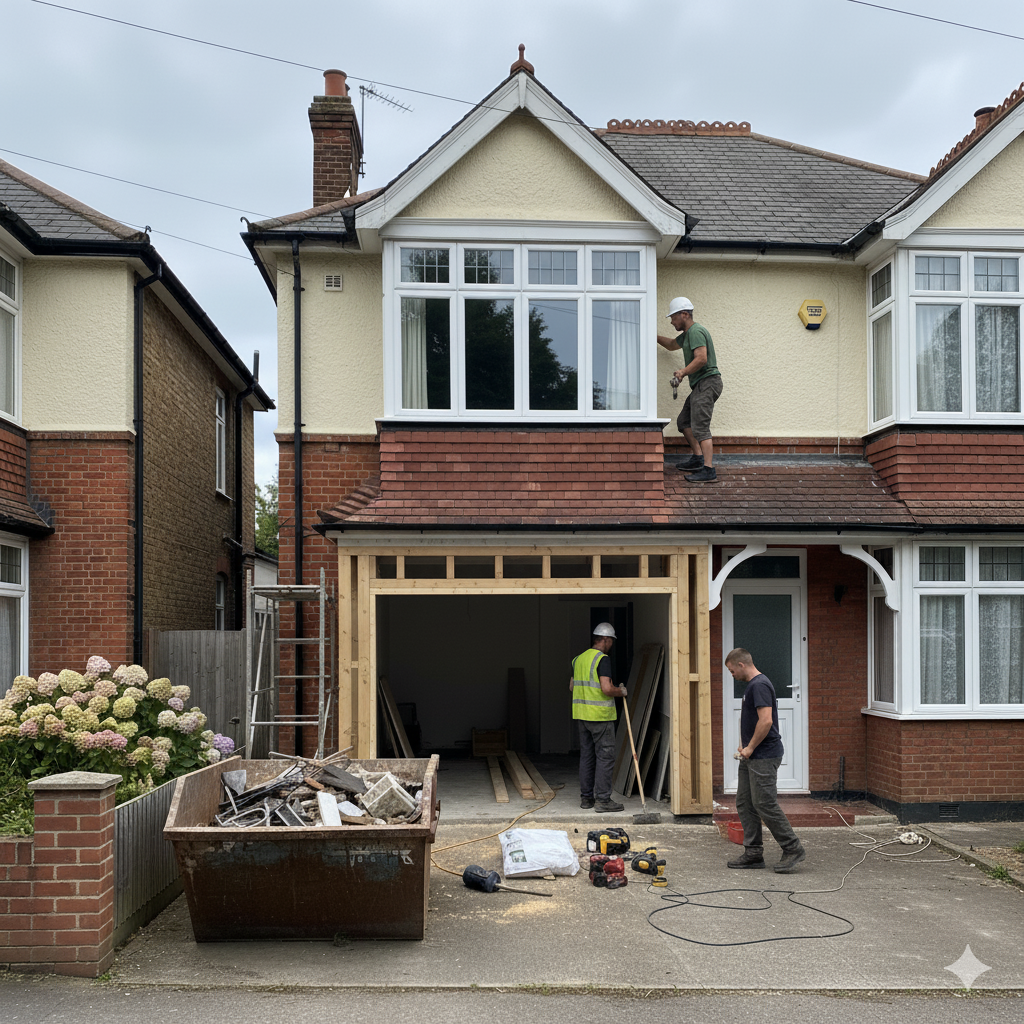
Visit a Live Site: Don’t just look at a finished house. Visit a project in progress. Is the site tidy? Is the skipping managed? Are the workers wearing correct PPE? A disorganised site usually indicates a disorganised budget.
-
Specialist Accreditations: Depending on your project, look for Gas Safe (for boilers), NICEIC/ELECSA (for electrics), or MCS (for heat pumps and solar).
-
NHBC/ICW Warranties: For new builds or major renovations, check if they can offer an insurance-backed 10-year structural warranty.
5. The “Culture Fit” and Communication
You will be “married” to your construction company for several months. Communication is the leading cause of disputes in UK construction.
-
The Single Point of Contact: Will you have a dedicated site manager, or will you be chasing different trades every day?
-
Detailed Quotations: A trusted firm provides a Bill of Quantities (BoQ) or a highly itemised quote. Vague descriptions like “install bathroom” are a red flag; you want to see “Install [Brand] Suite, 15m² tiling, 4x LED spotlights.”
Red Flags to Watch Out For
-
🚩 Immediate Availability: Good UK builders are usually booked 3–6 months in advance.
-
🚩 No Written Contract: If they refuse a JCT or FMB standard contract, they aren’t professional.
-
🚩 Door-to-Door Solicitation: Reputable firms in 2026 rely on their reputation and digital presence, not cold-calling.
-
🚩 Vague Estimates: A “ballpark” figure scribbled on a notepad is not a quote.
Final Thoughts
Choosing a construction company in the UK is an exercise in due diligence. In 2026, the best builders are those who embrace transparency and new technology. By verifying their insurance, checking their BSR compliance, and insisting on a staged payment schedule, you turn a high-risk investment into a controlled, successful transformation of your hom
