



1. Start with Local Recommendations
Word of mouth remains the most powerful tool in the UK construction industry. A company that has successfully completed work in your immediate area is likely to be reliable, as their local reputation is their most valuable asset.
-
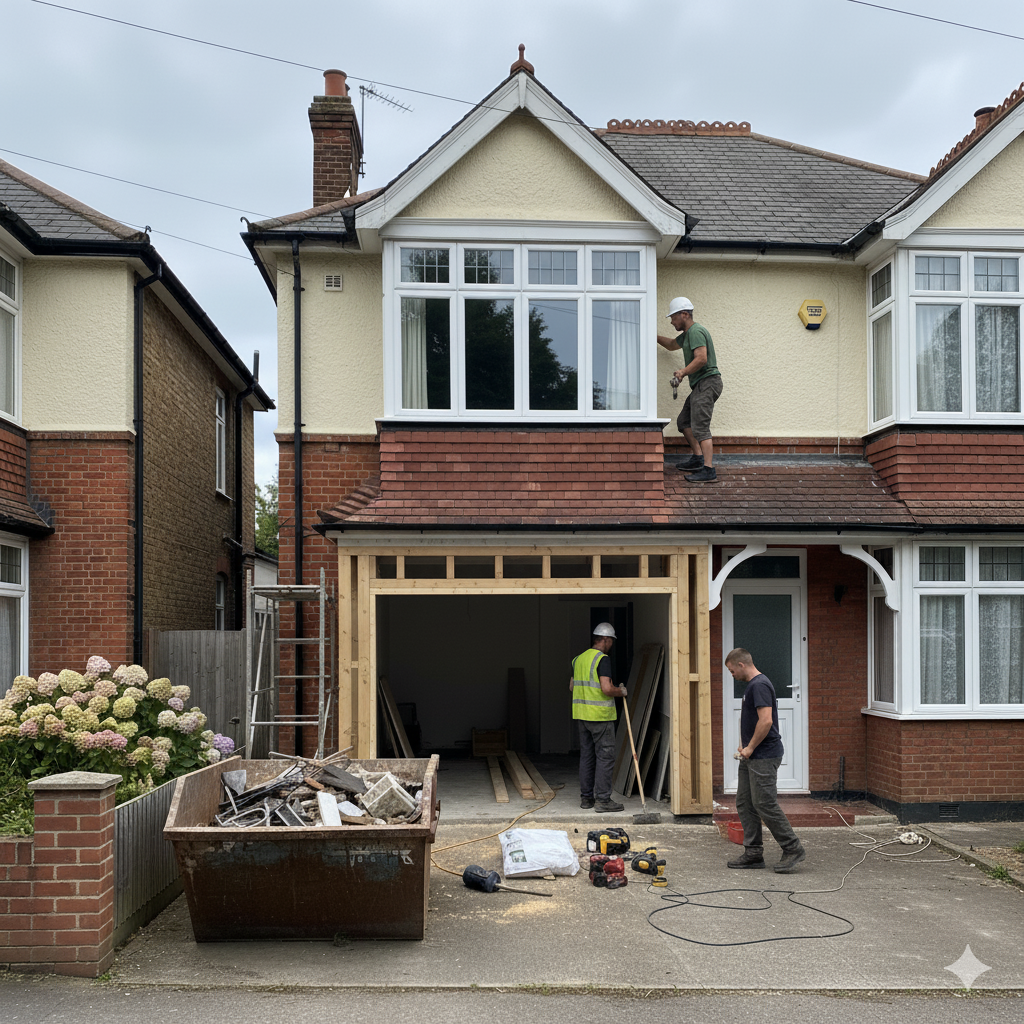
Ask Neighbours: If you see a skip or a branded van on your street, don’t be afraid to ask the homeowner about their experience.
-
Social Media Groups: Local Facebook or Nextdoor groups can be goldmines for honest reviews, but be wary of “recommendations” from accounts that may be affiliated with the builder.
-
Visit Previous Sites: A truly reliable company will be happy to provide references. If possible, ask to see a project they completed 12–24 months ago to see how the work has stood the test of time.
2. Verify Professional Accreditations
In the UK, certain badges of honour indicate that a builder has been vetted for quality and financial stability. Look for these key accreditations:
| Accreditation | What it Means |
| FMB (Federation of Master Builders) | Members must pass an independent inspection and undergo financial checks. |
| TrustMark | The Government-endorsed quality scheme for tradespeople. |
| Checkatrade / Rated People | Useful for reviews, but shouldn’t be the only factor in your decision. |
| Gas Safe / NICEIC | Non-negotiable for plumbing and electrical work; ensure their certificates are up to date. |
Expert Tip: Don’t just look at the logo on their website. Search the official registers on the FMB or TrustMark websites to confirm they are active members.
3. The Three-Quote Rule
Never settle for the first quote you receive. To understand the market rate for your project, you should aim for at least three “like-for-like” quotes.
-
Avoid the “Estimate”: An estimate is a rough guess. You want a fixed-price quote based on a detailed “schedule of works.”
-
The Middle Ground: Often, the cheapest quote is a red flag (suggesting they might cut corners or haven’t understood the complexity), and the most expensive might be a “we don’t really want this job” price. The middle quote is usually the most realistic.
-
VAT Clarity: Ensure the quote specifies whether VAT (20%) is included. Forgetting this can lead to a massive unexpected bill at the end.
4. Check Insurances and Contracts
A reliable builder will have no problem providing proof of their paperwork. If they hesitate, walk away.
-
Public Liability Insurance: Protects your property and members of the public if an accident occurs on-site.
-
Employer’s Liability Insurance: A legal requirement if they have staff.
-
The Contract: Never rely on a handshake. Use a standard contract (like those provided by the JCT or FMB) that outlines:
-
The agreed price.
-
The payment schedule (never pay 100% upfront).
-
The expected start and completion dates.
-
How “variations” (changes to the plan) will be priced.
-
5. Communication and “Gut Feeling”
Construction projects are often long and invasive. You will be dealing with this team daily, so personal chemistry is vital.
-
Responsiveness: Do they answer your emails or call you back within a reasonable timeframe? If they are hard to reach before they have your money, they will be impossible to reach once the work starts.
-
The “Vibe”: Are they professional and respectful? Do they turn up on time for the initial viewing? A builder who respects your time during the quoting stage is more likely to respect your home during the build.
