



In 2026, the British property market has reached a pivotal point. With high moving costs—including the “ever-present” Stamp Duty and legal fees—staying put and extending has become the smartest financial move for UK homeowners. Whether you need a sanctuary for remote work, a “broken-plan” kitchen for entertaining, or a multi-generational annex, adding square footage is the ultimate way to future-proof your investment.
If you are wondering how to add extra living space without moving house, this 2026 guide covers everything from “hidden” internal gains to high-ROI external extensions.
1. The Loft Conversion: The “Sky-High” ROI
Converting your attic remains the gold standard for adding value. In 2026, the trend has shifted from “simple storage” to luxurious Master Suites or “Sky Offices” with panoramic views.
-
ROI Potential: A well-executed loft conversion can add up to 20% to your property’s market value.
-
Permitted Development (PD): Most conversions fall under PD, meaning you can often avoid a full planning application. For detached and semi-detached houses, you have an allowance of 50 cubic metres ($50m^3$) of additional space; for terraced homes, it is 40 cubic metres ($40m^3$).
-
2026 Insight: With the Future Homes Standard now in play, modern conversions must prioritise high-performance insulation (like spray foam or rigid PIR boards) to ensure the space stays “thermally intelligent” year-round.
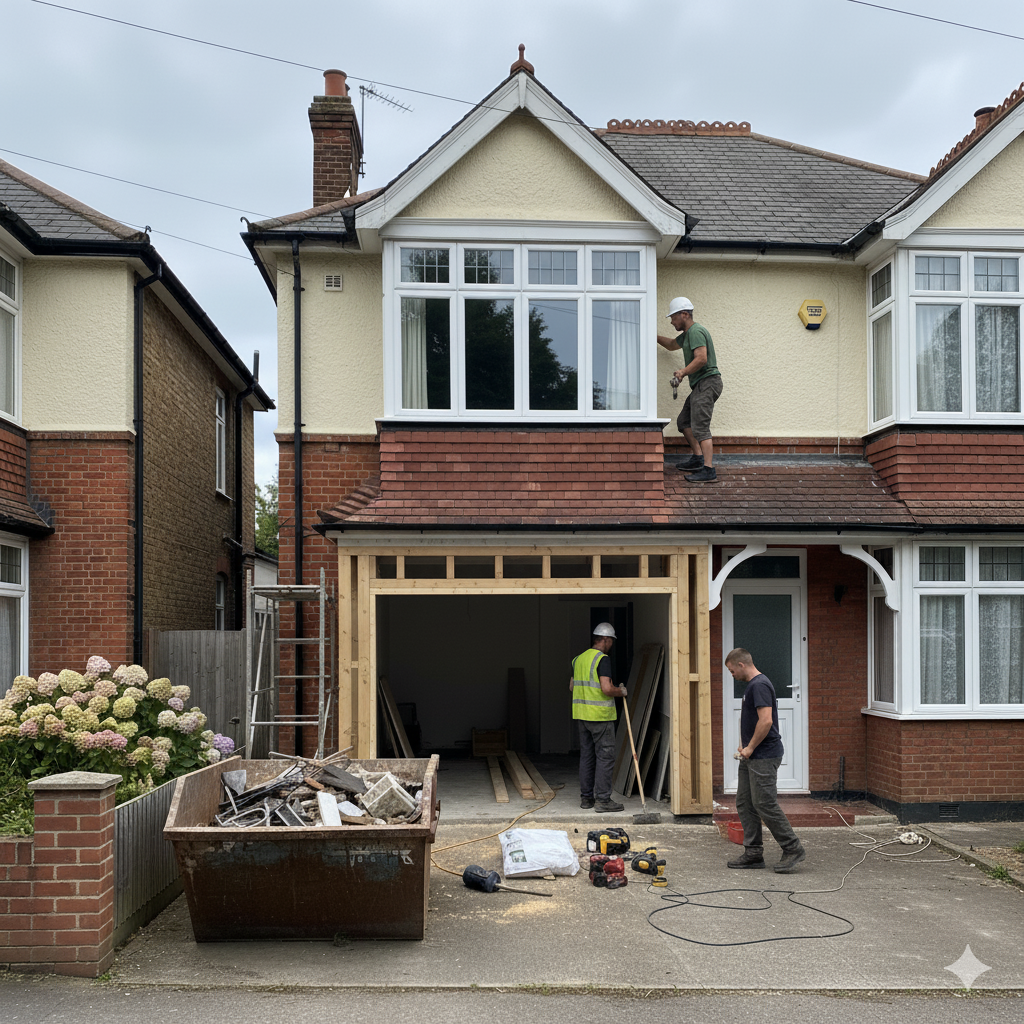
2. The Garage Conversion: Cost-Effective Square Footage
If your garage is currently a graveyard for old paint tins and cardboard boxes, it is the most undervalued part of your home.
-
Typical Cost: £10,000 – £20,000 (significantly cheaper than a full extension).
-
Best For: Converting into a ground-floor home office, a gym, or a “snug” playroom.
-
Planning Tip: Integral garages rarely need planning permission unless you live in a Conservation Area or a new-build estate with restricted rights (check for an Article 4 Direction).
3. Rear and Side Extensions: The “Social Hub”
The “open-plan” era is evolving into “Broken-Plan” living—using different floor levels, glass partitions, or “internal windows” to create zones within a large extension.
-
Single-Storey Rear Extension: Under the Larger Home Extension Scheme (still active in 2026), you can often build up to 8m (detached) or 6m (semi/terrace) via “Prior Approval,” provided your neighbours do not object.
-
Side-Return Extensions: Popular in Victorian terraced homes, these utilise the narrow “alley” at the side of the house to create a massive, light-filled kitchen-diner.
Home Expansion Cost & Value Comparison (2026 UK Averages)
| Project Type | Average Cost (Inc. VAT) | Value Added (Est.) | Planning Route |
| Loft Conversion | £35,000 – £65,000 | 15% – 20% | Permitted Development |
| Garage Conversion | £12,000 – £18,000 | 10% – 12% | Permitted Development |
| Garden Room / Annex | £15,000 – £35,000 | 5% – 10% | Permitted Development* |
| Rear Extension (30$m^2$) | £70,000 – £95,000 | 12% – 15% | PD / Prior Approval |
| Basement Conversion | £100,000+ | 15% – 25% | Full Planning Required |
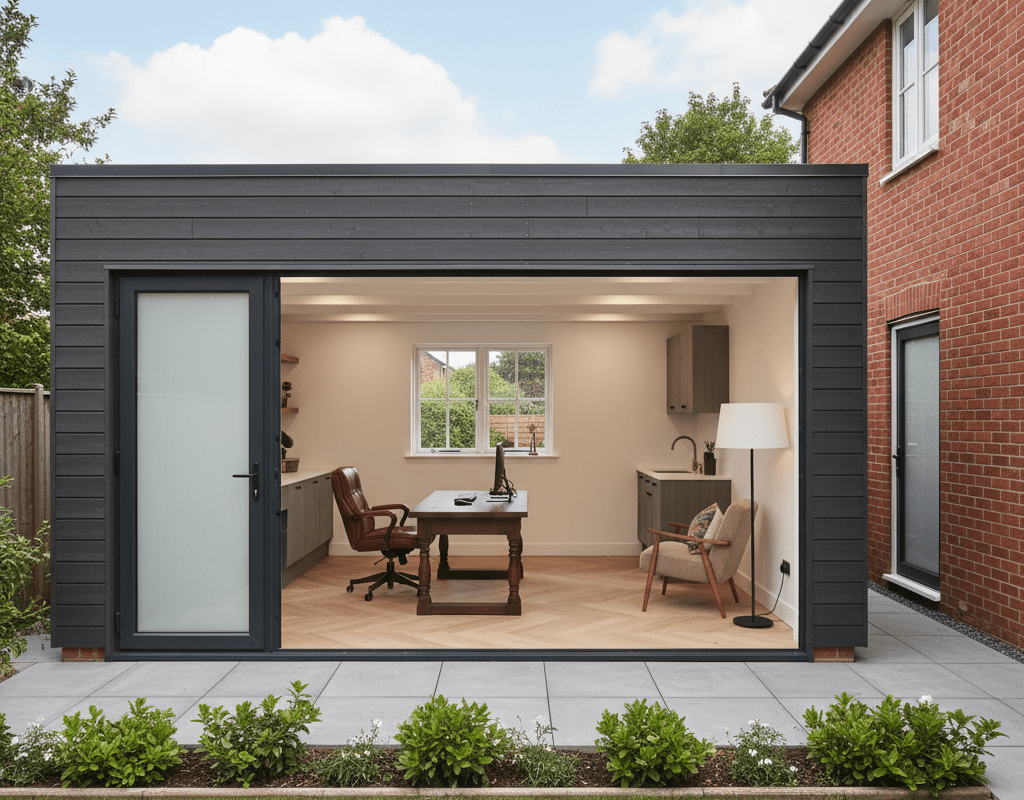
4. The Garden Room: The “Plug-and-Play” Solution
In 2026, the “Garden Office” has become a staple of the British garden. These standalone structures are perfect for those who want a physical separation between “work” and “home.”
-
Speed of Build: Often installed in as little as 2 weeks.
-
Regulations: As long as they are under 2.5m in height, they usually don’t need planning permission. However, if you plan to use it as a guest bedroom (a “Granny Annex”), you will likely need full planning and Building Regulations approval for fire safety and waste.
5. Internal Reconfiguration: “Finding” Space
Sometimes, you don’t need to build out; you just need to think smart.
-
Knocking Down Walls: Removing a non-load-bearing wall between a kitchen and dining room can instantly make a home feel 20% larger.
-
Under-Stair Optimisation: In 2026, custom-built cabinetry is turning “dead space” under stairs into sophisticated wine cellars or “cloaks” rooms.
-
Basements: While the most expensive option due to excavation and tanking (waterproofing), digging down is the ultimate “secret” way to add a cinema room or spa in space-restricted cities like London or Bath.
