



How to Add Extra Living Space Without Extending
The secret to a spacious home in 2026 isn’t just about total area; it’s about volume and usage. Many British homes are “room rich but space poor,” filled with underutilised corners that can be reclaimed through smart design.
1. The Garage Conversion: The Easiest “New” Room
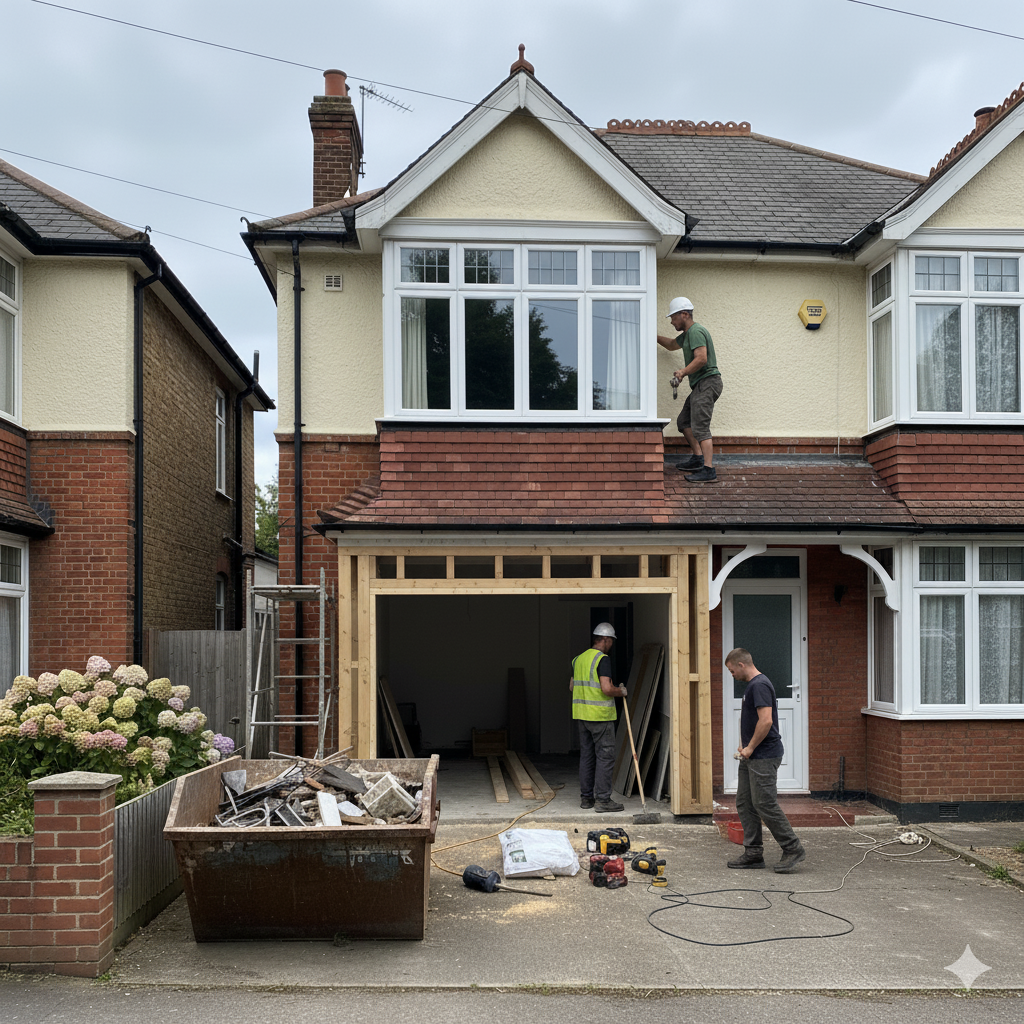
For most UK households, the garage is a graveyard for old paint tins and bicycles. Converting an integral or attached garage is the most cost-effective way to gain a substantial new room.
-
The Benefit: Since the structure already exists, you bypass foundations and roofing—the two most expensive parts of an extension.
-
Planning: Most garage conversions fall under Permitted Development, meaning you won’t need full planning permission (check your local authority if you live in a Conservation Area).
-
Cost (2026): Expect to pay between £10,000 and £18,000 for a high-spec conversion, compared to £40,000+ for an extension of the same size.
2. Internal Reconfiguration: The “Broken-Plan” Shift
Sometimes, you don’t need more space; you need better space. Removing a non-load-bearing wall between a cramped kitchen and a formal dining room can create a “Super-Room” that serves as the hub of the home.
-
Smart Zoning: In 2026, we are seeing a move away from totally “open-plan” toward “broken-plan.” Use internal glass doors or half-walls to maintain the sense of space while allowing rooms to have distinct functions (e.g., a quiet “snug” off a loud kitchen).
-
Reclaim the Hallway: If you have a wide, traditional hallway, consider “pinching” some of that space to enlarge a downstairs cloakroom into a full shower room or a compact utility.
3. The Loft “Room-in-Roof” (Non-Dormer)
A full-scale dormer loft conversion is an extension, but a “Velux” or “Shell” conversion works entirely within your existing roofline.
-
Why it works: If you have enough head height (typically $2.2m$ at the ridge), you can board, insulate, and add roof lights to create a habitable room.
-
The Result: It’s the perfect solution for a dedicated home office or a teenager’s “den,” adding value to your property without changing its external silhouette.
4. Reclaiming “Dead Zones”: Under the Stairs and Alcoves
In a small home, every centimetre must work. 2026 design is obsessed with “functional cabinetry.”
-
Under-Stairs Offices: With the rise of hybrid working, the space under the stairs is no longer just for the hoover. Bespoke pull-out desks and fitted shelving can turn this “dead zone” into a professional workstation.
-
Chimney Breast Alcoves: In Victorian homes, alcoves are often shallow. By installing floor-to-ceiling “invisible” wardrobes that sit flush with the chimney breast, you gain massive storage that makes the rest of the room feel uncluttered and larger.
Cost vs. Space Gain Matrix (2026)
| Strategy | Est. Cost (UK) | Space Gained | Planning Needed? |
| Garage Conversion | £10k – £18k | 12–15m² | Rarely (PD) |
| Removing Internal Wall | £2k – £5k | Visual Space | No (But needs Building Regs) |
| Velux Loft Room | £20k – £28k | 15–20m² | No (PD) |
| Under-Stairs Office | £1.5k – £3k | 2m² | No |
5. Mezzanine Floors: Thinking Vertically
If you live in a property with high ceilings (such as a converted chapel, schoolhouse, or Victorian industrial loft), look up.
-
The Platform Solution: Building a mezzanine platform over a kitchen or living area can provide a “bonus” sleeping platform or library.
-
Regulatory Check: While you won’t need planning permission for internal platforms, you will need to ensure it meets Building Regulations regarding structural support and fire safety (specifically escape routes).
6. The “Outdoor-In” Garden Room
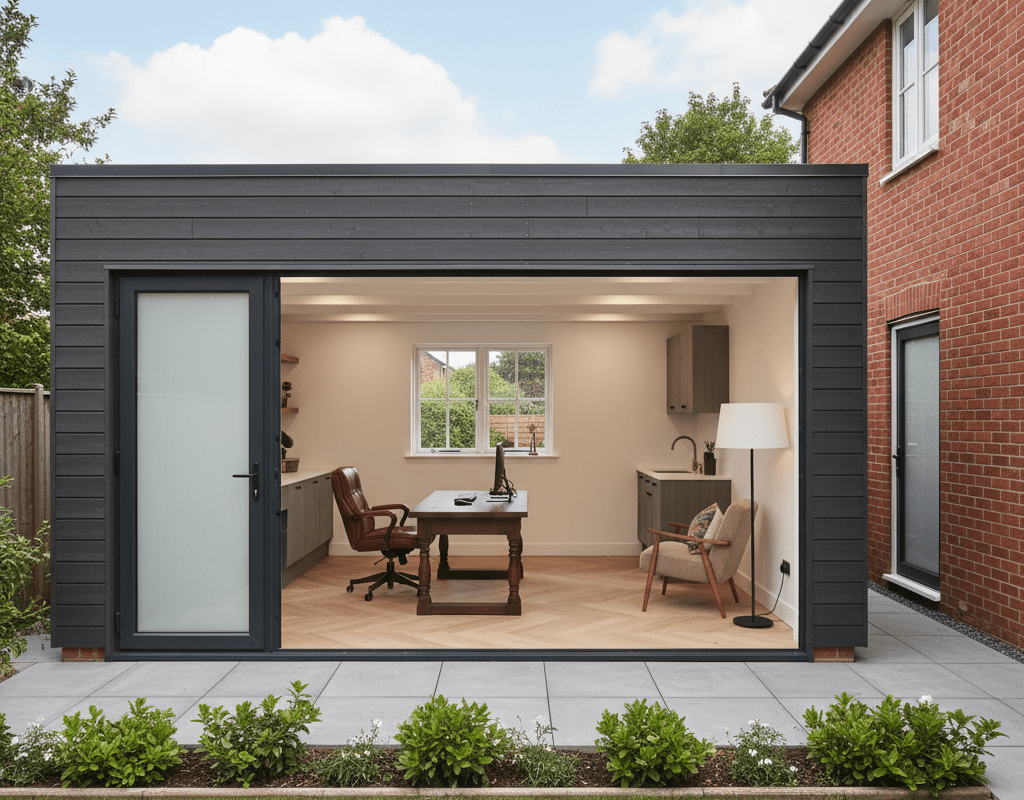
While technically an outbuilding, a Garden Room is often considered a “non-extension” solution because it doesn’t touch the main house.
-
Permitted Development: As long as it is under $2.5m$ in height and occupies less than $50\%$ of your garden, you can usually build a fully insulated, electrified office or gym without a planning application.
-
Versatility: It provides a “destination” away from the noise of the house, which is often more valuable than an extra room indoors.
Final Thoughts
Adding living space without extending is about editing your environment. By converting a garage, vaulting a ceiling, or simply reconfiguring your internal layout, you can achieve the “new home” feel for a fraction of the cost of a traditional extension. In 2026, the smartest renovators aren’t the ones who build the most; they are the ones who use what they have the best.
