



In the British property market of 2026, semi-detached houses remain the most popular “canvas” for home improvements. With a shared wall on one side and an open aspect on the other, these properties offer a unique blend of structural constraints and incredible creative potential.
As moving costs—including the 2026 Stamp Duty rates and legal fees—continue to climb, extending your semi-detached home is the most effective way to gain space while significantly boosting your property’s equity. Whether you are looking for a sprawling open-plan kitchen or an extra bedroom, here is the definitive guide to the best extensions for semi-detached houses in the UK.
1. Single-Storey Rear Extension
The most common choice for a reason: the rear extension is the “standard” for creating the modern, open-plan kitchen-diner that buyers in 2026 crave.
-
The Layout: Usually spans the full width of the house, extending 3m to 6m into the garden.
-
Value Added: Can increase property value by 10% to 15%.
-
Permitted Development (PD): In 2026, most semi-detached homes can extend up to 3m under PD. Under the “Prior Approval” (Neighbour Consultation) scheme, you may be able to extend up to 6m without full planning permission.
-
Average Cost (2026): £40,000 – £75,000.
2. Side Return Extension
If your semi-detached home has a narrow, underutilised “alleyway” running alongside the kitchen, a side return extension is your “secret weapon” for gaining internal space without losing your garden.
-
The Impact: It “squares off” the back of your house, turning a narrow galley kitchen into a spacious, light-filled room.
-
Design Tip: Use a glass roof or a series of roof lanterns. Since side returns are often overshadowed by the neighbour’s wall, overhead glazing is essential for natural light.
-
Average Cost (2026): £35,000 – £60,000.
3. Wraparound Extension (The L-Shape)
This combines the rear and side return extensions to create a massive, L-shaped living area. In 2026, this is the “Gold Standard” for semi-detached transformations.
-
The “Wow” Factor: It allows for a multi-functional hub: a kitchen, a dining area, and a “snug” or playroom all in one.
-
Planning Note: Wraparounds typically require Full Planning Permission, as they are considered more complex than simple rear additions.
-
Average Cost (2026): £65,000 – £110,000+.
Extension Comparison Matrix (UK 2026)
| Extension Type | Est. Cost per m2 | Typical Duration | Planning Route |
| Rear (Single Storey) | £2,000 – £3,200 | 10 – 14 Weeks | PD / Prior Approval |
| Side Return | £1,900 – £3,000 | 8 – 12 Weeks | PD / Full Planning |
| Two-Storey | £2,200 – £3,500 | 16 – 24 Weeks | Full Planning |
| Wraparound | £2,500 – £3,800 | 14 – 20 Weeks | Full Planning |
4. Two-Storey Extension: Maximising ROI
If you have the budget, a two-storey extension offers the best “bang for your buck.” Because the foundations and the roof are already being paid for, the cost of adding the second floor is relatively lower than the ground floor.
-
The Gain: An extra-large kitchen-diner downstairs, plus an additional master bedroom with an en-suite upstairs.
-
Key Constraint: In 2026, two-storey extensions must not extend beyond the rear wall by more than 3m to stay within certain planning guidelines, and they must respect the “45-degree rule” to ensure you don’t block a neighbour’s light.
-
Average Cost (2026): £85,000 – £150,000.
5. First-Floor Extension (Over a Garage)
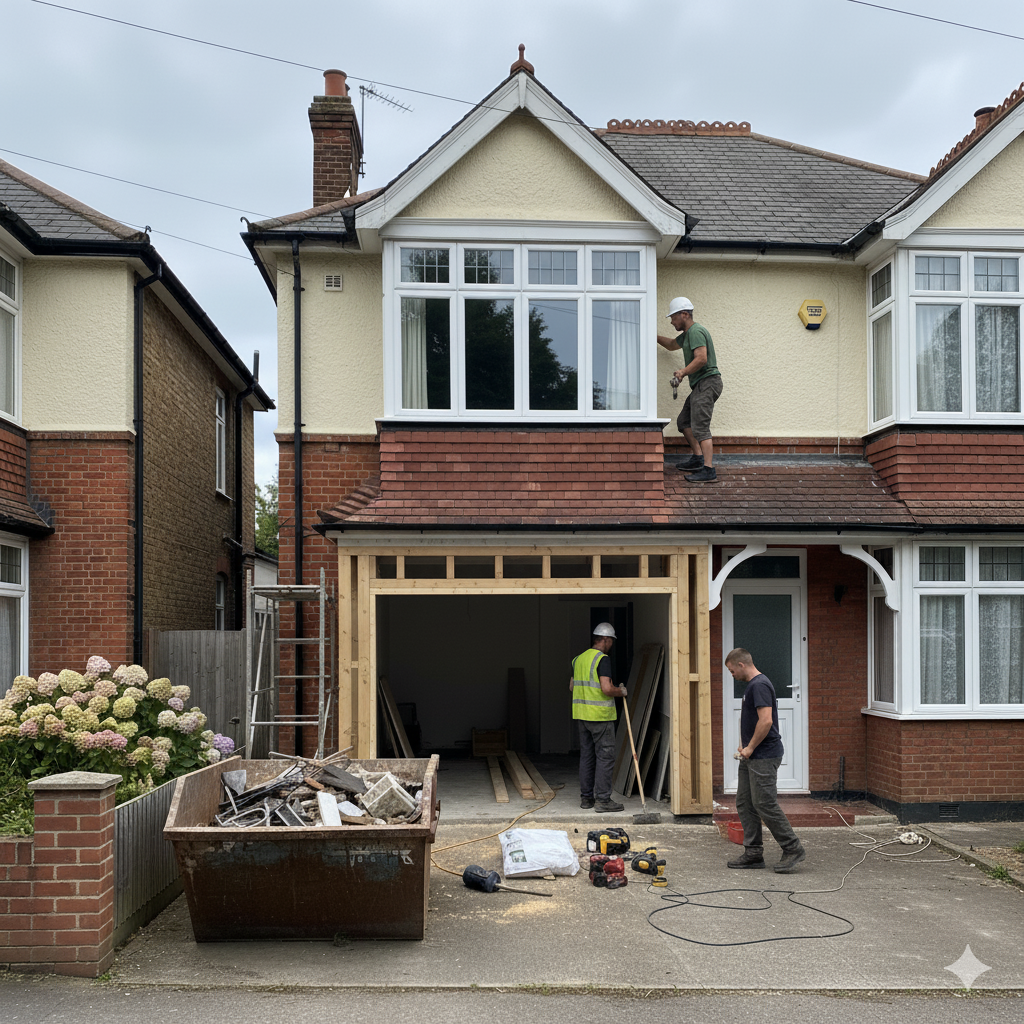
Many 1930s-style semi-detached houses come with a side garage. Building a room on top of this existing structure is a brilliant way to add a bedroom or home office without losing any garden space at all.
-
Structural Check: The existing garage foundations must be checked by a Structural Engineer to ensure they can take the weight of a second storey. If they can’t, underpinning may be required.
-
Average Cost (2026): £50,000 – £85,000.
2026 Design Trends for Semi-Detached Extensions
-
The “Indoor-Outdoor” Flow: Floor-to-ceiling slimline aluminium sliders or bi-fold doors remain the top request.
-
Sustainability: With the Future Homes Standard 2026, there is a massive shift toward high-performance insulation, triple glazing, and “green” roofs (sedum roofs) to manage water runoff.
-
Broken-Plan Living: While open-plan is still popular, 2026 sees more “broken-plan” designs—using internal glass partitions or “crittall” doors to create zones for quiet working while maintaining a sense of space.
