


In the UK property market of 2026, a loft conversion is widely considered the most “bankable” home improvement. With average moving costs—including Stamp Duty, legal fees, and removals—now exceeding £50,000 for many London and South-East homeowners, the “improve don’t move” trend has solidified.
Data from 2026 indicates that a well-executed loft conversion can increase a property’s value by 15% to 25%, often delivering a Return on Investment (ROI) of over 100% in high-demand areas. However, not all conversions are created equal. To maximise your equity, you need to choose a layout that aligns with current buyer demands for energy efficiency and flexible living.
1. The “Hotel-Style” Master Suite (Uplift: 20–22%)
The most valuable loft conversion idea remains the master bedroom with a dedicated en-suite. In 2026, buyers are looking for a “sanctuary” away from the main house.
-
The En-suite Essential: A loft bedroom without a bathroom is simply a room; with a bathroom, it becomes a suite. Even a compact shower room can add significant value.
-
Juliet Balconies: Integrating floor-to-ceiling glass doors with a Juliet balcony provides panoramic views and an “airy” feel that makes the square footage feel doubled.
-
Vaulted Ceilings: If your roof pitch allows, exposing the rafters or creating a vaulted ceiling adds a luxury “wow-factor” that justifies a premium price tag.
2. The “Dual-Zone” L-Shaped Conversion (Uplift: 22–25%)
Commonly found in Victorian and Edwardian terraced homes with a rear wing, the L-shaped dormer is the 2026 champion of space.
-
Multi-Room Layout: This style allows you to add two distinct spaces—typically a large master bedroom and a separate home office or a second smaller bedroom.
-
The Family Appeal: By adding two rooms, you can transform a standard 3-bed terrace into a 5-bed powerhouse, potentially jumping your home into an entirely different valuation bracket.
Loft ROI & Cost Matrix (UK 2026)
| Conversion Type | Average Cost | Est. Value Added | Best For |
| Velux / Rooflight | £25,000 – £45,000 | 10% – 12% | Budget-friendly / High original height |
| Dormer (Rear) | £40,000 – £60,000 | 15% – 20% | Most UK semi-detached/terraces |
| Hip-to-Gable | £50,000 – £75,000 | 18% – 22% | 1930s Semi-detached homes |
| Mansard | £65,000 – £90,000+ | 20% – 25% | Urban terraces (London/Bristol) |
3. The “Hybrid” Home Office & Guest Suite
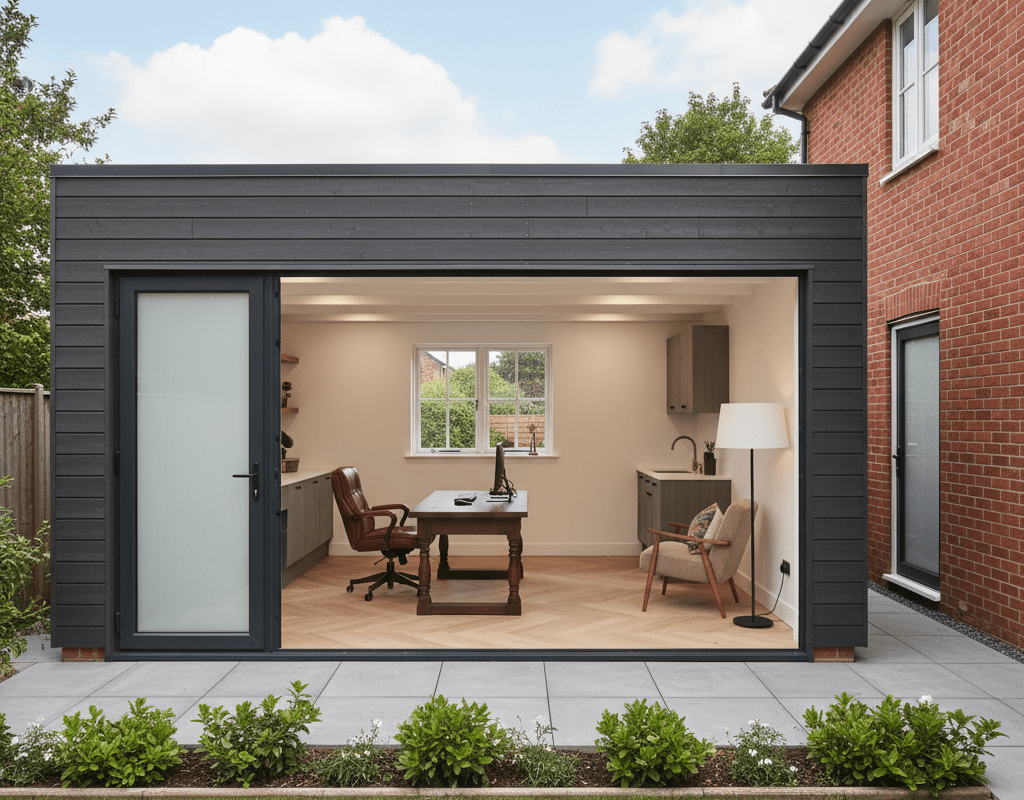
With hybrid working now the standard for UK professionals, a dedicated, quiet workspace is a top priority for buyers in 2026.
-
Soundproofing: Professional-grade acoustic insulation is a must. Highlighting “sound-insulated quiet zones” in a property listing is a major selling point.
-
Built-in Functionality: Use the eaves for bespoke fitted desks and storage. In 2026, “clutter-free” living is a hallmark of high-end design.
-
Dual Use: Design the space so it can easily transition from a high-tech office during the day to a comfortable guest room at night with a wall-mounted fold-down bed.
4. Eco-Lofts: Future-Proofing for ROI
In 2026, a home’s EPC (Energy Performance Certificate) rating directly impacts its saleability. A loft conversion is the perfect time to “green” your home.
-
Solar Integration: Solar PV panels integrated into the south-facing roof slope are now a standard expectation for 2026 buyers.
-
Superior Insulation: Go beyond the minimum building regulations. Using high-performance PIR boards or eco-friendly sheep’s wool insulation reduces heating bills—a key metric for modern valuations.
-
Triple Glazed Rooflights: These offer superior thermal retention and noise reduction compared to standard double glazing.
5. Maximising Headroom: Hip-to-Gable
If you own a semi-detached or end-of-terrace home with a “hipped” (sloping) roof, a Hip-to-Gable conversion is your best move. It straightens the side of the roof to create a vertical wall, dramatically increasing the internal volume and making the new staircase feel like a natural extension of the home rather than a cramped addition.
