


In the UK, where space is often at a premium—especially in urban hubs like London, Manchester, or Birmingham—mastering the art of compact living is essential. Whether you are living in a cosy studio apartment or a narrow Victorian terrace, the square footage doesn’t have to dictate the feel of your home.
Learning how to make small homes feel larger with smart design is about tricking the eye, maximising light, and ensuring every centimetre of your property serves a dual purpose. Here is our comprehensive guide to creating an expansive atmosphere in a compact footprint.
1. The Strategy of “Visual Weight”
When a room is small, furniture with “heavy” visual weight can make the walls feel like they are closing in. To create a sense of airiness, you must choose pieces that allow the eye to travel through them.
-
Leggy Furniture: Opt for sofas, armchairs, and beds with exposed legs rather than “blocky” designs that sit flush with the floor. Seeing the floor continue under the furniture makes the room appear wider.
-
Transparent Materials: Ghost chairs (acrylic), glass coffee tables, and open-mesh shelving units provide functionality without taking up “visual space.”
-
Low-Profile Pieces: High-backed sofas can chop a room in half. Choose low-profile, mid-century modern designs to keep sightlines clear from one side of the room to the other.
2. Maximising Natural and Artificial Light
A dark room will always feel smaller. To combat this, you need a multi-layered lighting strategy that eliminates “dead corners.”
-
The Power of Mirrors: Placing a large mirror opposite a window is the oldest trick in the book for a reason. It effectively doubles the amount of natural light and creates a “window effect” on a solid wall.
-
Sheer Window Dressings: Avoid heavy velvet curtains. In the UK, where grey skies are common, use linen sheers or voile blinds that offer privacy while letting in maximum daylight.
-
Recessed Lighting: Floor lamps take up precious floor space. Consider recessed ceiling spotlights or wall-mounted “swing-arm” lamps to keep surfaces clear.
3. Smart Storage and “The Invisible Office”
Clutter is the enemy of space. In a small home, you need to be ruthless with organisation, utilising “dead space” that most people overlook.
-
Vertical Living: Install floor-to-ceiling shelving. By drawing the eye upwards to the ceiling, you emphasise the height of the room, making the floor area feel less restrictive.
-
Built-in Joinery: Custom-built cupboards under the stairs or alcove shelving around a chimney breast utilise awkward nooks that freestanding furniture simply can’t fill efficiently.
-
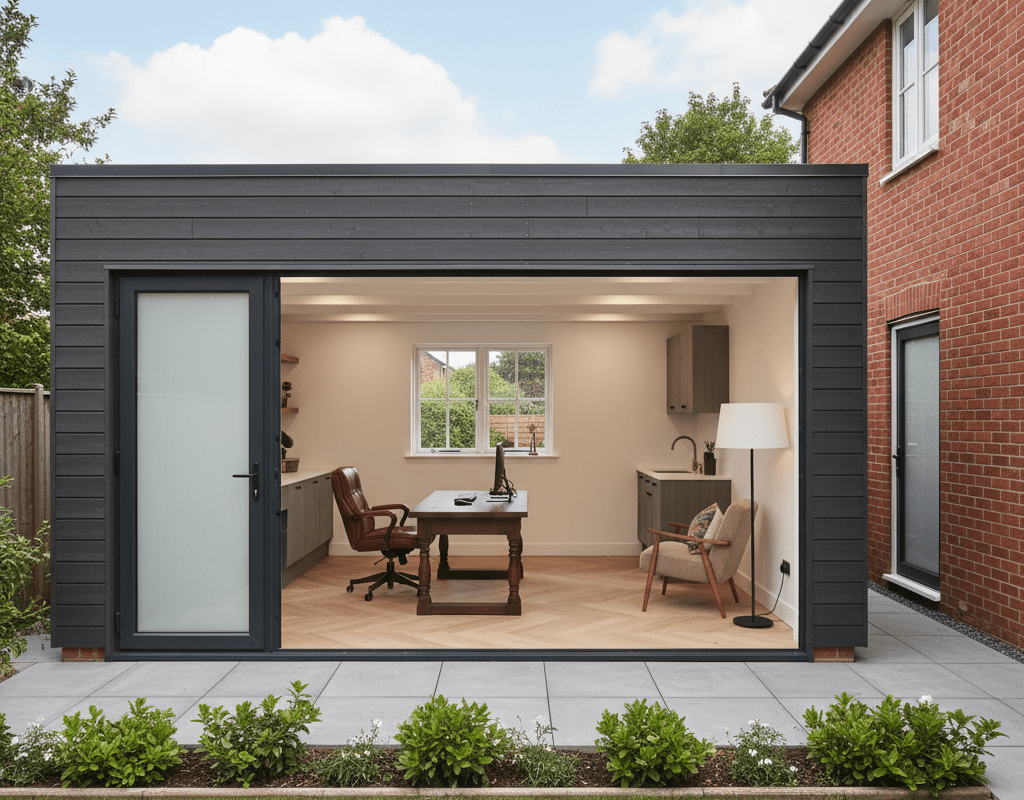
The “Cloffice”: With hybrid working now the norm, many UK homeowners are converting cupboards into “cloffices.” This allows you to hide your workspace behind doors at the end of the day, maintaining a clear boundary between work and relaxation.
4. Cohesive Colour Palettes and Flooring
A fragmented colour scheme makes a house feel like a series of small boxes. To create a sense of grandeur, you need continuity.
-
Monochromatic Schemes: Using varying shades of the same neutral colour (such as soft pebble greys or warm whites) across walls, ceilings, and woodwork prevents visual breaks.
-
Uninterrupted Flooring: If possible, use the same flooring (be it engineered oak or luxury vinyl tile) throughout the entire floor. When the flooring is consistent from the hallway into the living room, the eye perceives it as one large, continuous space.
Smart Design Hacks for Small Spaces
| Feature | Design Trick | Benefit |
| Pocket Doors | Slides into the wall | Reclaims the “swing” area (approx. 1 sqm) |
| Oversized Rugs | Extends under all furniture | Makes the floor boundary feel wider |
| Hidden Storage | Ottoman beds/benches | Keeps surfaces clutter-free |
| Glass Partitions | Internal Crittall doors | Separates zones without blocking light |
5. Scale and Proportion: Go Big or Go Home
It sounds counter-intuitive, but filling a small room with lots of small furniture makes it look cluttered. Instead, opt for one or two statement pieces that are slightly larger. A single large, comfortable L-shaped sofa often feels more spacious and “expensive” than a cramped collection of small chairs and stools.
