
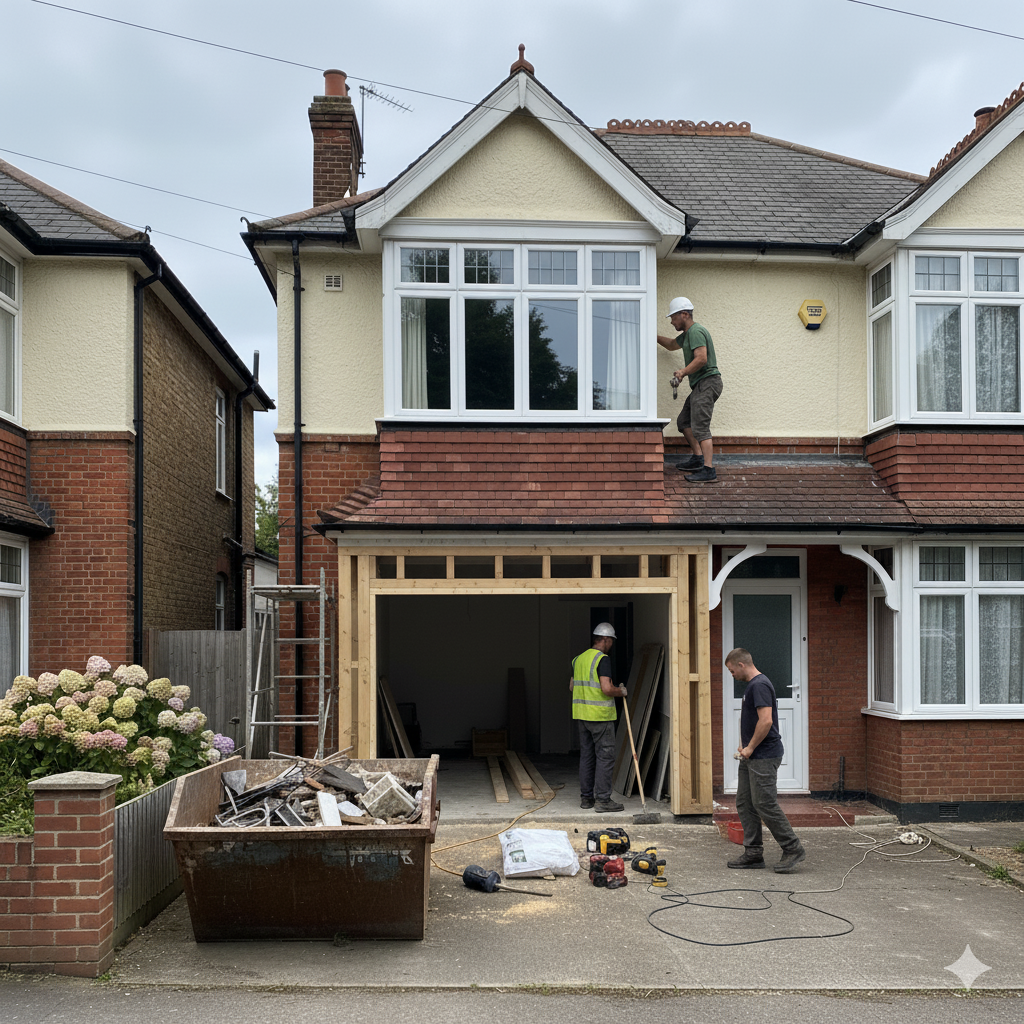




A successful renovation doesn’t start with the first swing of a sledgehammer; it starts weeks earlier with a “pre-flight” checklist that protects your property, your neighbours, and your sanity.
1. The Legal Foundation: Notices and Agreements
In the UK, ignoring the legal paperwork can halt a project before it begins. By 2026, “dutyholder” requirements are stricter than ever.
-
Party Wall Agreements: If you are working on a shared wall or excavating near a boundary, you must serve a Party Wall Notice at least two months before work starts. In 2026, it is highly recommended to include a “Schedule of Condition”—a photographic record of the neighbour’s property—to prevent future disputes over “new” cracks.
-
Building Control Notification: Ensure your building control body (either local authority or a private inspector) has been notified. Under 2026 rules, specific “gateways” for fire safety and structural integrity must be signed off before you move to the next phase.
-
Insurance Update: Contact your home insurer. Standard policies rarely cover “major works.” You may need Renovation Insurance or “Contract Works Insurance” to cover the structure while it is under construction.
2. Inventory and “Strategic Decanting”
A major renovation generates an incredible amount of “fine dust” that can penetrate even closed wardrobes.
-
Off-Site Storage: For a major overhaul, hire a self-storage unit. Moving your furniture and valuables off-site doesn’t just protect them; it gives your contractors the “clear floor” they need to work efficiently, which can actually reduce labour costs.
-
The “Sanctity Box”: Pack a box of essential documents (passports, deeds, birth certificates) and keep it entirely off-site.
-
The Digital Archive: Take “before” photos of every room from multiple angles. In 2026, many homeowners are using 3D scanning apps to create a digital twin of the home’s current state—this is invaluable for architects and for insurance proof.
3. Managing the “Human Element”
If you are living in the property during the works (see our guide on Renovating a Home While Living in It), you need a survival plan.
-
Temporary Living Zones: Establish a kitchen-free cooking station with an air fryer, kettle, and microwave. Ensure your “Clean Zone” (usually a bedroom) is sealed with a heavy-duty zip-door barrier.
-
Pet and Child Safety: Construction sites are high-risk areas. Plan for pets to stay with family during the loudest demolition phases, and ensure all work areas are physically cordoned off with child-safety gates.
Renovation Prep Timeline (8 Weeks Out)
| Timeline | Action Item | Why It Matters |
| Week 8 | Serve Party Wall Notices. | Legal requirement for shared boundaries. |
| Week 6 | Confirm Contractor & Start Date. | Secures your slot in the 2026 build calendar. |
| Week 4 | Arrange Skip Hire & Council Permits. | Essential for waste management flow. |
| Week 2 | Move Furniture to Storage. | Protects assets and speeds up the build. |
| Week 1 | Neighbour “Tea & Talk.” | Minimises complaints and fosters goodwill. |
4. Utilities and Access Logistics
Your contractor needs more than just a key; they need a clear “site setup.”
-
The Welfare Hub: Identify which toilet the builders will use or arrange for a portable toilet. In 2026, professional contractors expect a designated area for “welfare” (tea-making and breaks) as part of UK health and safety standards.
-
Isolation Points: Show your lead contractor exactly where the mains water stopcock, the gas shut-off, and the consumer unit (fuse box) are located. Label them clearly.
-
The Skip Permit: If you are placing a skip on a public road, you need a council permit. In 2026, many UK councils have digitised this process, but it can still take 7–10 days to process.
5. Neighbourly Relations: The “Tea & Talk”
In the era of remote working, your renovation is your neighbour’s distraction.
-
The Informal Briefing: Before you post a formal notice, have a chat over the fence. Explain the timeline, the expected noise levels, and provide your phone number.
-
Working Hours Agreement: Confirm with your builder that they will stick to the “Standard Hours” (usually 08:00–18:00 weekdays, 08:00–13:00 Saturdays). Keeping your neighbours “on side” prevents anonymous calls to the council’s noise abatement team.
6. Protecting the “Non-Renovated” Areas
If you are only renovating part of the house, the “unaffected” areas are still at risk.
-
Floor Protection: Don’t just use dust sheets. Use Correx (fluted plastic) or “Ram Board” on all walkways. In 2026, heavy-duty “tacky mats” at the entrance to work zones are common to catch grit before it’s tracked through the house.
-
HVAC Protection: Cover any radiators or air vents in the work zone to prevent dust from being sucked into your heating system, which can cause long-term damage to your boiler.
Final Thoughts
Learning how to prepare your home for a major renovation is about removing as many “unknowns” as possible. By securing your legal notices, clearing the workspace, and setting clear boundaries with both your neighbours and your builders, you transform a potentially chaotic experience into a controlled, professional project.
