
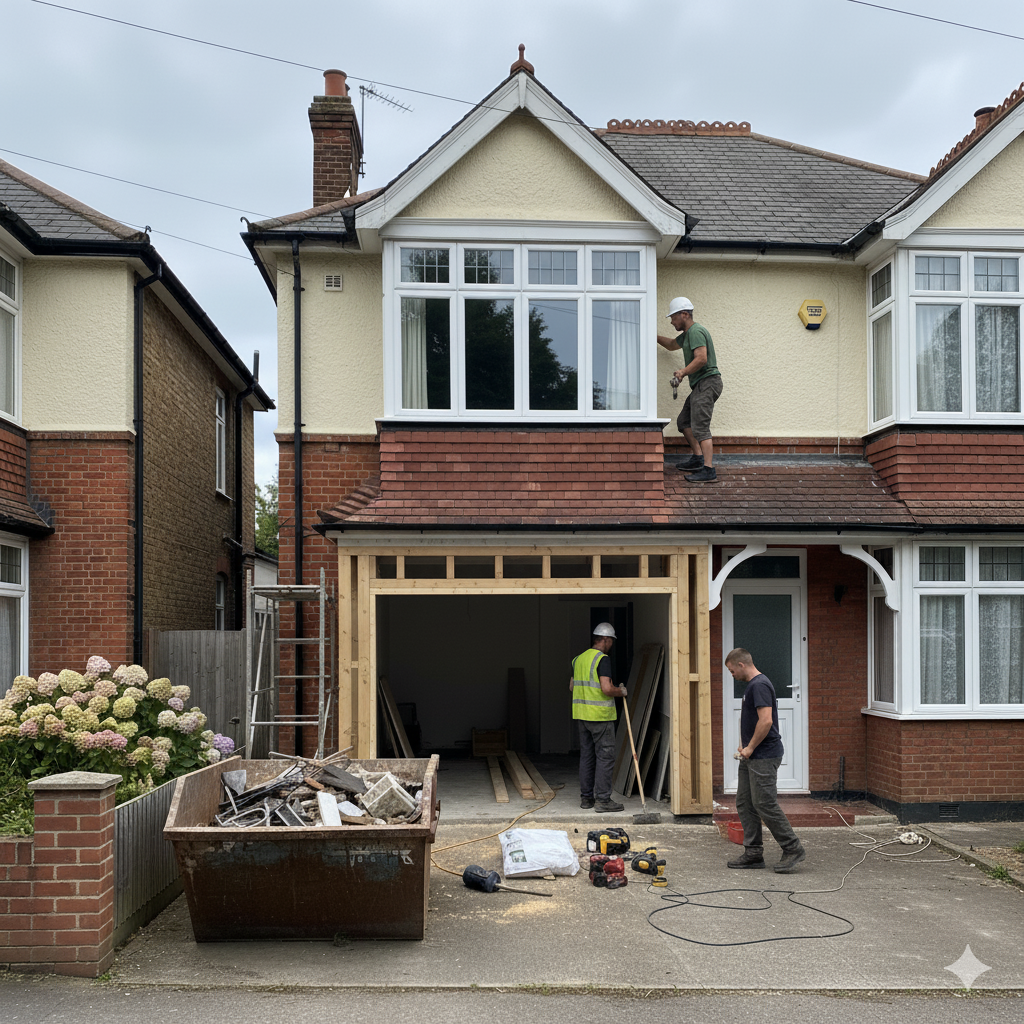




In 2026, professionalism is defined by competence and compliance. With the Building Safety Regulator (BSR) now operating as an independent statutory body, your contractor is legally required to prove they have the skills, knowledge, and experience to carry out your project.
1. Clear “Dutyholder” Accountability
Under the 2026 regulations, a professional contractor must formally accept the role of Principal Contractor. This isn’t just a title; it carries heavy legal weight.
-
What this means for you: They are responsible for planning, managing, and monitoring the entire construction phase. You should expect them to provide a written “Construction Phase Plan” before a single tool is lifted.
-
The Safety Signature: At the end of the project, a professional will sign a mandatory compliance declaration alongside you and the designer to confirm the work meets all Building Regulations.
2. The “Golden Thread” of Digital Documentation
The days of losing paper invoices and sketches in a drawer are over. A professional builder in 2026 maintains a “Golden Thread” of information.
-
Expect Digital Transparency: You should expect access to a digital folder or project management app (like Procore or Buildertrend) containing photos of hidden structural work, material specifications, and warranty certificates.
-
Why it matters: If you sell your home in 2030, a “Professional” handover pack proves to the buyer’s solicitor that the insulation, fire-stopping, and structural steels are exactly as promised.
3. Fixed Contracts and “Variation” Discipline
Professionalism in 2026 is evidenced by a JCT (Joint Contracts Tribunal) or FMB (Federation of Master Builders) contract.
-
No “Estimates”: Expect a detailed, itemised Quote, not a vague estimate.
-
The Variation Process: If the scope of work changes (e.g., you decide to add underfloor heating mid-build), a professional will pause. They will issue a formal “Variation Order” with the new cost and time implication for you to sign before the work proceeds. This prevents “sticker shock” at the final invoice.
2026 Professionalism Checklist
| Expectation | The Professional Standard | The Red Flag |
| Insurances | Public, Employer, & Professional Indemnity. | “I’m covered” (with no proof). |
| Payment | Staged payments based on milestones. | Large upfront cash deposits. |
| Compliance | Part L (Energy) and Part B (Fire) expert. | “We’ve always done it this way.” |
| Site Rules | Fenced off, clean, and skips managed. | Tool mess and loose materials. |
4. Expertise in “Green” and Smart Tech
In 2026, a professional contractor must be more than a builder; they must be a systems integrator.
-
Retrofit Knowledge: Expect them to understand how an Air Source Heat Pump interacts with your insulation levels. They should be able to advise on MVHR (Mechanical Ventilation with Heat Recovery) to ensure your home doesn’t suffer from condensation after being made airtight.
-
Future-Proofing: They will suggest “Smart-Ready” infrastructure, such as running data cables alongside new electrics, even if you haven’t asked for them yet.
5. Proactive Communication and Project Sequencing
A pro doesn’t just “show up.” They provide a 90-day programme (often via a Gantt chart) that shows exactly when the plumber, electrician, and plasterer are scheduled.
-
Weekly Updates: You should expect a 15-minute “Friday Briefing” to review what was achieved this week and what decisions you need to make for the following week (e.g., “We need your tile choice by Tuesday”).
-
Supply Chain Management: With 2026 material lead times still volatile, a pro will flag long-lead items (like bespoke glazing or heat pumps) months in advance to avoid site delays.
6. High Standards of Site Conduct
A professional builder respects that they are working in your most valuable asset.
-
Welfare & Waste: They will arrange their own welfare facilities (portable toilets) and waste management (skips and licensed muck-away).
-
Neighbourly Relations: Expect them to manage the impact on your neighbours, adhering to local council “Code of Construction Practice” hours (typically 8am–6pm weekdays) and keeping the pavement clear of debris.
Final Thoughts
What to expect from a professional building contractor in 2026 is a partnership based on risk management. By hiring an accredited professional, you are protected by the law, insured by the contract, and supported by a digital record of quality. In the modern UK market, the “cheapest” builder is almost always the most expensive in the long run.
