


In 2026, the UK’s approach to home renovations has shifted from purely aesthetic upgrades to a “fabric-first” philosophy. With the Future Homes Standard and updated Building Regulations (Part L) now in full effect, improving your insulation is no longer just about saving a few pounds on your heating bill—it is a legal and structural necessity for future-proofing your property.
Whether you are stripping back a Victorian terrace or adding a modern extension, here is how to improve insulation during home renovations according to 2026 standards.
1. The “Fabric-First” Rule
Before you invest in a new air-source heat pump or solar panels, you must ensure your home’s “envelope” is airtight. Insulation is the most cost-effective way to reduce your carbon footprint.
-
Target U-Values: For 2026 renovations, the government’s target U-values (the measure of heat loss) have tightened. Aim for a maximum of 0.16 W/m²K for roofs and 0.18 W/m²K for walls.
-
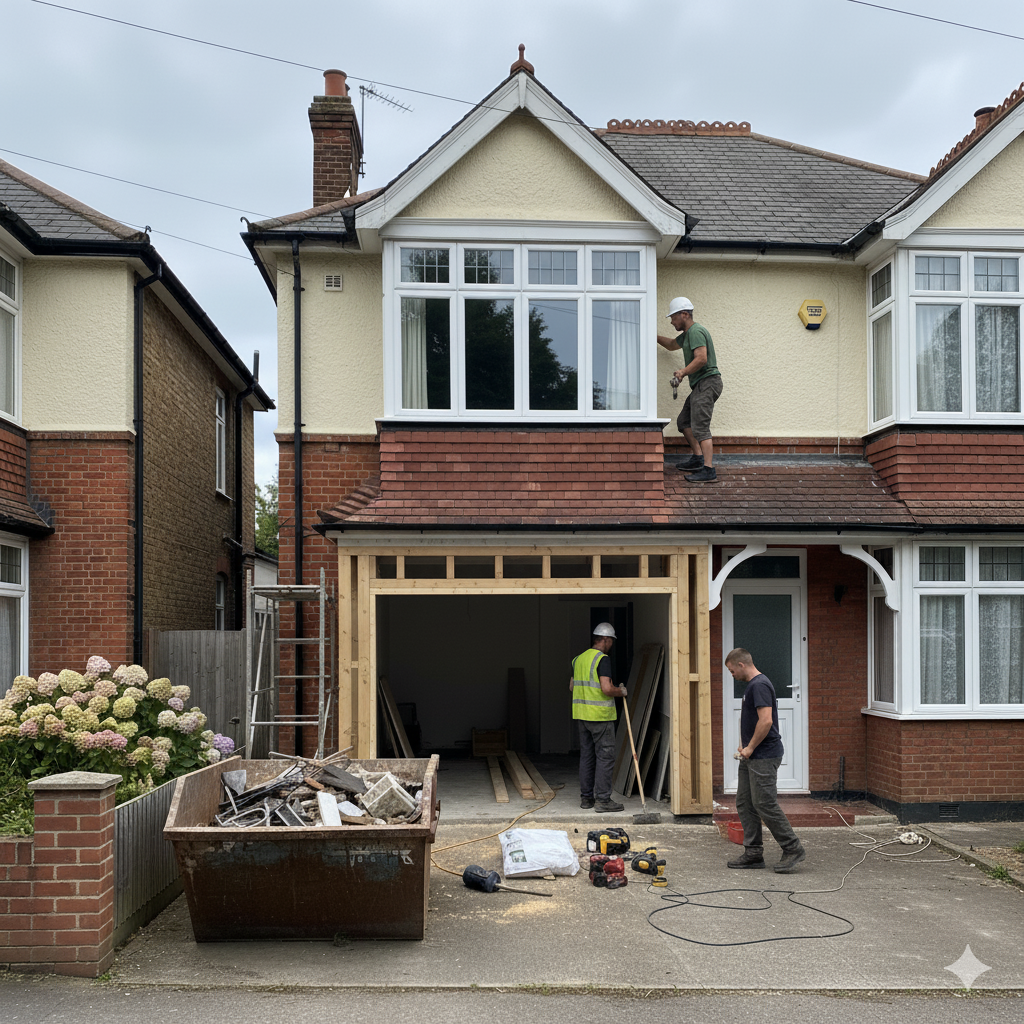
The Snagging Stage: Use the “back-to-brick” stage of a renovation to install insulation where it was previously impossible—inside wall cavities, under floorboards, and between roof rafters.
2. Roof and Loft: The 270mm Benchmark
Up to 25% of a home’s heat escapes through an uninsulated roof. In 2026, the standard for loft insulation has stabilised at a minimum thickness of 270mm.
-
Cold Roof (Loft Floor): If you use your loft for storage, don’t squash the mineral wool. Use “Loft Legs” to raise the floorboards, allowing the full 270mm depth of insulation to sit uncompressed.
-
Warm Roof (Rafters): If you are creating a loft conversion, use high-performance PIR boards (like Celotex or Kingspan) between the rafters. To meet 2026 standards without losing head height, consider a “hybrid” system: PIR boards between rafters and a thin layer of multifoil insulation across the underside.
3. Wall Insulation: Solid vs. Cavity
The method for improving wall insulation depends entirely on the age of your British home.
-
Cavity Walls (Post-1930s): If you have a cavity, “blown” bead insulation is a quick win. However, during a renovation, ensure any old, slumped glass-fibre insulation is removed first to prevent “cold spots” and damp.
-
Solid Walls (Pre-1930s): Victorian and Edwardian homes require Internal Wall Insulation (IWI). Use breathable materials like wood fibre boards or lime-based hemp-lime. Avoid non-breathable foams on old brickwork, as this can trap moisture and lead to structural rot.
4. Ground Floor Comfort: Suspended vs. Solid
Many UK homeowners overlook the floor, yet 10–15% of heat is lost here.
-
Suspended Timber Floors: If you are lifting floorboards to rewire or plumb, net the underside of the joists and fill the void with mineral wool or sheep’s wool. Ensure you do not block the air bricks; the void beneath the insulation must remain ventilated to prevent joist rot.
-
Solid Concrete Floors: During a kitchen renovation, if the floor is being dug up, install a minimum of 100mm of rigid PIR insulation beneath the new screed. This is especially vital if you are installing underfloor heating.
Insulation Material Comparison (2026)
| Material | Best For | Benefit |
| PIR / Phenolic Boards | Roofs & Floors | Best thermal performance per mm of thickness. |
| Mineral Wool | Lofts & Joists | Excellent fire rating and acoustic dampening. |
| Wood Fibre | Solid Walls | Breathable; ideal for period properties. |
| Sheep’s Wool | Sustainable Reno | Natural, moisture-regulating, and non-toxic. |
5. Don’t Forget the “Thermal Bridges”
A “thermal bridge” is a gap in your insulation—usually at corners, window reveals, or where a wall meets the floor.
-
The Detail Matters: Ensure your builder “returns” the insulation into the window reveals (the sides of the window frame). Failing to do this can lead to a cold strip around your windows where condensation and black mould will inevitably form.
-
Airtightness Tapes: Use specialist membranes and tapes (like Pro Clima) to seal the gaps between your insulation and the structural frame.
6. Financial Support: Grants in 2026
Before you pay out of pocket, check your eligibility for the Great British Insulation Scheme (GBIS), which is scheduled to run until March 2026.
-
Eligibility: If your home is in Council Tax bands A-D (England) and has an EPC rating of D or below, you may be eligible for free or heavily subsidised loft or cavity wall insulation.
Final Thoughts
When learning how to improve insulation during home renovations, remember that insulation and ventilation are two sides of the same coin. As you make your home “tighter,” you must ensure adequate extraction in “wet rooms” (kitchens and bathrooms) to prevent stale air.
